



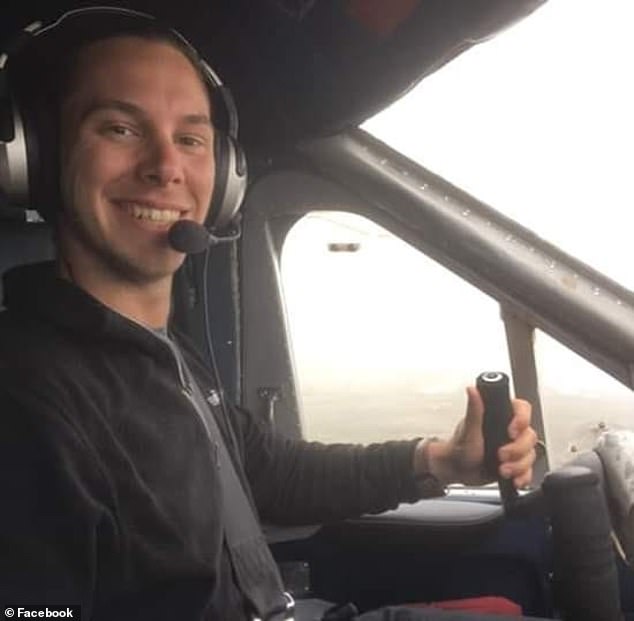
An Air Canada pilot killed when his plane struck a fire truck at LaGuardia Airport has been named – alongside a flight attendant who miraculously survived being hurled out of the doomed jet.
Antoine Forest, 30, died when the Bombardier CRJ-900 aircraft he was flying collided with the firetruck at the New York City airport on Sunday night, TVA Nouvelles reported.
Forest was the first officer aboard the plane, operated by Air Canada subsidiary Jazz Aviation. The other pilot in the aircraft was also killed, but has not yet been identified.
Forestwas from Coteau-du-Lac, Quebec, and has worked as a CRJ First Officer with Jazz Aviation since December 2022, according to his social media.
He studied aviation at Cegep de Chicoutim and previously worked as a pilot with Air Saguenay and Exact Air.
Flight attendant Solange Tremblay was strapped into a jump seat and violently thrown 330 feet clear of the aircraft when it collided with the truck, but somehow survived.
Tremblay’s daughter, Sarah Lépine, told Quebec broadcaster TVA Nouvelles that her mother suffered a broken leg requiring surgery, but did not sustain any other serious injuries.
‘I’m still trying to understand how all this happened, but she truly must have had a guardian angel watching over her,’ she said.

Jazz Aviation CRJ First Officer Antoine Forest, 30, has been identified as one of the pilots who died in the collision

Flight attendant Solange Tremblay was strapped into a jump seat and violently thrown dozens of feet outside of the aircraft when it collided with a fire truck

Two pilots were killed, and at least 41 other people were hospitalized when the Air Canada jet struck a fire truck while landing at the New York City airport on Sunday
Tremblay has been a flight attendant with Air Canada Jazz since 1999, according to her Facebook.
The horror unfolded shortly before midnight on Monday. An air traffic controller gave the fire truck permission to cross La Guardia’s runway to check on a United plane reporting issues with an odor that was preventing it from taking off.
The unidentified air traffic controller quickly realized the mistake he’d made and was heard pleading for the fire truck to stop, but it was too late.
Grisly images showed the Air Canada plane crumpled on the tarmac on Monday morning, after the flight from Montreal collided with the airport vehicle at 11.40pm Sunday night.
Surveillance footage released on Monday captured the violent impact, which sheared off the nose of the Air Canada plane, which was traveling at about 150mph.
Aviation experts said the tragedy could have been far worse had the truck struck the plane’s fuel tanks.

Forest is from Coteau-du-Lac, Quebec, and has worked as a CRJ First Officer with Jazz Aviation since December 2022

Tremblay has been a flight attendant with Air Canada Jazz since 1999. She suffered a broken leg requiring surgery, but did not sustain any other serious injuries
Addressing the plane seconds later, the air traffic controller said: ‘JAZZ 646, I see you collided with the vehicle. Just hold position. I know you can’t move. Vehicles are responding to you now.’
The audio from air traffic controllers then showed the dispatcher telling the crew of a nearby Frontier plane that the runway would be closed, asking if they would like to return to the ramp.
‘We got stuff in progress for that man, that wasn’t good to watch,’ a Frontier pilot said.
‘Yeah, I tried to reach out to them. We were dealing with an emergency, and I messed up,’ the controller replied, before the Frontier pilot tries to reassure him, saying: ‘No, you did the best you could.’
There were 72 passengers and four crew members aboard the aircraft. Forty one people required hospitalization, although most have since been released.
The crash was not caused by ongoing chaos with the Transport Security Administration (TSA) at La Guardia Airport.
An ongoing government shutdown means TSA staff – who screen passengers at security checkpoints – have not been paid since January.
Many have called out or quit, leading to very long lines at security at La Guardia and other airports across the United States.
Air traffic control systems are also short staffed, but have been for years, amid growing warnings controllers are overstretched and that a disaster was inevitable.