


A new exhibition on history’s most notorious serial killers – which has gory recreations of crime scenes and killers’ living quarters – has divided opinions with one prominent true crime podcaster arguing it ‘crosses a line’.
But a psychotherapist – whose sister and two nieces were the victims of a notorious 2008 triple murder – believes our fascination with serial killers is an understandable part of ‘human nature’.
Mind of a Serial Killer, running at the RDS in Dublin until May, is an immersive walkthrough of 20 areas relating to 20 different serial killers, the majority from the US and many well–known.
Information on each killer’s background and their victims are presented in text, while most rooms feature props where attendees can interact and take selfies.
These include a recreation of Jeffrey Dahmer’s fridge complete with body parts inside; a bloodied bathtub representing the place Richard Chase’s victims’ mutilated remains were discovered; and the homemade gynaecological chair in the BTK killer’s ‘toy box’ torture room.
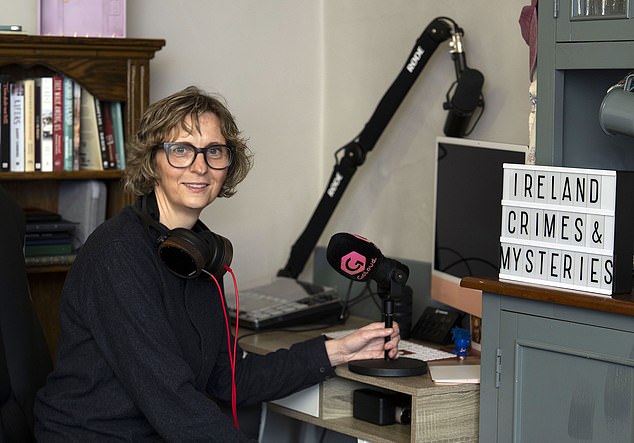
Host of the Ireland Crimes and Mysteries podcast Nules Ní Chleirigh said the appeal of the exhibition was obvious, with true crime ‘more popular than ever’.
She old the Irish Mail on Sunday: ‘That curiosity we have isn’t in itself unhealthy, and it doesn’t make you a bad person for being into true crime.’

But the former nurse said there appears to be a ‘tension at the heart of’ the expo in relation to what purpose it serves.
Ms Ní Chleirigh said: ‘On the one hand, the exhibition claims to focus on criminal profiling, investigative processes, and forensic techniques, which could be genuinely educational.’
There is ‘value’ in learning about how cases were solved, understanding victimology and seeing the real investigative work that went into catching killers, she added.
‘But on the other hand, they’re heavily marketing photo opportunities with recreated belongings of killers and crime scenes. They’re calling it a “killer date night” for Valentine’s Day. That’s where it crosses a line for me.
‘When you’re encouraging people to pose for Instagram photos in a recreation of a killer’s car or kitchen, you’re not honouring victims – you’re turning their murders into entertainment.’
Another set allows attendees to pose inside a recreation of Ted Bundy’s Volkswagen Beetle.
‘Those aren’t just props,’ Ms Ní Chleirigh continued. ‘Bundy’s car held terrified women before they were murdered. Dahmer’s kitchen was where he dismembered real people with families who are still living.’
John Whelan, a psychotherapist and co–founder of SAVE, said the exhibition ‘doesn’t really bother me one way or the other’.
Mr Whelan has been an advocate for criminal sentencing reform since his sister Sharon Whelan and her daughters Zara and Nadia were murdered by postman Brian Hennessy at their home in Co. Kilkenny on Christmas Day in 2008.
‘People have a fascination with that type of thing, and it’s just human nature,’ Mr Whelan told the MoS.
‘People are going to be fascinated by crime, whether it’s serial killers or the lads down the road.
‘I think it’s just a fascination with the limits of human behaviour – what the human being is capable of and the worst of it. And I think people engage in those stories in a way that’s kind of voyeuristic.’

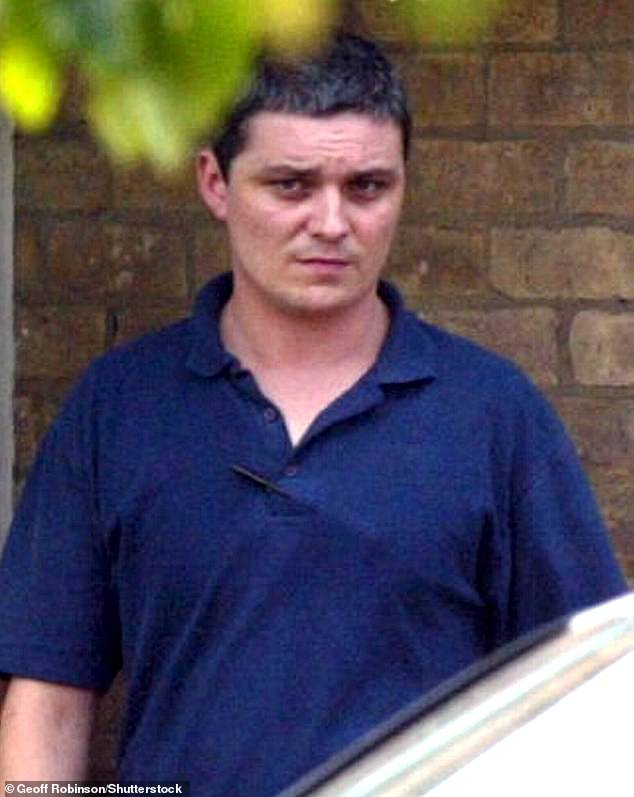
Serial killer Jeffrey Dahmer enters court in August 1991. Dahmer was later killed by a fellow prisoner

Ted Bundy’s 1968 Volkswagen Beetle, in which he committed many of his crimes
John Zaller, creative director of the company behind the show, Exhibition Hub, said his approach was about ‘trying to strike a parallel tone between connecting with the public on a subject of great interest, but also trying to create some spaces for reflection’.
He told the MoS: ‘It’s framing this as not a celebration of these individuals, but more of an exploration of the mind and the dark recesses of the soul.’
Mr Zaller said a ‘big concern’ was to avoid making something ‘really sensational’, like many true crime documentaries and podcasts that have exploded in popularity in recent years.
‘What got me as I did the research, was that all we remember are the names of these killers. We don’t know their victims. We don’t know anything about their victims.
‘And so I did want to make sure that we made it clear the volume of death that these people perpetrated in places where we could tell the story, where we had the research to talk about some of the individuals without getting too gruesome in the text panels.’
Mr Zaller called it a ‘fair point’ to question the taste of some of the exhibits and said it was ‘part of that line you walk in terms of having a cultural experience – it’s also a commercial experience.’
‘Everything is a selfie opportunity in our world today, so there are certainly places where we lean into that, while also trying to tell the story in a powerful way.
‘You might be able to get into [Chase’s] bath tub, but if you get in, you’re also going to see there’s dead kittens and puppies there.
‘It really makes you think twice about what you’re doing, and it helps tell the story of Richard Chase, who was completely out of his mind, thinking that he had to drink the blood of animals and then humans in order to live.’
It’s a question Ms Ní Chleirigh returns to: ‘I think the question is: when someone leaves that exhibition, what are they taking away?

Mind of a Serial Killer, running at the RDS in Dublin until May, has divided opinions
‘Are they thinking about the victims? About the investigative work? About how to prevent these tragedies? Or are they thinking about their photos and how creepy it was?’
The podcaster insisted true crime ‘has to keep the focus on the right things, the victims, the investigation, the justice – not on making killers into celebrities or turning tragedy into a photo op’.
‘That’s where I try to draw the line in my own work – keeping the focus on the people who were lost, not the people who took them.’