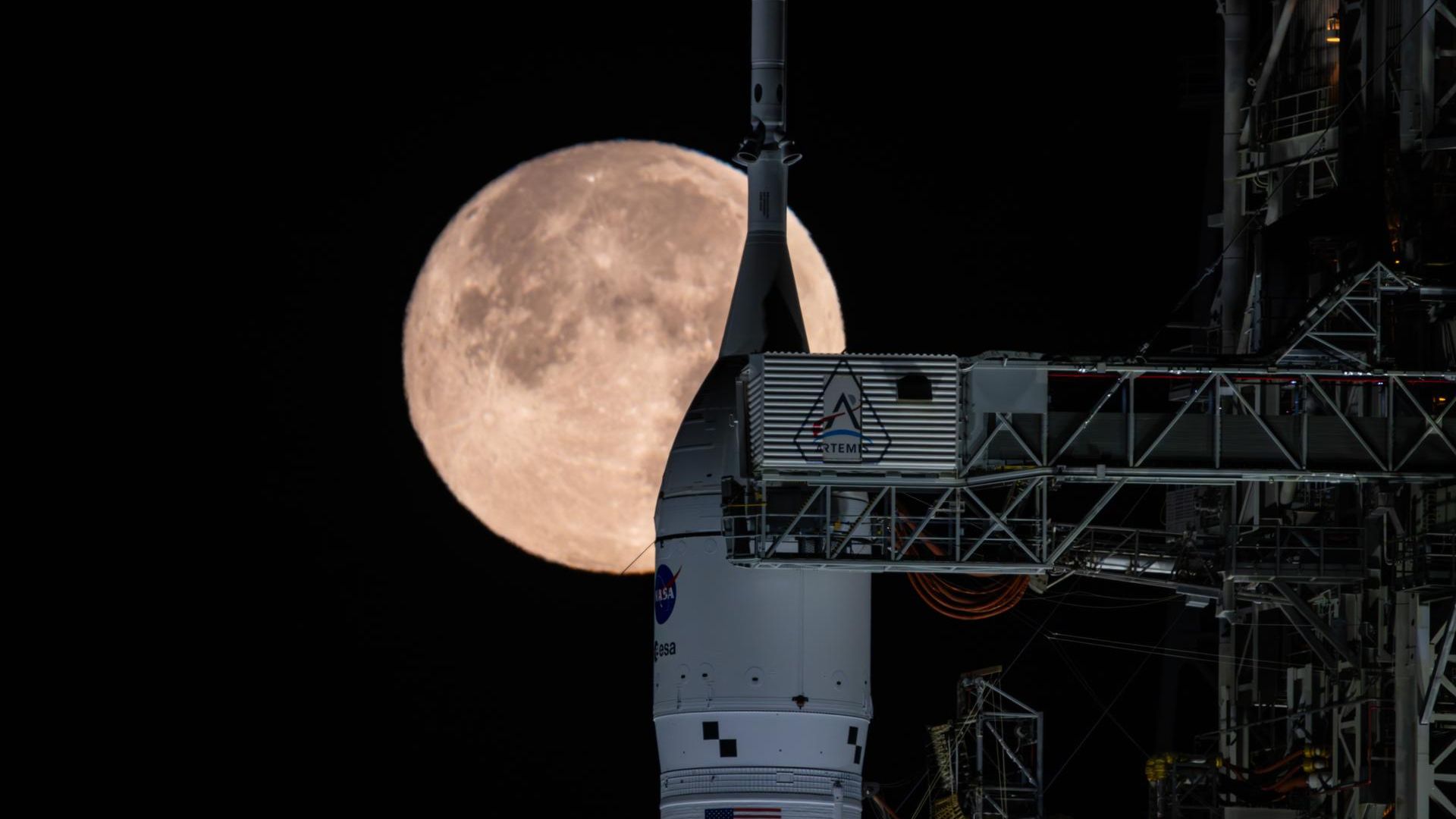
NASA’s long-anticipated Artemis 2 mission — the first crewed flight around the moon in more than half a century — could lift off as soon as April 1, and you’ll be able to watch it live.
The Artemis 2 mission is scheduled to lift off aboard NASA’s powerful Space Launch System (SLS) rocket from Pad B at NASA’s Kennedy Space Center (KSC) in Florida. It will send four astronauts on a roughly 10-day journey around the moon and safely back to Earth on board the Orion capsule.
Article continues below
So viewers will be able to follow the final countdown, hear live commentary from mission experts and watch real-time views of the SLS rocket on the pad. As with other major launches, NASA is offering live views of the Artemis 2 stack at KSC ahead of liftoff, including a 24/7 livestream from the launch pad during key phases of prelaunch preparations.
Artemis 2 is a critical test flight for NASA’s broader Artemis program, which aims to return humans to the moon and establish a long-term presence there as a stepping stone toward future missions to Mars.
Artemis 2 will send its crew on a free-return trajectory around the moon. This flight path allows Orion to loop behind the moon and use gravity to naturally guide the spacecraft back to Earth, while giving the astronauts an opportunity to test life-support systems, navigation, communications and deep-space operations. If all goes to plan, the first Artemis crewed lunar landing will occur in 2028, on the Artemis 4 mission.
The four astronauts flying on Artemis 2 are Reid Wiseman, who will serve as commander; Victor Glover, the mission’s pilot; and mission specialists Christina Koch and Jeremy Hansen. All work for NASA except Hansen, who is with the Canadian Space Agency.
Koch will become the first woman to travel to the moon’s vicinity, Glover will be the first person of color to do so, and Hansen the first non-American.

Following liftoff, the SLS rocket will place Orion into Earth orbit before the capsule performs a burn that sends the spacecraft toward the moon. During the journey, the crew will conduct a series of checkouts and demonstrations designed to validate Orion’s systems for future lunar landing missions. After looping around the moon, Orion will return to Earth and splash down in the Pacific Ocean, concluding NASA’s first crewed lunar mission in more than 50 years.
As always with spaceflight, launch timing is subject to change due to weather or technical considerations, and Space.com will provide updates on this page as new information becomes available.