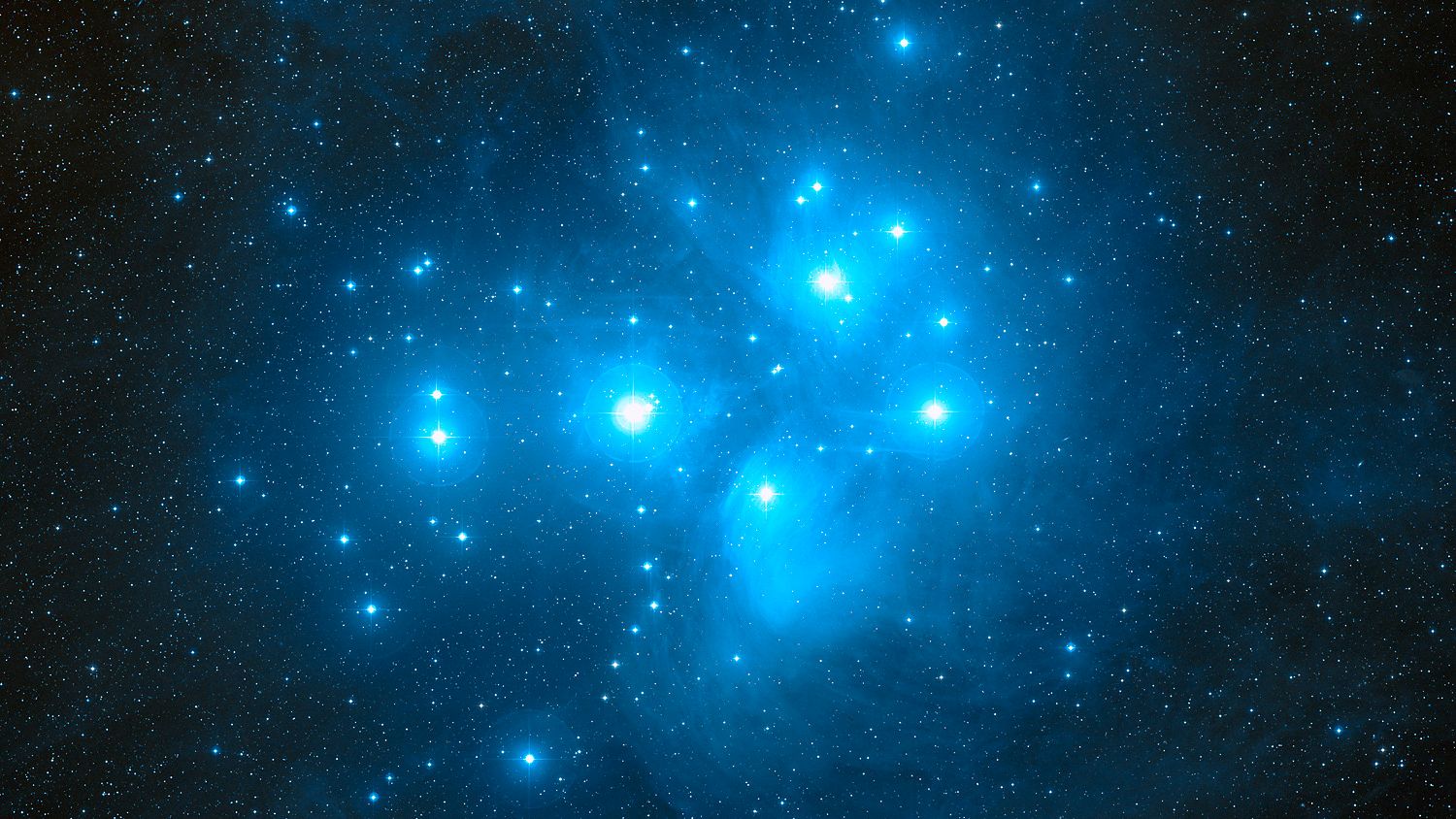
Head outside tonight and drink in the sight of the Pleiades open star cluster glistening close to the red star Aldebaran in the constellation Taurus, before the mesmerizing naked-eye jewel slips out of view with the changing of the seasons.
The Pleiades are at their most spectacular from October to March, after which the cluster slips ever lower in the spring sky, appearing closer to the horizon with each passing night. By late April, it will be lost to sight in the glare of the setting sun and won’t be seen again until the very end of June, when it will briefly shine close to the red light of Mars in the predawn sky.
On a clear night under dark skies, the Pleiades appear as a distinct haze of light that becomes easier to see when you look slightly to one side — a technique known as averted vision, which helps your eyes pick up faint objects.
Article continues below
The Pleiades is a vast collection of roughly 1,000 gravitationally bound blue-white stars, the seven most prominent of which are named after the daughters of the Titan Atlas from Greek mythology — Asterope, Alcyone, Celaeno, Maia, Electra, Taygete and Merope.
How to find the Pleiades
Finding the Pleiades is easy with a little help from the most recognizable constellation in the northern hemisphere night sky — Orion, the Hunter — which is currently shining about halfway up the southwestern sky after sunset through late March. Next, identify the three familiar stars of Orion’s Belt.
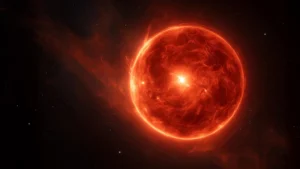
Draw an imaginary line from the leftmost star, Alnitak, through the rightmost star, Mintaka and out into space. Follow it past the red giant star Aldebaran and you’ll find the hazy light representing the stellar city of the Pleiades!

A pair of 10X50 binoculars can help to reveal the seven brightest stars of the Pleiades along with numerous fainter blue-white companions, while a small telescope enhances the view to reveal dozens more of the stellar grouping.
To view the cluster’s ancient light is to follow in the footsteps of the greatest astronomers ever to have walked the Earth, including the famed Italian scientist Galileo Galilei, who recorded the first ever telescopic observation of the Pleiades in his 1610 work Sidereus Nuncius, the Sidereal Messenger.
Want to marvel at the stars of the Pleiades for yourself? Then be sure to read our roundup of the best telescopes and binoculars for observing the night sky, along with our picks of the best smartphone astronomy apps available in 2026.
Editor’s Note: If you would like to share your photos of the Pleiades with Space.com’s readers, then please send your image(s), comments, name and location to spacephotos@space.com.