



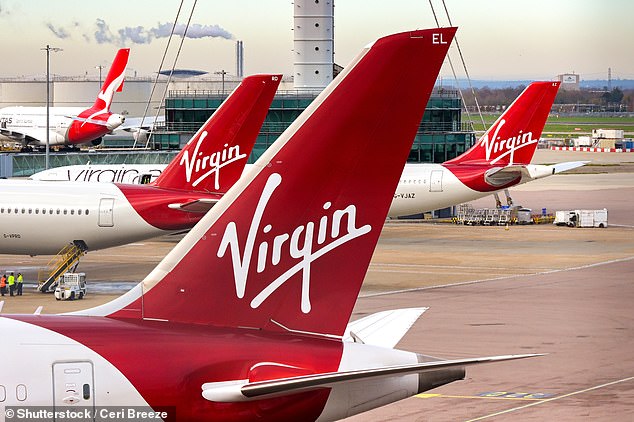
Virgin will increase the price of domestic airfares by five per cent after the cost of fuel doubled in just one month amid the conflict in the Middle East.
The move comes after Australia’s national carrier Qantas and its budget airline Jetstar said they would raise prices due to the effects of the war in Iran.
‘Costs across the aviation sector continue to rise, now significantly exacerbated by the situation in the Middle East,’ a Virgin spokesperson said in a statement.
‘We are making necessary fare adjustments to reflect these cost pressures.’
It’s understood domestic airfares will jump by five per cent, 9News reports. The increase will apply to both economy and business tickets.
It comes after Qantas and Jetstar announced similar hikes last week.
‘Qantas International is increasing fares this week in response to rising costs, including the significant increases in jet fuel prices,’ it said in a statement.
‘These increases will vary from route to route.’

Virgin will increase the price of domestic airfares by five per cent after the price of jet fuel doubled in a month amid the conflict in the Middle East (stock image)
Qantas has not announced any changes to its domestic fares, with the airline to conduct fortnightly reviews into airfares.
Meanwhile, Coles has also issued a similar price warning.
The major supermarket said it would be conducting additional reviews of what it pays its transporters amid the soaring cost of fuel.
Coles said it was ‘increasing the frequency that we review the fuel component of our freight rates from monthly to twice per month – so that changing fuel costs are reflected more quickly and fairly’.
‘In the current climate, this means transport providers will be able to recoup more of the rising fuel costs,’ a spokesman told the AFR.
It comes as Energy Minister Chris Bowen said more fuel could be released from Australia’s national reserve should the crisis in the Middle East continue.
While emphasising there was plenty of fuel available to get through April, Chris Bowen said additional releases from reserves were on the table.
‘Fuel suppliers will continue and are locked in and will continue to arrive,’ he told reporters in Brisbane on Friday.

Coles said it would be conducting additional reviews into how much it is paying its transporters amid the soaring cost of fuel (stock image)
But beyond late April, the situation was more uncertain and dependent on how international events panned out, Mr Bowen said.
Oil prices have soared and global supplies cut after Iran’s de-facto closure of the Strait of Hormuz in retaliation against US-Israeli strikes.
‘We will release more of the strategic fuel reserve if we have to, but only if we have to. It’s there for a rainy day,’ Mr Bowen said.
One-fifth of the national reserve of petrol and diesel has already been released from emergency stockpiles, including 500 million litres going into regional areas.
Government subsidies will continue to Australia’s two remaining oil refineries, in Geelong and Brisbane, after six months of negotiations over the payments.
Only a ‘very low percentage’ of service stations were out of fuel, Mr Bowen said after reports of outlets running dry in some regional areas.
‘(It’s in the) low single digits, but that doesn’t mean it’s not a real challenge for having trouble getting fuel in rural and regional areas,’ he said.
The energy minister will meet with state and territory counterparts later on Friday to discuss fuel supply issues due to the Middle East conflict.