


When the Samsung Galaxy S26 Ultra debuted at a Galaxy Unpacked event on February 25 of this year, the one hardware upgrade that stood out well above the rest was its new Privacy Display feature. With the flip of a single software toggle, Privacy Display effectively obfuscates the visibility of on-screen content when looked at from an angle — perfect for clapping back against any and all shoulder surfers operating out in public.
It wasn’t long, however, before reports started emerging of two unforeseen drawbacks to Samsung’s Privacy Display technology: anecdotally, it appears the feature slightly dims the overall brightness of the S26 Ultra’s 6.9-inch OLED panel, while also subtly reducing the anti-reflective properties of Corning’s Gorilla Armor 2 display glass coating. Now, as per a new report from TechRadar, Samsung has finally commented on at least the former concern in an official capacity.
“Privacy Display is designed to protect user’s privacy by providing a vivid visual experience for using the phone in normal use cases. Some variation will be seen when the phone is held at certain angles and when set to maximum brightness, however, any impact on actual usage when holding the phone should be negligible.” says Samsung in its statement to TechRadar.
This response from Samsung confirms that, indeed, the company’s Privacy Display comes with a distinct visual drawback, even if it’s an admittedly small one. It remains unclear if all Galaxy S26 Ultra units are impacted equally by this screen “variation,” as well as whether the company was aware of this trade off prior to mass-producing the screen tech that ultimately found its way into the flagship Android handset.

- SoC
-
Snapdragon 8 Elite Gen 5
- Display
-
6.9-inch Dynamic Super AMOLED 2X
- RAM
-
12 or 16 GB
- Storage
-
256GB, 512GB, or 1TB
- Battery
-
5,000 mAh
- Operating System
-
Android
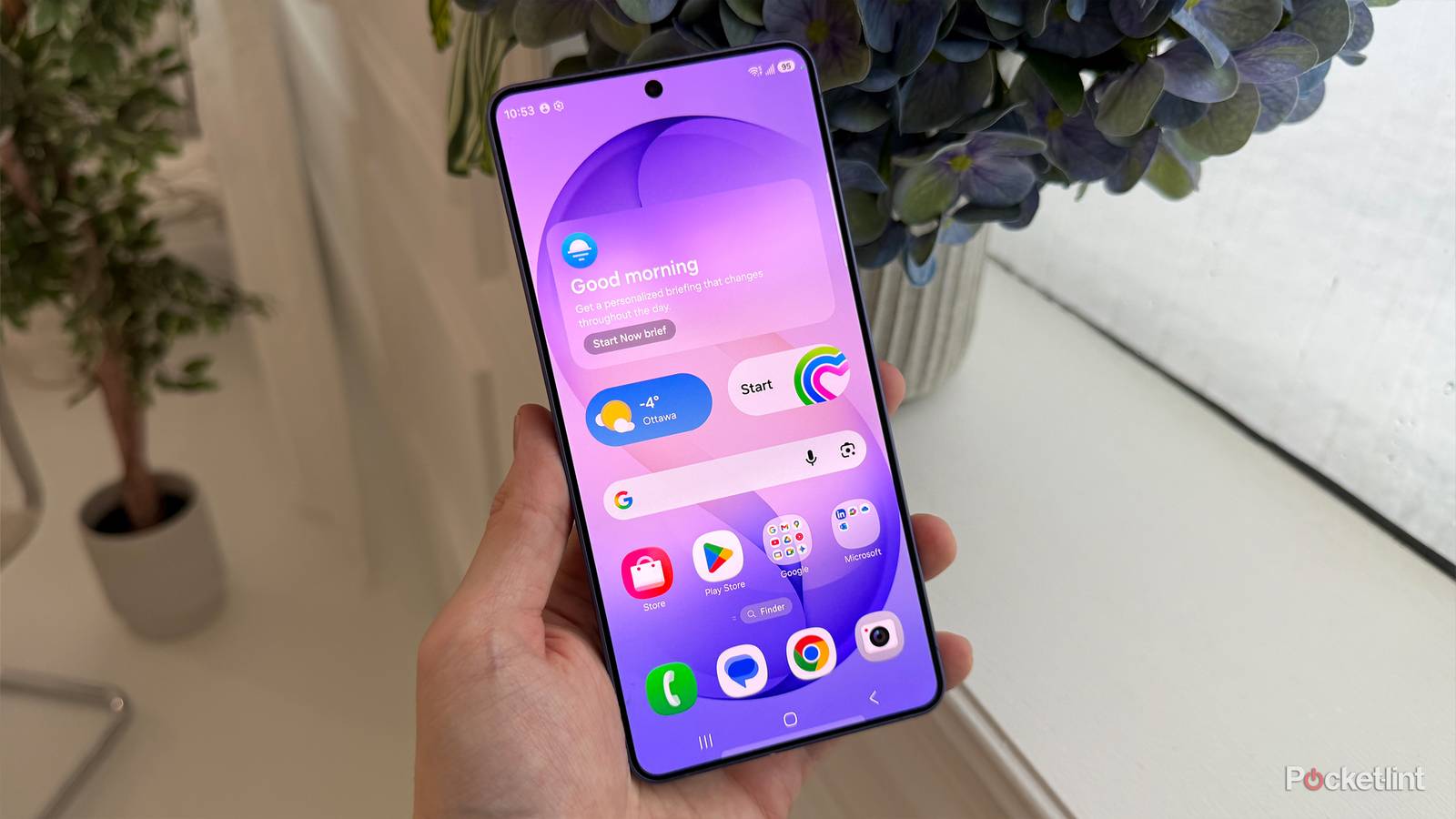
Samsung’s Galaxy S26 Ultra comes packed with the latest Snapdragon 8 Elite Gen 5 chipset, a new Privacy Display feature within its 6.9-inch OLED screen panel, and a powerful quadruple rear camera setup.
You win some, you lose some
Does Samsung’s Privacy Display have real staying power?

Technologically speaking, Samsung’s Privacy Display is impressive. The ability to black out the contents of the Galaxy S26 Ultra’s screen when viewing from an angle is mightily handy when, say, commuting on public transport, and it’s the sort of quality-of-life upgrade that feels genuinely innovative as opposed to gimmicky.
While it’s true that cheap ‘privacy filter’ screen protectors have existed on the market for years, Privacy Display is far more advanced, with its ability to switch on and off on the fly, and its per-pixel control that allows for select parts of the display (like incoming notifications) to work in privacy mode without impacting the rest of the screen. Privacy Display also appears to work more effectively at top-and-bottom off-axis angles, whereas most screen protector solutions only offer side-to-side angle protection.
…I certainly hope to see an improved second-generation Privacy Display hit the Galaxy S27 Ultra next year.
Of course, as has now become clear, this added layer of privacy does come at a price. For the most part, a slight reduction in overall panel brightness and anti-reflectiveness will hardly be noticeable unless you’re pitting the Galaxy S26 Ultra directly side-by-side with its predecessor, and, even still, the difference doesn’t appear to be too massive in most conditions. It’s worth noting that Privacy Display does offer a ‘maximum privacy protection’ toggle that can be disabled in Settings, which reduces the effect of the feature and in turn also reduces associated side effects.
Nevertheless, it’s disappointing to see any regression at all when jumping to a new flagship phone generation, and so I certainly hope to see an improved second-generation Privacy Display hit the Galaxy S27 Ultra next year. Whether the feature itself will end up becoming part of the smartphone hardware canon of the future is tough to say, but I do have my doubts about whether Apple, Google, and others will ultimately adopt the tech.