



SPOILER ALERT: The following reveals major plot points from tonight’s episode of FBI titled “Forgiven.”
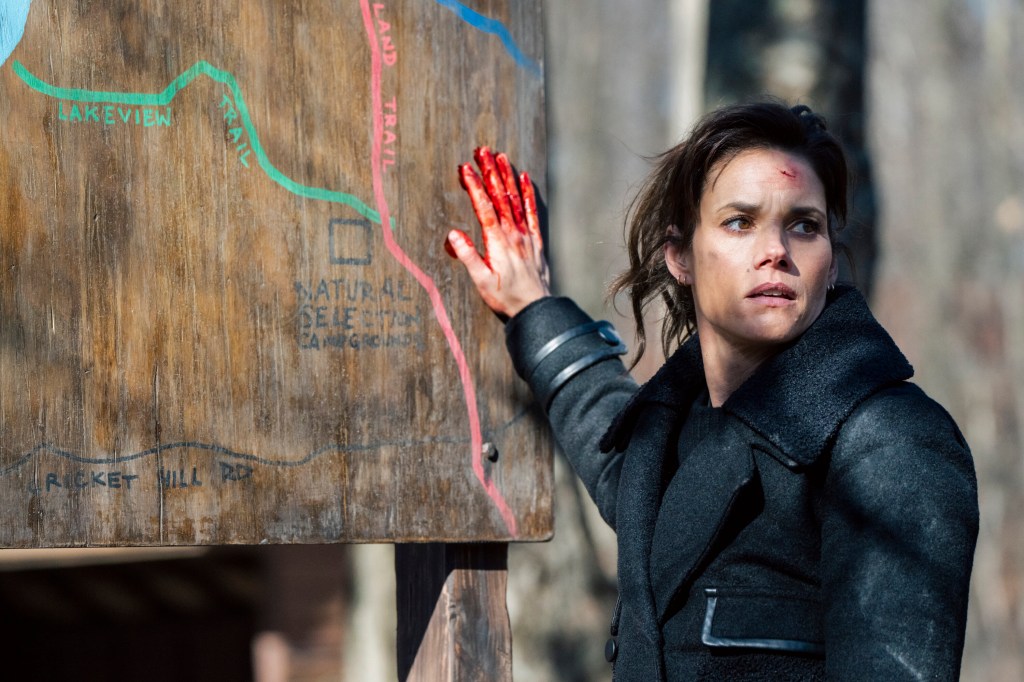
Maggie Bell (Missy Peregrym) was put through the wringer on tonight’s episode of the CBS hit series FBI, following her sister Erin’s (Adrienne Rose Bengtsson) abduction at the hands of Ray DiStefano (Matthew Rauch).
With not much to work with, Maggie is joined by her partner OA (Zeeko Zaki), her mentor, Peter (Zach Grenier), and members of the team working every angle to get Erin back safe and sound. Yes, the sisters had been estranged, but Maggie was passionate about saving Erin’s life. There were some awkward moments, like when Maggie met Erin’s roommate, who was absolutely clueless about Maggie but was happy to help however she could to aid in finding her.
Maggie was in too deep, but she didn’t let her emotions get in the way of the job she was doing. As hard as it was, she definitely hit that goal, but there were bumps and scary moments along the way.
The team soon discovers that Erin was being catfished by DiStefano on a dating app, which is how he lured her out of her safe space and right into his dangerous arms. Time is not on the team’s side, but Maggie will turn over every stone if it means saving her sister’s life.
By the end of the episode, Maggie discovers that her nemesis has killed for the first time, and the victim is her sister. The amount of grief, pain and regret left behind for Maggie to deal with will be immense, but it seems she may have the support that she needs.
Shooting the episode was as emotional for Peregrym as it was for Maggie to go on this journey in “Forgiven.” She spoke to Deadline recently about all the things Maggie dealt with and will continue to, and how, as an actress, Peregrym is able to channel dark spaces while protecting her well-being in our Q&A below.

“(L-R): Zeeko Zaki as Special Agent Omar Adom ‘OA’ Zidan and Zach Grenier as Peter Olsen
Bennett Raglin/CBS
DEADLINE: It was great watching you go through so many emotions as an actor in the episode. How does this work for you? Do you emotionally go through what your character is? There’s usually no time in a procedural to go so deep.
MISSY PEREGRYM: I know. We’re a procedural, right? So we don’t really have time to get involved this deeply with our storylines. That only works on our show if it has to do with the case. Then we can really spend time on how a character is processing. Yeah, we were very thoughtful and careful about where we started and where we ended up because we were dealing with such complicated problems right from the beginning. There’s the fact that I don’t have a relationship with Erin anymore, and now she’s gone. And I’m like, Well, is she gone? Maybe she’s on a bender, or maybe I just haven’t been able to get a hold of her. She’s not calling me back. Is it that?
Then there’s the DiStefano thing, and it’s like, “Oh, okay.” Now everything’s kind of crashing, but I can’t really afford to get into the emotional stuff yet. I’ve got to be as professional as possible to use my head to get to the bottom of this and use the team, and to have these [emotional] moments kind of leaking through.
DEADLINE: Was that challenging as an actor?
PEREGRYM: It was a challenge to make sure that we were careful with the arc emotionally. And I just throw myself into wherever it is at that time. And everybody was really wonderful about creating a script that did that for us.
DEADLINE: This one episode came out like a little mini movie.
PEREGRYM: Agreed. And I was wiped after it. I was so happy that I had an episode off after, which was also planned. [Showrunner] Mike [Weiss] did that on purpose. Thank God.
DEADLINE: When they yell cut, is it all over for you, or do you take any of that home?
PEREGRYM: Yeah, definitely. I had a serious, emotional come-down after shooting the last scene. I was sitting with anxiety the whole time that I was in the episode. Here’s the cool part about acting and the horrible part about it: There’s an opportunity for catharsis when you have experiences in your life where you’ve been to the bottom, and you can bring that for relatability, and people can see that, and there’s a connection through your character. That’s amazing.
The other part that sucks is that it doesn’t just go away for me when I’m done. I have to actually sort that out in my body. I have to release that. I have to tell my body that this isn’t real, because my body does not know the difference. In the same way that it doesn’t know the difference between panic and excitement, it doesn’t know the difference between real emotional grief, whether it’s a fake scenario or a real scenario, and I guess I didn’t.
Missy Peregrym as Special Agent Maggie Bell
DEADLINE: Are you not able to approach it a different way to protect yourself?
PEREGRYM: I didn’t have to do it that way, but I don’t know how else to do my job. I’m not a method actor. I don’t have tricks. If I believe it, and if I can sense it, I’ll read a script and sob, and that’s exactly where we got with the script. So I really just tried not to think about it too much. As long as the stepping stones were there, I had to trust myself that I would get to where I needed to go in that moment, and only in that moment, otherwise I would just be suffering the whole two weeks of filming it.
DEADLINE: DiStefano may now be gone, but he really put you through it this time. You talk about anxiety, and we felt it right along with you. Like when the photo reveals its DiStefano behind the disappearance…
PEREGRYM: It’s awful because I’ve already had such a history with this guy. I wanted to make sure that we played it with what we last saw, which is that we worked really well together. And by the way, Matt is such an awesome actor. He’s so good.
DEADLINE: Are we sure DiStefano is dead?
PEREGRYM: I mean, pretty sure. It’s a pretty bad cliff. I’d be very surprised if he was back, but right now, we’re definitely playing that he’s gone. He’s completely stripped me. I don’t know how to do my job. I don’t know how to trust myself. He’s taken the very thing that I have that makes me very good at my job, which is empathy and being able to get people to open up and talk and connect. And he’s shattered me because I was not able to save my sister. How can I protect anybody else? How can I be trusted to do my job again? How’s anybody going to trust me again? How can I trust myself and my instincts? I was really scared to play this part for my character.
DEADLINE: That you’d lose yourself?
PEREGRYM: To go so far. I was like, “What are we doing after this?” You know, I’ve been playing the same character for eight years, and we’re going so far. What’s the plan? How are we going to move through the next steps of getting back on your feet and being able to be in the world again? We’re not a drama where we sit around in our underwear and chat on the couch. We’ve got to get back to work.
So at what point are we going to address the reality of this scenario, and we are, we are doing it in the best way that we can with our show, like the way we do it on a procedural. But you know, as much as it scared me, I was terrified to go into that space at the end. I’m finding it really interesting to play my character now and finding these beats of when I can insert this stuff and when to work. And it’s just a challenge. It just feels like we’re doing a new show again. Do you know what I mean? And maybe that’s a gift.
DEADLINE: But you’re not leaving the show, are you?
PEREGRYM: No. I think it’s an opportunity. When I spoke to Aaron about it, Aaron Ginsburg is one of the writers on the show. I called him after we filmed the last scene, and I said, Aaron, this is so far. What are we doing? And he said, “Miss, this is what we want to do with you. We want to show you getting knocked down. There are a lot of people getting knocked down right now, and we want to show you how to get back up.” I was like, Okay, I think that’s really important. I think that’s exactly what we need.
I’ll be honest. I’m on a procedural show, and I wonder what impact this is possibly making? And sometimes I get freaked out because I think we’re just highlighting some of the horrors of humanity every week. And what is this? What are we doing this for? What am I investing a lot of my life in to do this for? And I think it’s really important what we’re doing, because we’re highlighting how to move forward. Everybody experiences loss. Everybody goes through the depths of emotions in life. You have an opportunity to show connection, relationship, intimacy, and growth. And this is exactly why I do what I do. I hope this makes people feel seen and that they want to keep going after such a horrific experience, and that they don’t give up.
This interview was edited and condensed for length and clarity.