The longevity of TVs is both better than ever and worse than it used to be. It’s worse in that with CRTs, the expectation was that you could keep them almost indefinitely — there are retro gamers playing on TVs that are 20 to 30 years old. Things are better in that a lot of the early problems with LCDs and OLEDs have been shaken out, and it’s possible to keep a TV running smoothly until you’d want to upgrade anyway.
The question remains, though — which type of TV lasts the longest? I’m going to exclude CRTs from this debate, since while you can technically buy new ones, those are very much a niche product that aren’t meant to keep up with 4K HDR content you’d find on streaming services. You might be surprised at the winner, although a couple of incoming technologies are poised to complicate the situation.
The one to avoid: budget LCD/LED
A major compromise

You’re increasingly less likely to find these on the market, but there is a class of LCDs out there that continues to use the same LED technology from when LCDs were new. Specifically I’m thinking of ones with edge-based lighting, or which otherwise have no local dimming capabilities.
These technologies do cut the cost you pay, but they’re sacrificing more than just image quality. The problem is that all LCDs need to run some form of backlighting constantly to have a visible image, and without local dimming, there’s no opportunity for that lighting to get any relief from shadows or other dark image sections. Every light has to run as hard as required for the brightest pixels, increasing their heat load, and thus the chance of them failing.
In an accelerated three-year longevity test of over 18,000 hours, conducted by RTINGS, 16 out of 28 direct-lit, non-dimming LCDs experienced either total or partial failure. That was far worse than the figures for OLEDs, or LCD’s with full-array dimmable lighting. For edge-lit LCDs, the results were 7 out of 11, including a rare model with some dimming functions.
Effectively, there’s a risk that a budget LCD could become unusable in five years or less. That’s going to depend on your habits, naturally, but I wouldn’t risk buying an LCD without full-array lighting unless you’re only going to use it for an hour or two at a time, say for putting on Rocky IV while you lift weights in your garage gym.
The step up: OLED
Much better, but with major risks

Modern OLED TVs can be surprisingly resilient. Some manufacturers claim longevity up to 100,000 hours, which on paper means you’d be able to run an OLED non-stop for over 11 years. In practice, however, you’re likely to get 7 to 10 years out of an OLED, possibly far less.
The problem resides with the “O” part of the acronym: organic components. These are more prone to degrading than synthetic ones. So while there aren’t any backlights that can fail, pixels can be rendered unusable in a variety of other ways. The best-known problem is burn-in, caused by static images such as channel logos or in-game interfaces being left onscreen for too long.
The good news is that TV makers have implemented a number of measures to combat burn-in, namely pixel-shifting, automatic logo brightness adjustment, and periodic pixel refresh cycles. But even with these, OLEDs are distinctly unsuited to people who engage in marathon gaming sessions, or who like to leave a news channel on all day in the background. It’s not just cost that’s keeping OLED out of your doctor’s waiting room.
Another possible issue is long-term color tinting, since certain colors degrade faster than others. And inevitably, the peak brightness of an OLED is going to become dimmer and dimmer, eventually crossing a threshold where increased voltage can’t compensate to hide it.
The threat, then, isn’t so much outright component failure as it is image quality becoming subpar. That might be just as much of a dealkiller for some people, given that the tech still comes at a hefty cost, and superior colors and contrast are the reasons people are willing to pay up.
The winners: mini-LED and full-array QLED
For the moment, that is

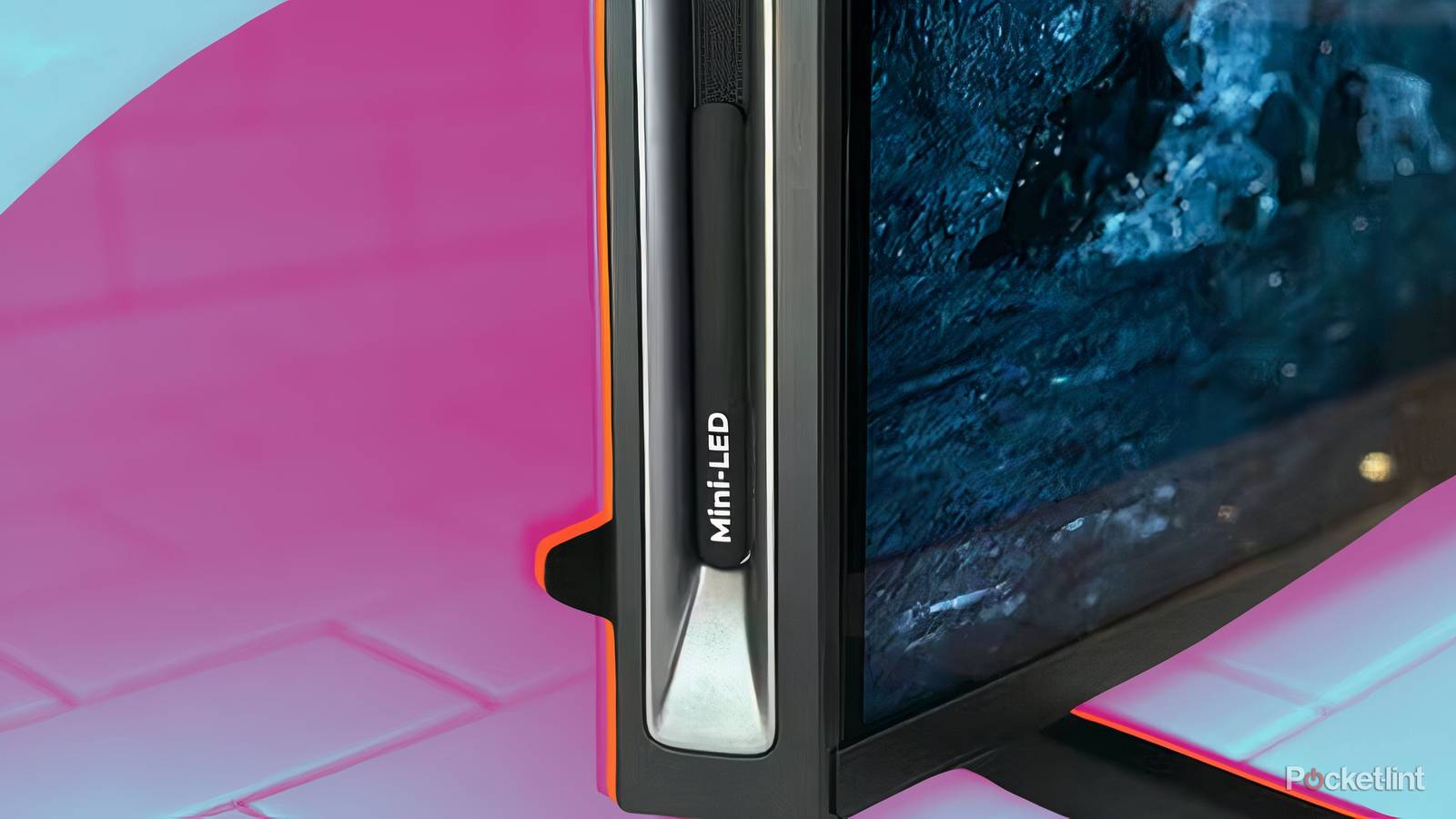
From a certain angle, you might be concerned that mini-LED and better-quality QLED sets would actually be worse than OLED, since they’re the brightest options available to the masses. Mini-LED TVs can be insanely bright, speaking from personal experience — the one in my home can be nigh-on blinding if you crank its settings too high.
The more dimming zones an LCD has, however, the more opportunities it has to dial down the brightness of its backlights. QLEDs with full-array local dimming typically have hundreds of LEDs, enough to permit some portions of an image to approach true black. Mini-LED steps this up to thousands or even tens of thousands of lights, enough that it can often be hard to distinguish the difference in contrast with OLED without putting two TVs side-by-side. Note that only technologies like OLED — based on self-illuminating pixels — can actually achieve pure blacks.
A mini-LED will probably look just as good at 70,000 hours as it did at 7,000, and it should be possible to keep one running for over a decade.
The gist is that when manufacturers claim a mini-LED or QLED can last between 70,000 to 100,000 hours, that’s less of an exaggeration than it is with OLED. Backlight failures are possible, but since LCDs are purely synthetic, there’s essentially no risk of burn-in or a decline in peak brightness. A mini-LED will probably look just as good at 70,000 hours as it did at 7,000, and it should be possible to keep one running for over a decade.
It is important to keep these panels cool, though, and avoid maxing out their brightness. Even if LEDs don’t die outright, you can still end up with uniformity issues, in which some lights appear dimmer than others. You can tell this is going on if images sometimes seem cloudy. Thankfully, if this does happen, it has to be pretty severe to completely ruin your TV experience.
Question marks about the future
New technologies around the bend

What makes the current situation is the arrival of two new formats: RGB mini-LED and MicroLED. The former uses separate red, green, and blue LEDs instead of filtering white or blue lights, while MicroLED is destined to replace OLED, with individual LEDs for each pixel.
Strictly speaking, both formats have been on the market for a few years at this point, but only in TVs that are so rare and expensive that for the same price, you could buy a car or put a down payment on a house — if not buy a house outright in some parts of the US. 2026 is the first year in which RGB mini-LED TVs are expected to become halfway affordable, by which I mean a few thousand dollars. We might have to wait a while longer for the same to be true of MicroLED.
Gaps between one MicroLED and another could just as easily be chalked up to gaps in build quality as the fundamental technology.
All this is to say that there isn’t enough data to say how these technologies will hold up in the long term. While companies like Samsung have presumably conducted their own accelerated testing, that’s meaningless when there are only a handful of models available across the entire industry. Gaps between one MicroLED and another could just as easily be chalked up to gaps in build quality as the fundamental technology. If I’m still on the TV beat then, I’ll have to revisit this question in a few years and provide an update.