The age of CRT TVs has come and gone, and while I’m guilty of being happy to move on, I’ve started to look back at the era fondly. No, I don’t miss the weight of these things, and lugging one up the stairs is a hassle that is incomparable to anything else. Also, aside from some late models, there’s no HD to be found here. In fact, you’re likely to find something in the 240p range.
What’s interesting is that this doesn’t look inherently bad. In fact, on small screens, it’s a lot better than you’d think. I would go out and buy a bunch of VHS tapes, but game consoles of their time look great on a CRT. If you want to hook up those consoles, you’re going to be relying on those beloved CRT ports. If you’re like me, you only had a TV with composite out ports back in the day, and while that’s completely serviceable, there are other options. If you have the chance to get your hands on a CRT TV today, then it’s worth getting something with a bit more versatility.
Composite still gets the job done
It’s not pretty, but it works

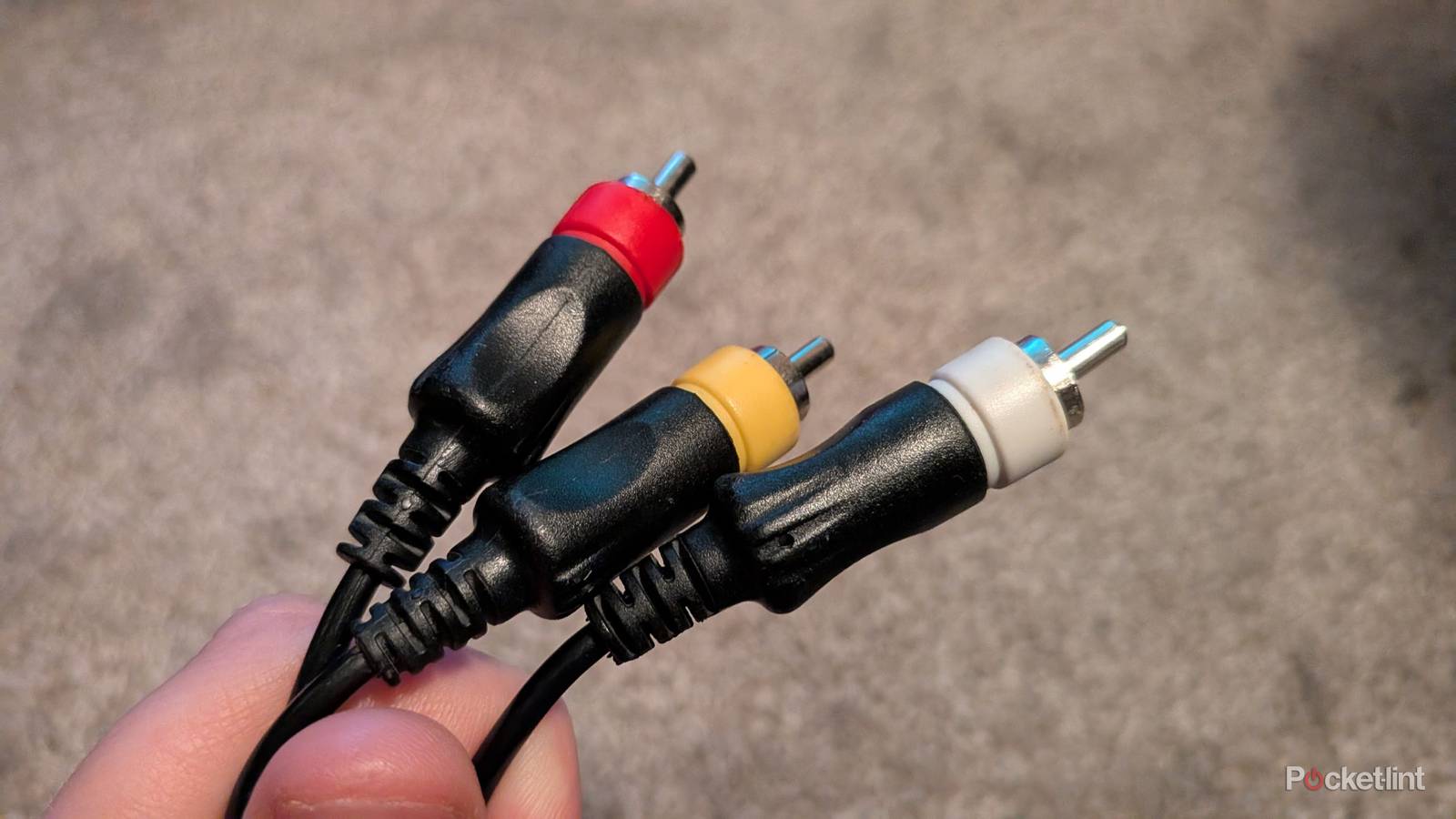
Composite is the most likely port you’ll find on a CRT, and while it’s the worst one you can find, it’s not awful. A lot of people actually like the softer, fuzzier look it offers, and it can create an overwhelming sense of nostalgia when you throw on an older game. I wouldn’t expect great graphics out of this port by any means, but that’s part of what makes a CRT TV so nice. The CRT effectively masks the image, and I’d argue it’s still a better-looking image plugging an N64 into a composite port on your CRT than it is playing on a modern flatscreen TV through the same port. Then again, many TVs today are omitting these ports entirely, so they really are a dying breed.
Most of your old consoles will have a composite cable bundled with them, so you shouldn’t have to look hard to track down a cable. If you misplaced yours, a replacement is quite cheap, even today. It’s definitely not my favorite way to enjoy retro games today, but I can’t deny that it’s the most budget-friendly way to do so. Your living room TV might still have these ports available, but don’t expect a clean-looking image if you go down that road.
S-Video is a step up from composite
A different-looking port

Instead of having a handful of cables as you get from composite and component, S-Video is a different beast entirely. If you’re lucky enough to have a CRT with this circular port on the back, you can get a sharper image than what composite has to offer. Think of it as a middle ground between the two formats.
There are a few more things you have to be aware of with S-Video, and the big one is that it’s just for video. Make sure you use an RCA cable to get audio, unless you’re fine with playing on mute. While many games might be fine with no sound, that’s not how I’d want to play something. In my experience, it’s rare to come across these TVs, but if you find a high-end set somewhere, you probably have it. Any of the old Nintendo consoles, even up to the GameCube, look solid with this port.
Component reigns supreme
The undisputed king

When it comes to the various CRT TV ports, component is the one that many people are searching for — and it’s for good reason. If you want the best audio and picture you can get, generally speaking, you can do with component cables plugged into your TV’s component port. The downside to this port is that it’s difficult to find it on a CRT TV at an affordable price.
Since we’re beyond the point where people simply donate their old CRTs, you have to pay a pretty penny for some of the better models, the Sony Trinitron, for example. I’ve managed to find a few CRTs waiting for a garbage truck to come by, including a Trinitron, but the model I found didn’t come with component ports. I think it’s well worth the effort to search for a CRT with component ports, however. It’s the best way to experience your old consoles, in my opinion. I understand a lot of it might be out of your hands, and we’re very much in a world where you take what you can get with these TVs.
With each passing day, fewer CRTs are available in the wild. If you don’t know how to fix any potential problems you run into, it’s difficult to find somebody who does. It’s no secret that old electronics fail over time, and part of this hobby means you have to figure out how to fix things yourself. For me, that’s a lot of the fun, but I know that’s not the case for everyone. Sadly, I see this becoming a bigger part of the CRT hobby as the years go by.