



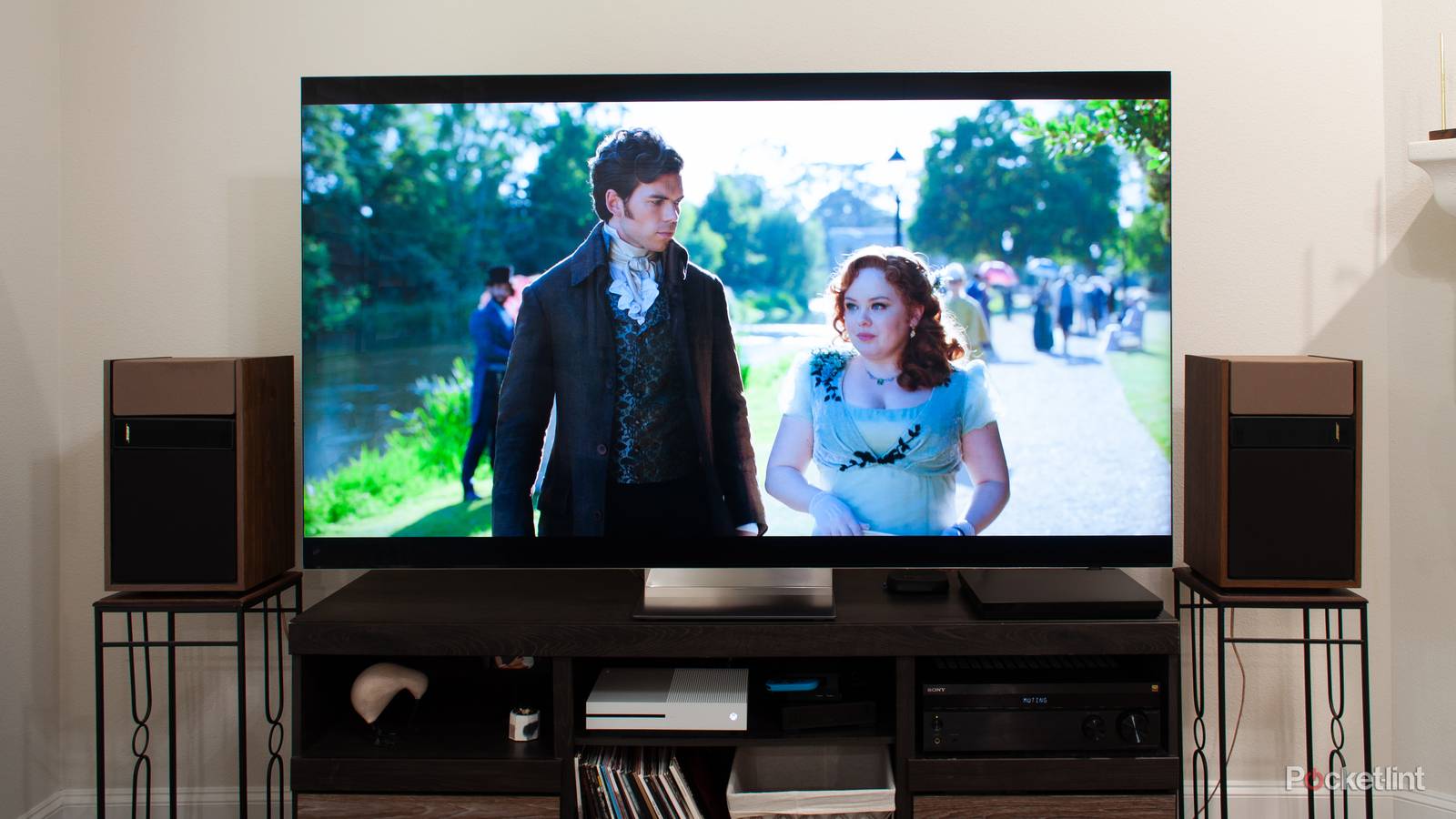
Not too long ago, it felt like 8K TVs were poised to become mainstream. All the major brands were getting into the act, and it wasn’t that hard to find one at the bigger electronics outlets in the US and Canada. You could even say there was a sense of inevitability. Since the 2000s, several leaps forward in TV tech have centered around resolution — and 4K has gone from an extreme luxury to a de facto feature on all but the smallest screen sizes.
More recently, though, companies have started pulling out of the 8K market, leaving Samsung as the format’s main backer. Honestly, I’m glad things are moving this way. Some reasons probably aren’t too hard to imagine, though ultimately, it boils down to 8K being a waste of resources.
There isn’t anything to watch in 8K
A Pinto on the Autobahn

The point of increasing resolution is to experience ever-more impressive amounts of detail, no matter how big your screen is. It might be difficult for younger people to remember, but the jump from 480p to 720p was mind-blowing, never mind 1080p. The 4K restorations of older movies and shows can reveal so much detail that it ruins special effects — wires that were invisible on VHS are now crystal-clear.
8K TVs can’t magically bring detail out of nowhere. Material has to either be shot natively in that resolution or remastered for it, and both are huge obstacles. Even in 2026, Hollywood productions won’t always use 8K cameras, and the remastering process can become more trouble than it’s worth for anything short of a classic. It’s true that some film negatives are being scanned at resolutions between 6K and 14K — yet that’s mostly for archival purposes, and every frame has to be cleaned up and color-corrected.
Without enough customers clamoring for 8K, there’s no reason for services to spend on the storage and bandwidth required. But customers aren’t going to pay for TVs and subscription plans if services don’t host content to watch.
Very few movies have made the jump to 8K, and services like Netflix and Disney+ don’t bother hosting what does exist. There’s a Catch-22 at work — without enough customers clamoring for 8K, there’s no reason for services to spend on the licensing, storage, and bandwidth required. But customers aren’t going to pay for 8K TVs and subscription plans if services don’t host content to watch.
About the only place you can watch 8K is YouTube. Blu-ray isn’t an option — while an 8K Blu-ray spec does exist, that resolution consumes so much space that a 100GB disc can be too small. Larger discs and upgraded players are necessary, and there’s not much incentive for those when most consumers are fine with 4K streaming or downloading.
8K resolution is meaningless in most homes
This one could change

Another thing 8K is hampered by is the limitations of human vision. Past a certain pixel density, adding more pixels doesn’t do any good, because your eyes can’t resolve the extra information. This was why the iPhone 4’s “Retina” display was a big deal — by dramatically increasing density, it finally did away with ugly pixelation effects.
Generally speaking, a TV has to be 55 inches or larger to discern a difference between 1080p and 4K. That’s not much trouble these days, given that many models now start at those dimensions, and it’s common for homes to have 60- or 65-inch sets. To notice the gap between 4K and 8K, though, you have to jump to at least 75 inches, and at that level you still need to sit uncomfortably close. Viewing from 10 feet (about 3 meters) away, you need such an enormous panel to recognize 8K that many homes don’t have enough wall space.
Viewing from 10 feet away, you need such an enormous panel to recognize 8K that many homes don’t have enough wall space.
This makes 8K a solution in search of a problem. 4K is liable to be more than enough for the next several years, if not the next decade. There’s more call for 8K on computer monitors, really. You’re sitting just 2 or 3 feet away, and more pixels means more room for apps. Bear in mind that you may still need an ungainly screen size — some of the better 8K monitors out there are 49-inch ultra-wides.
It diverts attention from the tech that really matters
Here’s what actually counts

Bringing any TV to market isn’t something a company can do on a whim. Even with well-established tech, serious research and design work is involved, which then has to be paired with a supply chain and marketing campaign, among other things. All this means making strategic choices about resources, knowing that chasing one trend means giving less attention (if any) to another.
This, of course, is why companies are pulling out of 8K. Realizing that the content isn’t coming, and customers aren’t biting, they’re concentrating on other, more promising avenues. In some cases, this may mean ultra-bright screens. Dolby Vision 2 and HDR10+ Advanced are around the corner, and later this year, we should see the first plausibly affordable RGB mini-LED TVs. “Affordable” is a relative term, mind you.
In some cases, this may mean ultra-bright screens. Dolby Vision 2 and HDR10+ Advanced are around the corner, and later this year, we should see the first plausibly affordable RGB mini-LED TVs.
All of these features are going to matter a lot more than 8K. Vision 2 and HDR10+ Advanced bring out more detail in dark scenes, and implement motion smoothing without the soap opera effect. RGB mini-LED is not only incredibly bright, but incredibly accurate, capable of achieving 100% of the BT.2020 color gamut. It’s so good that it’s liable to replace OLED as the premium tech of choice, if just until MicroLED doesn’t cost as much as a new car.
It jacks up TV prices for no reason
Light and fury, signifying nothing

I saved this one for last simply because it’s the most obvious thing to say. A “cheap” 8K TV is typically well over $1,000, and probably outdated anyway. Most new ones start closer to $2,500 and only rise from there. You can spend upwards of $5,000 on something measuring 85 inches or more.
Compounding the situation is that since 8K is inherently a premium feature, it’s always accompanied by other luxuries that inflate costs.
That’s without introducing cutting-edge panel technologies into the mix. More often, 8K sets are only equipped with mini-LED. That may look fantastic, yet it’s disappointing that you can spend that $5,000 and not get OLED, let alone RGB mini-LED. In fact, you’re unlikely to find many 8K OLED TVs at all — presumably because those are so difficult and expensive to manufacture that with their sticker prices, only the richest shoppers can justify them.
Compounding the situation is that since 8K is inherently a “premium” feature, it’s always accompanied by other luxuries that inflate costs, like advanced processors and 144Hz refresh rates. There’s no such thing as a barebones 8K set. It actually is worth shopping with better specs in mind — by dropping 8K, though, you can save a fortune and dramatically widen your options.