

March 5, 2026
3 min read

Measles outbreak erupts in one of U.S.’s largest ICE detention centers
Camp East Montana, one of the largest immigration detention facilities in the U.S., has reported 14 confirmed measles infections, triggering the El Paso center to close to visitors
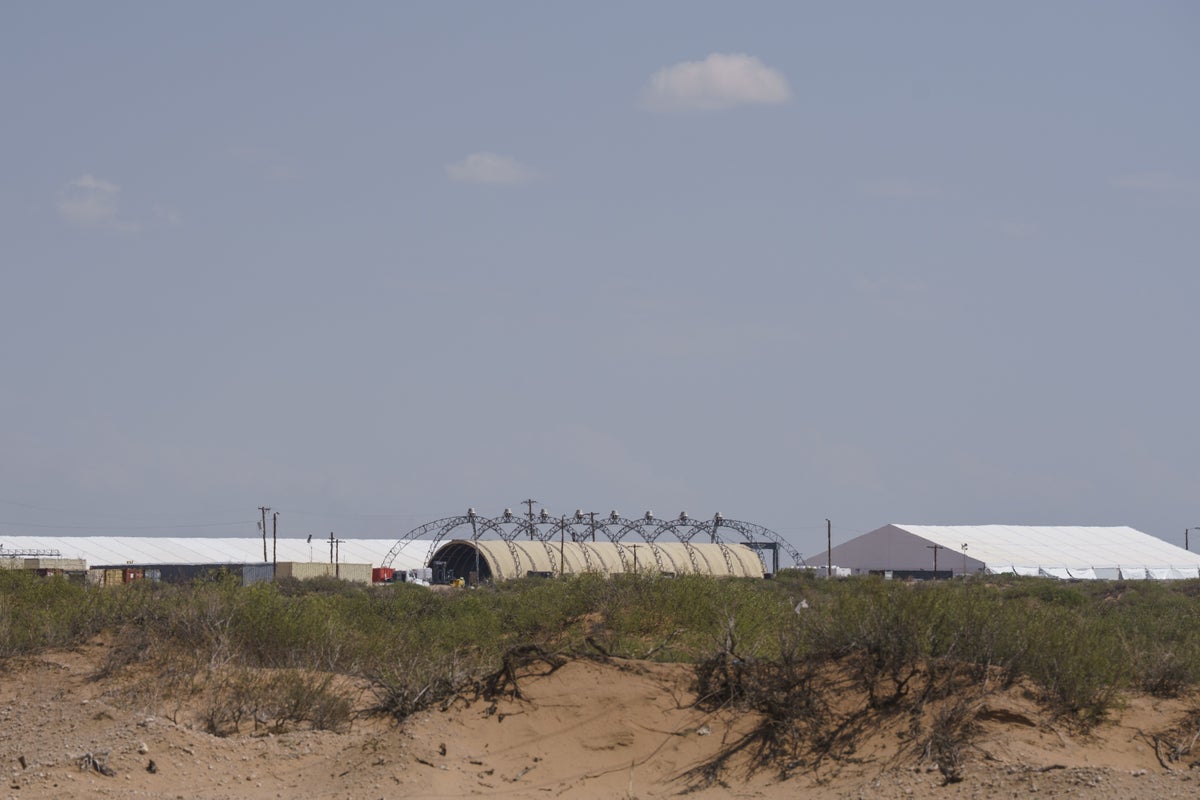
The Camp East Montana detention facility under construction on the U.S.-Mexico border in El Paso, Tex., on August, 2025.
Paul Ratje/Bloomberg/Getty Images
This week a U.S. Immigration and Customs Enforcement (ICE) facility in El Paso, Tex., confirmed an outbreak of measles.
At least 14 people detained at Camp East Montana, located on the Fort Bliss Army base, have tested positive for the disease and are being quarantined, NBC reported. As many as 1,500 people are currently in the facility, according to recent reports. Measles easily spreads from person to person, often through the air in close quarters. Uniquely confined places such as detention centers can promote the spread of measles and other infectious diseases, says Jennifer Nuzzo, an epidemiologist and director of the Pandemic Center at Brown University.
“Measles is extremely contagious and tends to cause explosive outbreaks in congregant settings like detention centers and prisons,” Nuzzo says. “Anytime you have a group of unvaccinated or undervaccinated people crammed into a common indoor space for an extended period, you can expect outbreaks if an infection is introduced.”
On supporting science journalism
If you’re enjoying this article, consider supporting our award-winning journalism by subscribing. By purchasing a subscription you are helping to ensure the future of impactful stories about the discoveries and ideas shaping our world today.
Vaccination is key to preventing these outbreaks, she says: Two doses of the measles, mumps and rubella (MMR) vaccine offer 97 percent protection against infection.
The Department of Homeland Security, which oversees ICE, is “closely monitoring the situation and coordinating with public health authorities to ensure appropriate medical care and containment measures and in place,” an agency spokesperson told NBC. “The health and safety of detainees, staff and the community remain a top priority.”
In a statement, Representative Veronica Escobar of Texas, whose district in El Paso encompasses Camp East Montana, said another 112 people in the facility are being isolated. “In addition to the thousands of detainees housed at [Camp East Montana], there are likely hundreds of El Pasoans employed there, along with 56 members of the Texas National Guard,” Escobar said in the statement. “Despite what I was initially told about the level of medical care inside the facility, it became very clear to me early on that serious medical issues were being overlooked and, in some cases, medical attention was non-existent for urgent health issues.”
In response to the outbreak, the facility has been closed to visitors and legal advisers and isn’t expected to reopen until March 19, according to the local news station FOX 7 Austin. In her statement, Escobar expressed concern that those detained in the facility have only been able to communicate with lawyers virtually.
At press time, the DHS has not responded to Scientific American’s request for comment. Camp East Montana—the country’s largest ICE detention center—is run by a private company, Acquisition Logistics. The DHS is reviewing whether to close the center permanently, the Washington Post reported on Wednesday.
In early February DHS officials had confirmed the detection of two measles cases in people held at another immigration detention center in Dilley, Tex., which triggered the cessation of all movement in the facility and the quarantine of infected individuals.
These measles outbreaks have occurred amid an alarming rise in the disease across the U.S. The Centers for Disease Control and Prevention has already reported 152 outbreaks across 45 states and jurisdictions this year—and these have included rapidly spreading ones in South Carolina and Florida. Last week the U.S. hit a troubling milestone: the country surpassed 1,000 confirmed measles cases just two months into 2026. That’s nearly half of all infections reported in 2025, which saw the highest rates since measles was officially declared eliminated in the U.S. in 2000. If this trajectory continues, experts say the U.S. will likely to lose its measles-free status, which it earned through widespread MMR vaccination campaigns. A meeting to determine that status has been postponed until November.
It’s Time to Stand Up for Science
If you enjoyed this article, I’d like to ask for your support. Scientific American has served as an advocate for science and industry for 180 years, and right now may be the most critical moment in that two-century history.
I’ve been a Scientific American subscriber since I was 12 years old, and it helped shape the way I look at the world. SciAm always educates and delights me, and inspires a sense of awe for our vast, beautiful universe. I hope it does that for you, too.
If you subscribe to Scientific American, you help ensure that our coverage is centered on meaningful research and discovery; that we have the resources to report on the decisions that threaten labs across the U.S.; and that we support both budding and working scientists at a time when the value of science itself too often goes unrecognized.
In return, you get essential news, captivating podcasts, brilliant infographics, can’t-miss newsletters, must-watch videos, challenging games, and the science world’s best writing and reporting. You can even gift someone a subscription.
There has never been a more important time for us to stand up and show why science matters. I hope you’ll support us in that mission.