


Conny Waters – AncientPages.com – Researchers conducted an important study on water management in the ancient Mayan city of Ucanal, an archaeological site of the ancient Maya civilization. It is located near the source of the Belize River in the Petén department of present-day northern Guatemala.

Image credit: Wikipedia – CC BY-SA 2.5
By integrating geochemistry and paleolimnology, PhD student Jean Tremblay examined both archaeological evidence and social dynamics related to water access and status-based inequalities in this densely populated pre-Hispanic urban center. His study was conducted between 2018 and 2024, under the guidance of Université de Montréal archaeology professor Christina Halperin.
The research focused on three distinct reservoirs at the Ucanal site in northern Guatemala: Aguada 2, which supplied a wealthier district; Aguada 3, located in a less affluent neighborhood; and Piscina 2, which was part of the city’s drainage infrastructure.
Sediment samples from these reservoirs were analyzed for indicators of biological pollution—such as cyanobacteria and fecal matter—as well as signs of chemical contamination.
The study contributed with valuable insights into how ancient Maya communities managed essential resources amid social stratification.
The research reveals a fascinating Mayan paradox. For almost 1,500 years, the people of Ucanal had access to water free from biological contaminants—even during the Terminal Classic period, when Ucanal thrived as other Mayan centers declined. This success was due to careful hydraulic engineering and effective management of visible pollutants, demonstrating a long-standing commitment to water quality.
Yet despite their technical expertise in maintaining biologically clean water, widespread mercury contamination was present. All reservoirs contained mercury levels far above toxic thresholds. The primary source was cinnabar—a mercury-based pigment integral to Mayan rituals—which introduced invisible pollution that filtration systems could not remove.
This highlights how Ucanal achieved a millennium of biologically clean water, yet still faced significant challenges from chemical contamination.
Throughout Ucanal’s history, its reservoirs remained free of cyanobacteria—commonly known as blue-green algae—a challenge that was well-documented in other parts of the Mayan world. This achievement can be attributed to the Maya’s ability to recognize biological contaminants with the naked eye.
As Tremblay noted, “The Maya knew about cyanobacteria, and these algae are clearly visible. The Maya could deal with bacteria they could see.”
The Mayan water supply systems were thoughtfully engineered to address such issues. For example, the monumental Aguada 2 reservoir, located on elevated ground, incorporated a natural filtration system: rock-filled inlet channels filtered out sediment and waste before it entered the reservoir. Preliminary studies also indicate that these basins were surrounded by vegetation. According to Halperin, “Shade keeps the water cooler,” which is significant because warmer water encourages cyanobacteria growth.
These design choices reflect a sophisticated understanding of environmental management and highlight how ancient engineering practices helped maintain clean water supplies in Ucanal.
The analysis demonstrates the effectiveness of the studied features. Carbon-to-nitrogen ratios reveal that the organic matter present originated primarily from terrestrial plants, rather than algae. The primary limiting factor for algal growth was identified as a lack of phosphorus. Importantly, there were no indications of eutrophication—a process where excessive phosphorus leads to harmful algal blooms and ecosystem degradation.
Another notable finding was the near absence of fecal contamination in drinking water reservoirs. By examining biomarkers such as coprostanol, researchers reconstructed historical sanitation practices. Even during times of high population density, Aguada 2 exhibited low levels of fecal contamination, suggesting efficient human waste management systems were in place. The evidence points to the likely use of sealed waste pits located outside water catchment areas—an uncommon practice for densely populated pre-industrial cities.
Aguada 3 stood out as an exception among the reservoirs studied.
Located within a residential area, it showed contamination levels similar to those found in polluted lakes today. According to Tremblay, “This reservoir was used as a small waste pit.” Analytical findings indicate the presence of broken ceramics, domestic refuse, and even evidence of a disturbed human grave. These discoveries suggest that Aguada 3 served primarily for artisanal activities or wastewater collection rather than as a source of drinking water.
In contrast, Piscina 2 was linked to a major drainage canal and benefited from consistent water flow and aeration. This circulation helped minimize contamination despite its location within an urban environment.
The red poison: pervasive and invisible
Beneath the seemingly pristine surface, a troubling issue was uncovered: extensive mercury contamination affected all reservoirs, sediment layers, and neighborhoods in Ucanal. Nearly every sample collected surpassed toxicity thresholds for aquatic environments.
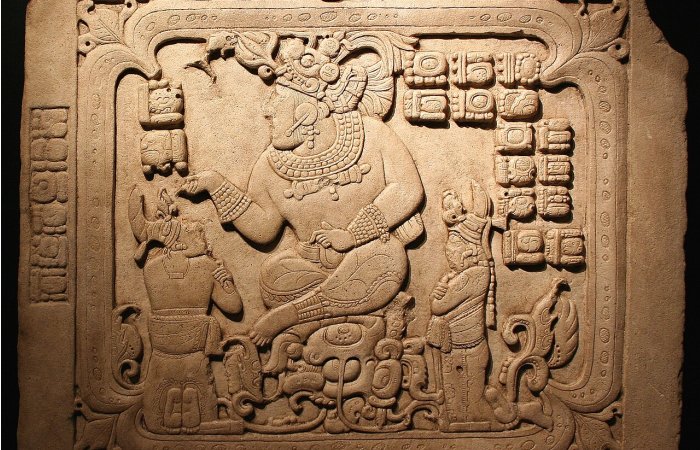
Researchers traced the contamination to cinnabar—a vivid red pigment made from mercury sulfide that was widely used throughout the Mayan world. According to Halperin, its color evoked blood and held deep significance in Mayan cosmology, where themes of blood, life, and death were ever-present.
Cinnabar adorned steles, buildings, prestigious artifacts, and even corpses. Over time, rainfall washed this pigment into the soil and water systems. By the Terminal Classic period, mercury concentrations in major basins had increased by more than 300 percent.
This surge coincided with expanded trade networks and broader access to ritual objects; as Halperin noted, cinnabar use extended beyond elites—exposing much of the population to its effects.
See also: More Archaeology News
Unlike biological pollutants that might alter water’s appearance or smell, mercury is imperceptible without scientific analysis. Tremblay explained that people at the time had no means of detecting its toxicity: “It didn’t cloud the water or turn it red.” Once dissolved in water sources, mercury easily bypassed even the most advanced filtration methods available during that era.
This paradox—water that was biologically safe but chemically toxic—reflects the limits of ancient knowledge, even though the Maya of Ucanal planned, looked ahead and managed their resources carefully.
“They didn’t live day by day,” said Tremblay. “That’s why their civilization survived for 2,000 years.”
Source
Paper 1
Paper 2
Paper 3
Written by Conny Waters – AncientPages.com Staff Writer