

An Australian travel industry expert has urged passengers to not cancel flights despite ‘significant disruptions’ to global aviation following US-led airstrikes on Iran.
US President Donald Trump on Saturday confirmed Iran’s leader had been killed in the strikes and urged Iranians to rise up and overthrow the regime. Retaliatory attacks by Iran have been persistent across the Middle East since, with missiles and drones striking Israel and the United Arab Emirates where hotels and airports were hit.
At Zayed International Airport in Abu Dhabi, one person was killed and 11 injured from falling debris, while Dubai International airport – the world busiest – also suffered minor structural damage.
Qatar, Bahrain, Jordan and Kuwait also said they had intercepted missiles fired towards them. Hundreds of flights have been grounded and all airlines are avoiding flying over the region, formerly one of the busiest air corridors in the world.
Sydney airport on Saturday night was filled with stranded travellers whose flights were cancelled. Virgin Australia said on Sunday seven of its flights which were jointly operated by Qatar Airways had been cancelled along with five on Monday.
Dean Long, Australian Travel Industry Association chief executive, said 11 per cent of international travel out of Australia goes through the Middle East as it’s the top connection point for for Europe.
But he warned travellers to not cancel their flights and rather let the airlines do it for them, because that way refunds are guaranteed and the airlines will also be more helpful with arranging alternative bookings.
‘It’s the number one learning from Covid, if you cancel your flights you do lose a number of consumer rights and protections that you have… So it’s really important that even if you’re nervous, do not cancel your flight,’ he told The Australian.

Australian travellers have been warned not to cancel their flight amid travel disruptions in the Middle East

The usually busy airspace over the UAE has been cleared since Saturday

Passengers are guaranteed full refunds if the airlines cancel rather than if they choose to cancel
Travel insurance companies will also not pick up the tab if a customer cancels their flights on their own.
Cover for conflict zones it not standard in the industry as would encourage travellers to take unnecessary risks.
A recent Finder analysis of 22 major Australian travel insurance providers found none that offered standard cover for war-related events.
The Australian government has issued a ‘do not travel’ advisory for Qatar and the UAE but major airlines are continuing to fly to Europe using flight paths that avoid the region.
Virgin Australia has been offering refunds, travel credits and alternative bookings for customer whose Qatar Airways operated flights have been cancelled, while Etihad was offering booking changes on flights it has suspended on Sunday.
Qantas has said there is no impacts to its flights to London.
Australian Airports CEO Simon Westaway said airports across the country were holding 30 aircraft that had been grounded following Middle East flight cancellations.
He said there would be ‘significant disruptions’ to international travel over the next week.

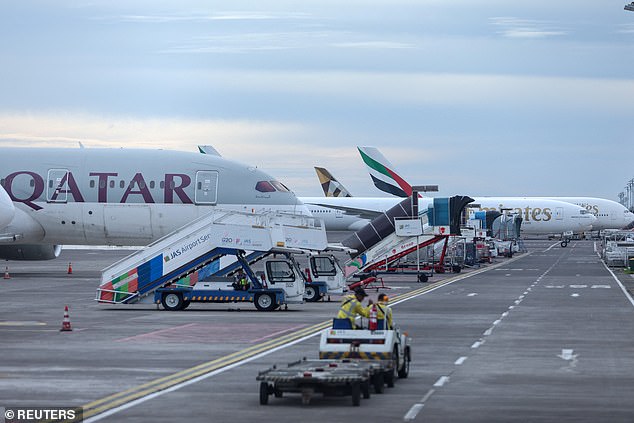
Emirates planes parked on Dubai International airport on March 1

In Dubai the Burj Al Arab (above) and Palm Jumeirah hotels were struck by drones

Dubai International aiport suffered minor damage at the weekend (pictured)