

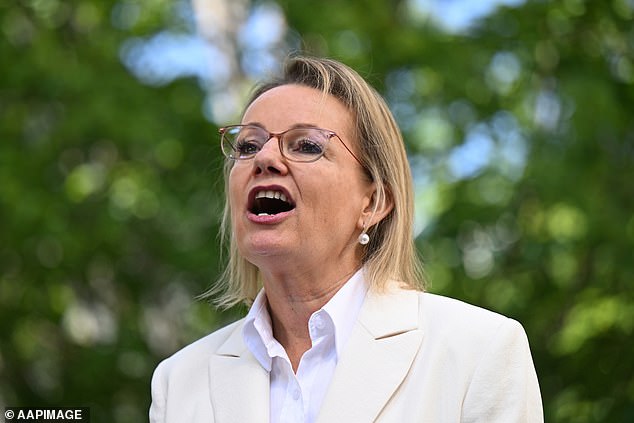
Sussan Ley’s resignation from Parliament doesn’t just end a career, it triggers a retirement perk most Australians can only dream about.
It’s the kind of old-school Canberra entitlement so generous it was shut off to new MPs two decades ago because it was considered indefensible.
The problem is it still exists for those who got in early enough, protected by a cut-off date that slammed the door behind them.
Ley entered the House of Representatives in 2001. That means she qualifies for the generous defined benefit arrangements closed to new members from 2004 onwards, to the tune of around $220,000 every year.
When Albo retires, he’ll get the same benefits because he entered Parliament back in 1996. Only his payout will be much higher.
Anyone elected after 2004 is on something much closer to what everyone else receives, albeit at the still-generous public service contribution rate of 15.4 per cent. That includes the new opposition leader, Angus Taylor.
The old scheme rewards staying in Parliament long enough to maximise the perk. Climbing the ministerial ladder helps too.
Achieving anything in the roles held is neither here nor there. The rate increases with years of service and tops out at 75 per cent of an MP’s salary once they reach 18 years in Parliament.
Ley’s 25 years takes her well past that, and her time in the ministry, as well as serving as deputy opposition leader and opposition leader, helps inflate the package even further.

Sussan Ley’s resignation from Parliament doesn’t just end a career, it triggers a retirement perk most Australians can only dream about.
The way the parliamentary pension is calculated is designed to sound technical so that people tune out. It’s calculated off the parliamentary allowance used for super purposes, not the headline base salary.
Right now that is $189,300, 75 per cent of which is $141,975 a year, indexed, for life.
Ley gets all of that, but she also receives top-ups for her time on various frontbenches as well as periods in party leadership roles.
She has been serving on frontbenches since John Howard’s final term as prime minister, which ended in 2007.
A retirement income of about $142,000 a year for a long-serving MP who never became a minister, indexed for life, is generous enough. But in the defined-benefit world of old Parliament, that is merely the starting point.
What comes next pushes the benefit into the truly eye-watering category. The additional pension for ministerial or office holders accrues at 6.25 per cent of salary for each year the position is held. The combined additional pensions cannot exceed 75 per cent of the salary for the highest-paying office the recipient held.
So in Albo’s case, he’ll be hoping to retire on about 75 per cent of his $600,000 Prime Minister’s salary. For Ley, the generosity doesn’t go quite that far. She’ll walk away with a pension for life of around $220,000 every year.
The formula doesn’t ask whether those years in office produced reform, revealed competence, or created any legacy the electorate might want to reward. It asks only whether the title was held, and for how long. Survive and rise, and the cheques will keep coming for life.

When Albo retires, he’ll get the same benefits because he entered Parliament back in 1996. Only his payout will be much higher
In Ley’s case, she has been eligible for her pension since turning 55, meaning she receives it immediately upon leaving Parliament.
She didn’t have to reach retirement age to access it, like the rest of us do with our far less generous superannuation savings.
Oh, and retired politicians can keep working without it affecting their parliamentary pensions, again unlike the rest of us and our super.
Many do, working as consultants and lobbyists trading off their connections. What a system.
The tax treatment adds another layer of disconnect. From age 60, retired politicians qualify for a 10 per cent tax offset on the portion of the annual pension below the defined benefit income cap.
It’s not entirely tax-free, but it’s a concession the rest of us certainly don’t get. Meanwhile, the government has been increasing super taxes on everyday Australians while claiming it can’t do the same for generous parliamentary pension recipients. Go figure.
When politicians say they should live under the same rules as everyone else, this is the moment the slogan collapses under the weight of its own hypocrisy.
But wait, the lurks and perks don’t end there. A retiring politician is entitled to convert up to 50 per cent of their parliamentary pension into a lump sum.
The lump sum is calculated by multiplying the annual amount by ten. So if Ley is receiving $220,000 a year for life, she can choose to take $1.1 million right now up front and still receive $110,000 annually for life. Not bad.
That’s not just a generous retirement handout. It’s a choose-your-own-adventure version of generosity.
This is not superannuation as most Australians understand it. It’s a taxpayer-funded entitlement that rewards longevity rather than legacy.
It remains a cost to taxpayers because Parliament once wrote rules for itself that later became too embarrassing for the next generation of MPs to defend on television.
But guess what? Those who don’t receive benefits like the ones Ley is about to enjoy still complain about missing out, lamenting that they arrived too late.