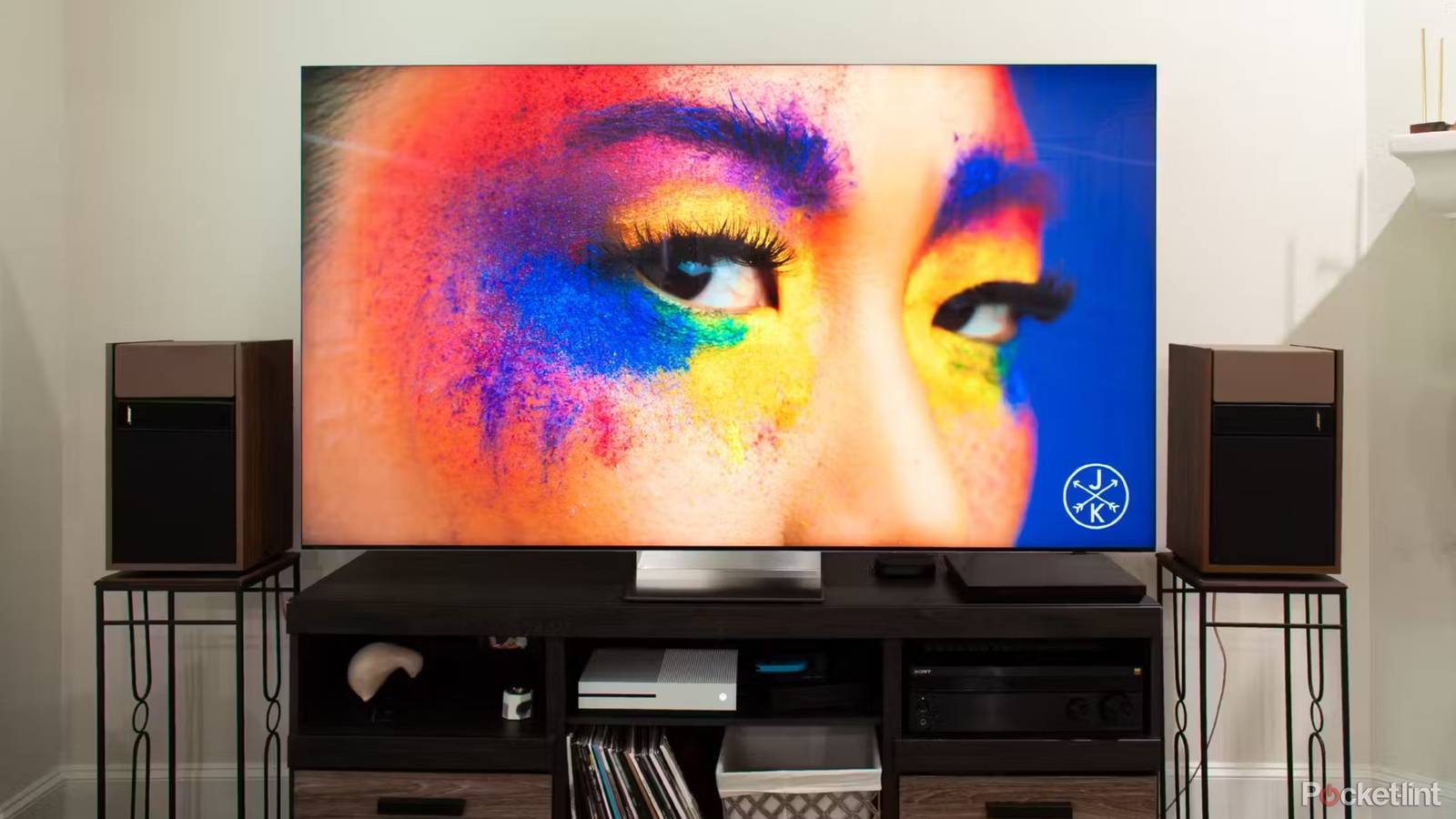
On paper, 8K resolution sounds like the obvious next step for TV technology. The past couple of decades have largely been defined by resolution jumps — first from 480p to 720p, then to 1080p and 4K. In fact 8K TVs have been on the market for a few years already, so you might think that the days of everyone having 8K in their home would be right around the corner.
It isn’t selling that well, as it turns out. There are several obstacles in the way. The first is that a lot of movies and shows either haven’t been shot in 8K or haven’t been remastered for it. That means there isn’t much content for streaming services to host, and they might be reluctant to host it anyway, given the massive increase in storage and bandwidth required. Without much to watch, there hasn’t been much reason for shoppers to spend extra on 8K panels when they could get more out of a 4K OLED or mini-LED set. TCL, Sony, and even LG have withdrawn from the 8K market, leaving Samsung as the one major player remaining.
If higher resolutions aren’t the future of TV though, what is? There are several trends you should be paying attention to, although not all of them are guaranteed to persist into the 2030s.
MicroLED and RGB mini-LED
All the OLED flavor with none of the fat

For a while now, OLED has been considered the gold standard in consumer TVs, mainly because of one trait: self-illuminating pixels. Without the need for backlights, OLED TVs can achieve perfect contrast, including deep, inky blacks. By extension this helps with color accuracy, since colors aren’t lightened or bleeding into each other.
The major downside, however, is that the organic material in OLED panels is susceptible to issues like burn-in and, over time, diminished brightness. MicroLED and RGB mini-LED are purely synthetic technologies that offer most or all of the benefits of OLED, with a few definite advantages.
Expect RGB mini-LED to gain more traction first. This is an evolution of the standard mini-LED technology, replacing white or blue backlights with dedicated red, green, and blue LEDs. The result is even better color accuracy — Samsung and TCL claim 100% of the BT.2020 color gamut — combined with brightness that’s leagues beyond most OLED sets. TCL says it expects its models to hit up to 9,000 nits. For a point of comparison, even the 3,000 nits on my Apple Watch Ultra 2 is perfectly readable in the midday sun.
RGB mini-LED is very costly going into 2026, but prices should come down towards the end of the year as more models launch.
MicroLED should take over in the long term, trouncing OLED completely by using LEDs for each individual pixel. The issue at the moment is efficient production — it’s even more expensive and difficult to manufacture than RGB mini-LED, so the few MicroLED TVs on the market are absurdly out of reach, priced as much as a car — sometimes in the six-digit realm. It may take several years for MicroLED production to scale to a point that it can be as affordable as OLED.
RGB mini-LED is also very costly going into 2026, but prices should come down towards the end of the year as more models launch. By the end of 2027, you may be eyeing one for your next upgrade.
Dolby Vision 2 and HDR10+ Advanced
Better HDR for the masses

You might be thinking that there’s no need for yet another set of HDR (high dynamic range) standards, given that Dolby Vision and HDR10+ look great on many TVs. “Many” is the operative word here, though. This doesn’t always work out as intended, with some viewers complaining about issues like crushed or too-dark shadows. Through upgrades like better tone mapping and motion smoothing, Vision 2 and HDR10+ Advanced are intended to look great on a range of compatible TVs, from budget models through to the newest ultra-bright TVs.
Some very different approaches are involved. Dolby’s emphasis is on giving studios more control, allowing them to specify metadata in extreme detail. HDR10+ Advanced relies more heavily on adaptive AI, although metadata has hardly been taken out of the equation.
The big catch here is that while some existing TVs may be able to support these standards via a software update, most of us will have to wait for TVs going on sale later this year. Vision 2, at least, is dependent on a certain level of processor power that most TVs lack.
Stepping up the AI race
Maybe it’ll actually be useful

AI has actually been crucial to smart TVs for several years at this point, mostly in image processing. Unless you turn on Filmmaker Mode or Game Mode, AI algorithms are constantly at work to present the best possible picture, including upscaling for video below your TV’s native resolution. It’s in other places of course, such as audio boosts, voice assistants, and smart home integration, but you can often ignore those if you like.
Clearly, TV makers and platform holders aren’t content with that. I’ve already talked about HDR developments, but in the next few years, you can also expect generative AI assistants like Google Gemini and Amazon Alexa+ to become more powerful and widely available. The goal is to enhance options for settings and search, as well as encourage you to ask general questions, in the same way you might with a chatbot on your phone or PC. I doubt that particular aspect is going to take off in a huge way, but it does make sense to be able to search for “dark comedies like Dr. Strangelove” and get meaningful suggestions.
I’m predicting that some efforts will stick around longer than others. Often, ambitions for other platforms have overshot what AI is actually capable of, leading to some backtracking or outright failures, such as the Humane AI Pin. Practical execution will dictate how much further AI goes in your living room.
Huge TVs
How big is too big?

As recently as a decade ago, a 50-inch TV was considered huge. Today, though, that’s almost small. 60- and 65-inch TVs are increasingly common, and it’s possible to buy a 98- or 100-inch TV without breaking the bank, although you might end up sacrificing some features in the process.
The major pattern I’m expecting isn’t so much new sizes, as larger sizes continuing to become more affordable.
Trendwise, the major pattern I’m expecting isn’t so much new sizes, as larger sizes continuing to become more affordable. This is already in action with 70-inch formats, so it’s not inconceivable that in a few years, you might be able to pick up an 85- or 90-inch TV that’s neither a compromise nor reckless spending.
There may be some ceiling to this, naturally. Larger screens tend to be more expensive not just because of the extra materials involved, but the difficulty of manufacturing and shipping them. You can already buy 115-, 116-, and 120-inch TVs, yet even without MicroLED or RGB mini-LED, they can still cost as much as a new motorcycle. And past certain dimensions, TVs can be completely unwieldy for the average room anyway, limiting their demand. I doubt that a 120-inch TV would fit on my living room wall.