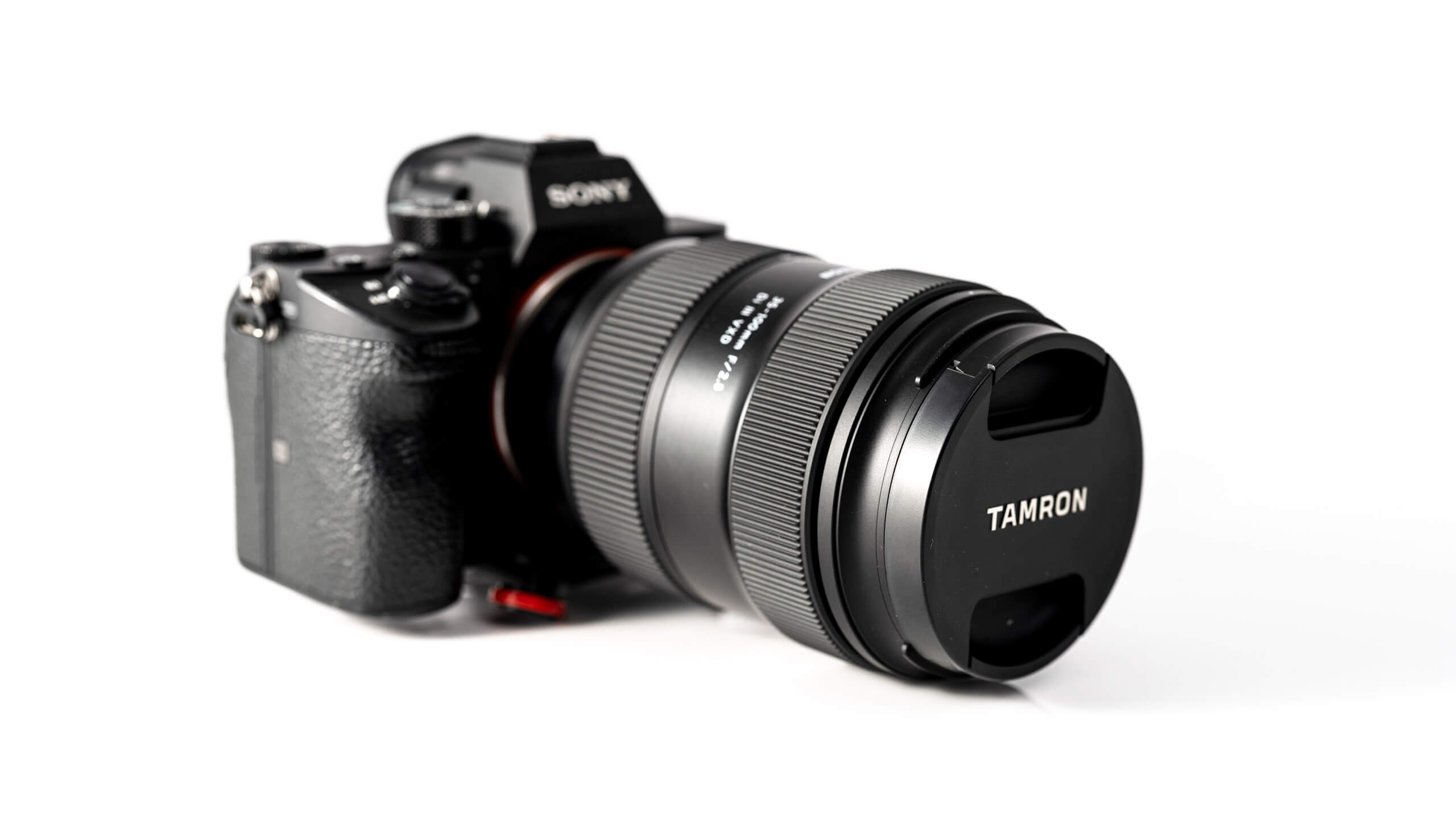
For Sony E-mount and Nikon Z-mount Full-Frame Mirrorless.
When a lens promises constant F2.8, full-frame coverage, and a compact design, I’m interested. When it actually delivers on all three, I pay attention.
The new Tamron 35–100mm F/2.8 Di III VXD (Model A078) for Sony Corporation E-mount and Nikon Corporation Z-mount mirrorless cameras is designed for photographers who live in that 35–100mm range, especially portrait, event and travel shooters.
I’ve tested both the Sony and Nikon versions, and this lens feels like a thoughtful response to photographers who want professional image quality without carrying a brick all day.

Why a 35–100mm F2.8 Zoom Makes Sense
I get it though, it feels like a weird focal range. Most lenses being with 24-70 or 70-150mm (or similar). But when you think about it, most photographers don’t spend their day at 150mm or 200mm. We move between:
- 35mm for environmental portraits
- 50–70mm for natural perspective
- 85–100mm for flattering compression
This lens focuses on the focal lengths most portrait photographers actually use. Instead of stretching longer, it trims the range and keeps the weight down.
For travel photography, creative portraits, workshops and events, that’s a smart trade-off.

Key Specifications
Model: A078
Focal Length: 35–100mm
Maximum Aperture: F2.8
Minimum Aperture: F22
Optical Construction: 15 elements in 13 groups
Minimum Object Distance:
- 0.22m (wide)
- 0.65m (tele)
Maximum Magnification Ratio:
- 1:3.3 (wide)
- 1:5.9 (tele)
Filter Size: 67mm
Aperture Blades: 9 (circular diaphragm)
Length:
- 119.2mm (Sony E)
- 121.5mm (Nikon Z)
Weight:
- 565g (Sony E)
- 575g (Nikon Z)
Autofocus: VXD linear motor
Size and Weight – Finally, a Manageable F2.8
At just over half a kilo, this is noticeably lighter than many traditional 70–200mm F2.8 lenses.
Mounted on a Sony full-frame body, it feels beautifully balanced. On Nikon Z, it’s fractionally longer and heavier, but in real-world shooting the difference is minimal.
If you shoot long sessions, travel regularly, or teach workshops where you’re constantly moving, this weight reduction matters. Your wrists will thank you. Mine did.

Image Quality – Sharp and Flattering
Wide open at F2.8, sharpness is excellent in the centre and very good toward the edges. Skin texture is rendered cleanly without feeling overly clinical.
What stands out:
- Strong centre sharpness
- Smooth fall-off into background blur
- Pleasant compression at 85–100mm
- Natural, soft bokeh thanks to the 9-blade diaphragm
For portrait photography, this balance of clarity and softness works beautifully.
Autofocus Performance – Fast and Confident
The VXD (Voice-coil eXtreme-torque Drive) system delivers quick, accurate autofocus for both stills and video.
During testing:
- Eye AF locked reliably
- Tracking remained consistent
- Focus acquisition was fast and silent
For moving subjects, it keeps up without hunting or hesitation, and probably would be good for candid portraits or events.
Close Focusing – More Versatile Than Expected
The 0.22m minimum object distance at 35mm is genuinely useful. Even for happy snaps in e garden with the dogs, flowers and more, I found it quiet versatile.
You won’t get macro-level magnification, but it’s ideal for:
- Tabletop photography
- Detail shots at events
- Creative close portraits
- Travel detail work
If you like blending portrait and still life in your work, this adds flexibility without needing a second lens.
Build Quality and Handling
Tamron has refined the exterior design, and the lens feels solid without being heavy.
Features include:
- Moisture-resistant construction
- Fluorine coating on the front element
- Unified 67mm filter size
- Smooth zoom and focus rings
That 67mm filter thread is a practical bonus, especially if you already use other Tamron lenses.

Sony vs Nikon Version – Is There a Difference?
I tested both mounts, and performance feels consistent.
- Optical quality is comparable
- Autofocus performance is equally strong
- Handling feels well-matched to each system
The only noticeable differences are the slight size and weight variation. In practice, both versions perform equally well.
Sample images below taken on Nikon Z6iii.
Pros and Cons
Pros
- Compact and lightweight for a constant F2.8 zoom
- Excellent portrait focal range
- Strong sharpness wide open
- Smooth, flattering bokeh
- Fast and reliable autofocus
- Useful close focusing
- Weather-resistant build
- 67mm unified filter size
Cons
- Stops at 100mm rather than extending to 135mm or 150mm
- No built-in optical stabilisation
- May not suit photographers needing longer telephoto reach
These aren’t flaws, they’re design choices. This lens prioritises portability and practicality over extended telephoto range.
Who Is the Tamron 35–100mm F2.8 For?
This lens is ideal for:
- Portrait photographers
- Event and wedding photographers
- Travel photographers
- Hybrid photo and video creators
- Anyone wanting a lighter alternative to a 70–200mm F2.8
If your work lives between 35mm and 100mm, this range makes a lot of sense.