


Traditionally, the emphasis in the home theater space has been on dedicated speakers, and with good cause. Early on, headphones were only ever useful for stereo output, and no one wanted to snake a long 3.5mm cable across their living room. Even today, though, you need separate speakers for true multi-channel surround sound, and it’s just generally more convenient to have audio going without slapping something on your ears.
With that said, there are still moments when listening with headphones can be the best way to experience a movie. It often depends on having the right gear, and the right circumstances aligning, both of which I’ll go into. You might, however, find yourself gravitating towards headphones even when there’s a Dolby Atmos soundbar sitting under your TV.
Before I get into the meat of things, I should note that I’m including earbuds under my definition of headphones. You’ll sometimes see people define headphones as having over- or on-the-ear cups, but in 2026, that seems needlessly restrictive given what the top earbuds are capable of.
What makes movies with headphones great
Immersion, privacy, and more

Sometimes, of course, headphones are a practical necessity. If you’ve got a partner or child in your home, there’s a decent chance that one of you is headed to bed earlier, and anyone who’s still awake faces the choice of either wearing headphones or cranking down speaker volume until it can be hard to make out dialogue. It’s also plain disappointing when a bombastic action movie sounds more like it’s playing in your neighbor’s house.
Intentionally choosing privacy has its merits, though. For one, it allows you to watch movies solo without judgment from anyone who would otherwise be in earshot. One of my favorite movies is The Witch — but as anyone who’s seen it can tell you, the audio alone can disturb people. Headphones allow you to be a little more experimental with your tastes, even if you might still need to glance over your shoulder occasionally during some scenes.
For me, the greatest advantage is simply immersion. A good speaker setup can be tremendously immersive, but there’s always the chance of some distraction. In a downtown apartment, it could be an ambulance rushing by, or an angry driver leaning on their horn. In my current house, the movies I watch sometimes have to compete with my son wandering around with his iPad. I’m usually content to pause and wait if I have to, but it would be easier to maintain the mood and tension of a story if I didn’t have to interrupt it two or three times.
For me, the greatest advantage is simply immersion. A good speaker setup can be tremendously immersive, but there’s always the chance of some distraction.
Headphones can even deliver better spatial audio, too. While it’s true that you need separate front, rear, and/or ceiling channels to get the real deal, that’s not always practical or affordable, and having drivers right next to you ears makes it surprisingly easy for virtual surround tech to fool you. I remember watching the Apple TV series Masters of the Air on an airplane, and being suitably impressed by the roar of B-17 engines around me.
On the flipside of that spectacle, a minor benefit is that you can pick up on small nuances. Some directors will intentionally fill scenes with subtle effects, music cues, or background conversations that can be harder to pick up on with a booming speaker setup. If you’re the sort of person who has a tough time hearing any dialogue clearly, headphones can be a way of avoiding subtitles for everything you watch. I wonder if this wouldn’t solve one of the complaints about Christopher Nolan’s Tenet, having not experimented with that myself yet.
As I mentioned, though, the circumstances sometimes have to align just right. Many TVs and media streamers aren’t designed to handle multiple headphones at once, so you’ll probably be watching solo, or at best with one other person. That makes headphones a no-go for parties or family nights. Moreover, some genres are better experienced with headphones than others. They’re great for thrillers or folk horror — but comedies are usually more entertaining with the sound of laughter, and it’s hard to imagine preferring headphones for a blockbuster action movie when you’ve got a powerful subwoofer sitting right there.
What sort of gear makes for the best listening?
Shop carefully for headphone specs

I actually want to avoid being too specific about hardware recommendations, but if you’re interested in listening with a partner, your shopping may need to begin with other TV add-ons. Dual-listener Bluetooth is built into some smart TVs, such as Samsung models released in 2022 or later — but otherwise, expect to buy a Bluetooth transmitter that supports multiple connections, or a media streamer with similar functionality. The Apple TV 4K, for instance, supports dual listeners as long as they’re using AirPods or Beats products.
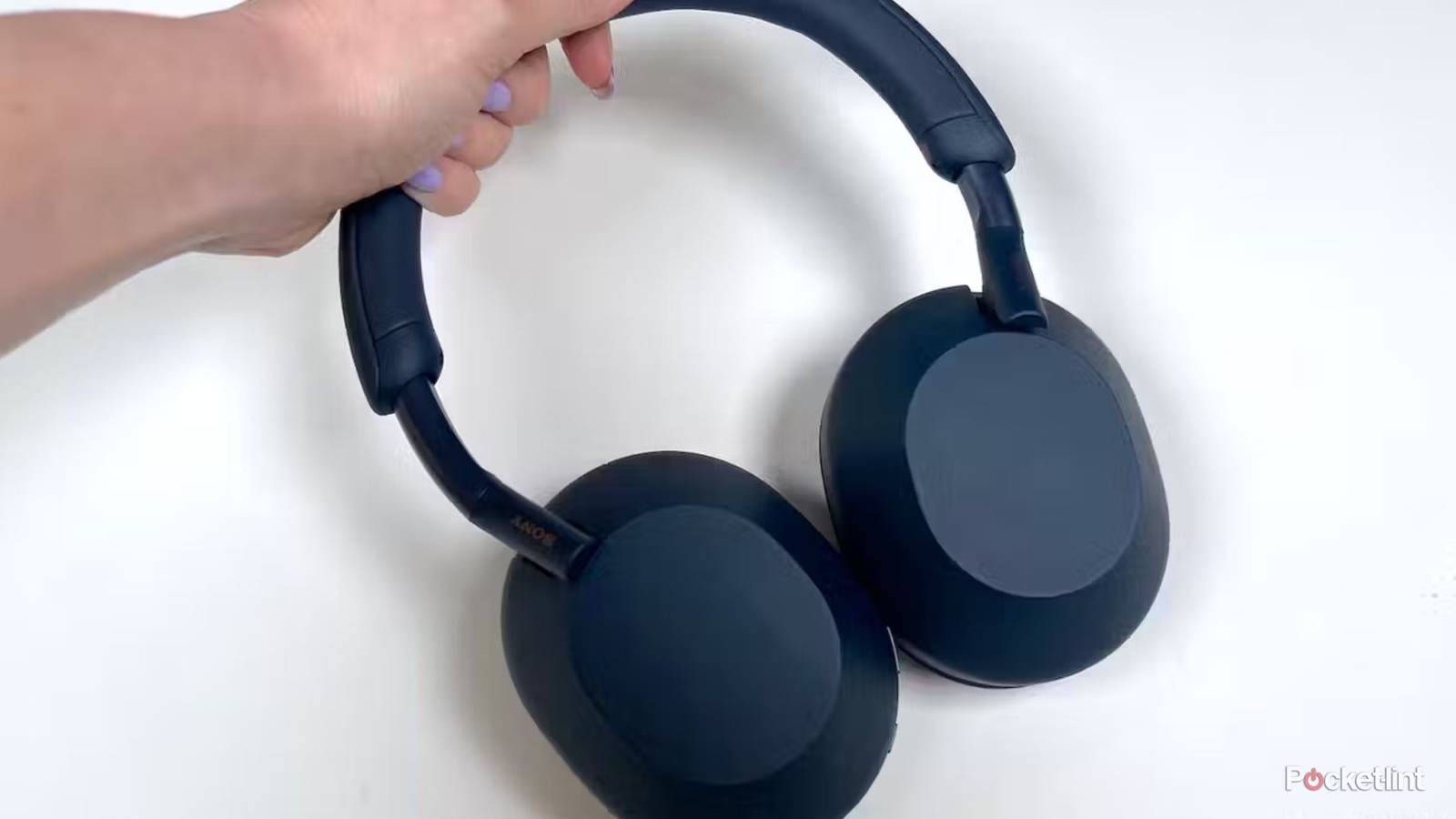
When it comes to the headphones themselves, it’s important to be picky about several things, leading with clarity and bass response. Although a lot of models are clear enough for music and podcasts, it’s essential to step things up a notch if you expect to understand dialogue mixed in with other audio layers. As for bass, you can’t replicate the visceral impact of a subwoofer, but there should be some serious punch in your headphones without it overwhelming other frequencies. For these reasons, you should prefer headphones with an app-based customizable EQ, or at least presets that can boost bass or vocal levels.
Some headphones are fine for a short period of time, but can put too much pressure on your head after a couple of hours, and/or make you sweaty even when the AC is turned down.
Active noise cancellation is often a must-have. Even if you don’t live in a noisy environment, you might be surprised at how much more “pure” sound can be when ANC is active. That’s because it’s canceling out things like the hum of air conditioning, distant traffic, or even room tone. Ideally, any headphones you buy will also support some form of “transparency” mode, giving you the opportunity to hear if someone in your home is calling for you. I’d only consider skipping ANC if you can find a quality over-the-ear design.
Speaking of which, a factor that’s severely underrated when picking headphones for movies is comfort. Some products are fine for a short period of time, but can put too much pressure on your head after a couple of hours, and/or make you sweaty even when the AC is turned down. You might also have the opposite problem, with a headband slipping off, or earbuds popping out. Anything you pick should be something you can imagine lasting an entire Lord of the Rings movie without a break. Not that you shouldn’t take a break — it’s just a useful gauge.
All these criteria are probably going to mean reading (or watching) a bunch of reviews. If you can, try getting some hands-on time with products at stores, or borrowing something from a friend. Perfect comfort and sound levels are often very subjective.