February 13, 2026
3 min read

Forget roses—name a roach after your valentine instead
The Bronx Zoo is celebrating 15 years of its extremely popular Valentine’s Day “Name a Roach” program
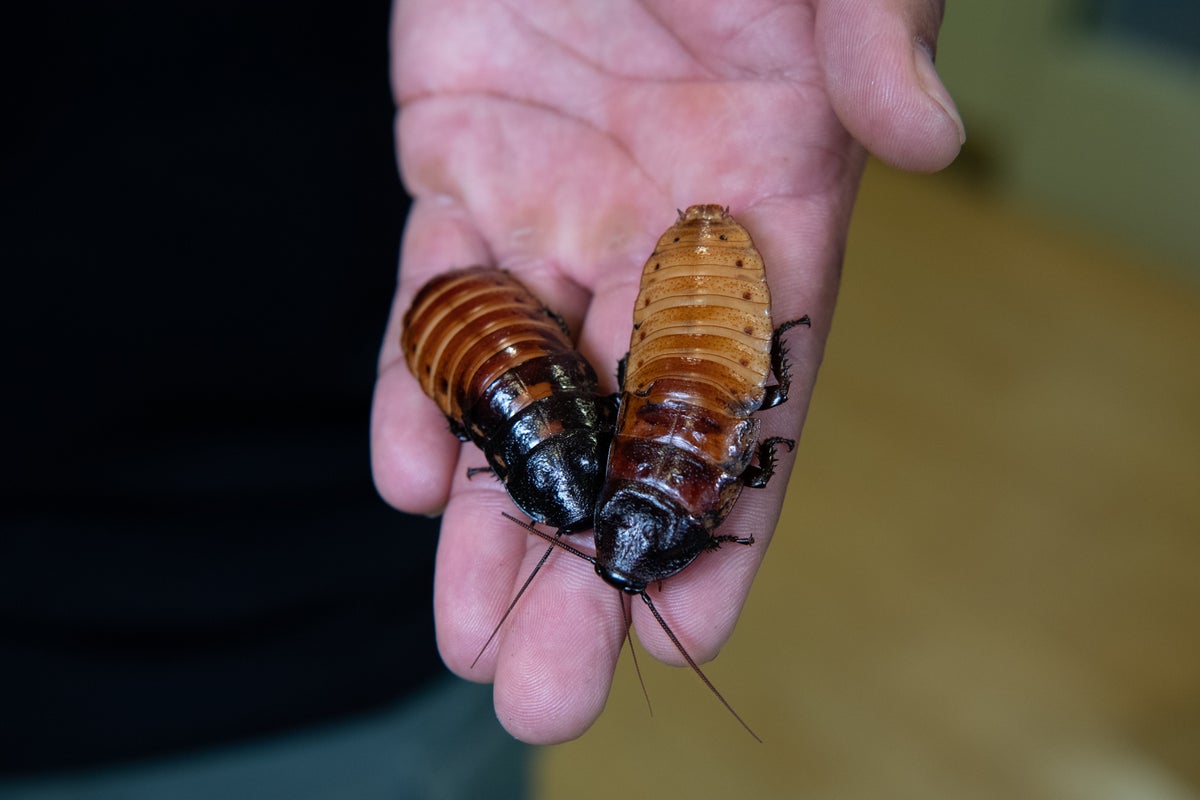
Two of the Bronx Zoo’s Madagascar hissing cockroaches.
Wildlife Conservation Society (WCS)
This Valentine’s Day, more than 2,000 hopeless romantics will gift their loved one an unforgettable memory—featuring one of the largest species of cockroach in the animal kingdom. How sweet!
Since 2011 the Bronx Zoo’s “Name a Roach” fundraising program has thrown a spotlight on the New York City institution’s Madagascar hissing cockroach exhibit. Participants give a donation to the Wildlife Conservation Society (WCS), which runs several zoos across the city, and in exchange they get to symbolically name one of the charismatic cockroaches in their loved one’s honor. On Valentine’s Day the zoo sends the recipient a certificate with the roach’s new name—and for a little extra cash, they also offer roach merch and a virtual roach encounter.
The program has garnered a surprising amount of success. “It’s very anti–traditional Valentine’s Day,” says Debbie Schneiderman, who leads the Name a Roach initiative. “But I think what we found is that people are not traditional.”
On supporting science journalism
If you’re enjoying this article, consider supporting our award-winning journalism by subscribing. By purchasing a subscription you are helping to ensure the future of impactful stories about the discoveries and ideas shaping our world today.
The Name a Roach program has made more than $1 million for the city’s zoos in its 15 years of existence, with more than 60,000 roaches named.
Why Madagascar hissing cockroaches are actually romantic
Naming a roach for Valentine’s Day is a great gag, but also these critters are capable of hissing their way into your heart. Madagascar hissing cockroaches (Gromphadorhina portentosa) are not your average New York City apartment roach. They’re larger (about the length of the palm of your hand), have a striped pattern on their backs, and have a round, charismatic, almost cute shape.
“I’m not gonna lie. It was a weird idea.”—Debbie Schneiderman, Name a Roach initiative leader
All roaches breathe through tiny openings in their exoskeletons called “spiracles.” (Fun fact: Roaches don’t have lungs.) Madagascar hissing cockroaches quickly force air out of their spiracles, which produces their classic “hissing” sound. They use this sound to communicate among their colony and when they’re disturbed, but also for romantic reasons: to attract mates.
The male cockroaches are territorial, defending females in their area and competing against encroaching rivals. “Male Madagascar hissing cockroaches grow large head horns and battle for a mate, ramming into each other while hissing,” says Mike Wrubel, a supervisor at the Bronx Zoo’s mammal department who has been caring for the roaches for almost 19 years.
As for reproduction, the keepers don’t need to tell the roaches twice. “Breeding naturally occurs,” Wrubel says.
The story behind “Name a Roach”
Schneiderman—who was there for the meeting where Name a Roach was first pitched to drum up funds during the early-winter slow season—says there was some doubt among her colleagues in the room. “It was weird,” she says. “I’m not gonna lie. It was a weird idea.”
WCS decided to try it out, but it could never have predicted its staggering popularity. Almost 6,000 people that first year wanted to name a roach. “It caught us off guard in the best of ways,” Schneiderman says.
In 2014 WCS tried to let it go, thinking the public had its fill of roaches. But it ended up receiving hundreds of unsolicited roach naming requests anyway and brought the program back.

Wildlife Conservation Society (WCS)
I can say from personal experience that these roaches can truly charm. In 2017 I named a roach for my then-in-film-school boyfriend, calling it “Francis Roach Coppola.” This Valentine’s Day, we’re celebrating 10 years together. The fact that we both look back on this fondly and not in horror makes me feel like we share a special language.
The nocturnal cockroaches are tucked away in a dark corner in the zoo’s Madagascar! exhibit. They were wriggling about, practically sparkling under the dim, warm lighting in their enclosure when I visited them this week. I almost forgot I was inches away from a wall full of cockroaches. Schneiderman says Name a Roach has brought a little notoriety to the humble insects. “We’re giving them a fighting chance to win the hearts of the public,” she says. “People are looking for them a little bit more or recognizing them, giving them the status they deserve.”
After 15 years, Name a Roach is still going strong. Every year the Bronx Zoo team brainstorms different additions to its offerings, and some of the challenges lie in choosing the right ones. (Plush toys always sell very well.) The team’s constant: love for its creepy-crawly associates. “The roaches are always cooperative,” Schneiderman says. They are very good colleagues, and they are always available to wiggle their antennae at us for moral support.”
It’s Time to Stand Up for Science
If you enjoyed this article, I’d like to ask for your support. Scientific American has served as an advocate for science and industry for 180 years, and right now may be the most critical moment in that two-century history.
I’ve been a Scientific American subscriber since I was 12 years old, and it helped shape the way I look at the world. SciAm always educates and delights me, and inspires a sense of awe for our vast, beautiful universe. I hope it does that for you, too.
If you subscribe to Scientific American, you help ensure that our coverage is centered on meaningful research and discovery; that we have the resources to report on the decisions that threaten labs across the U.S.; and that we support both budding and working scientists at a time when the value of science itself too often goes unrecognized.
In return, you get essential news, captivating podcasts, brilliant infographics, can’t-miss newsletters, must-watch videos, challenging games, and the science world’s best writing and reporting. You can even gift someone a subscription.
There has never been a more important time for us to stand up and show why science matters. I hope you’ll support us in that mission.