



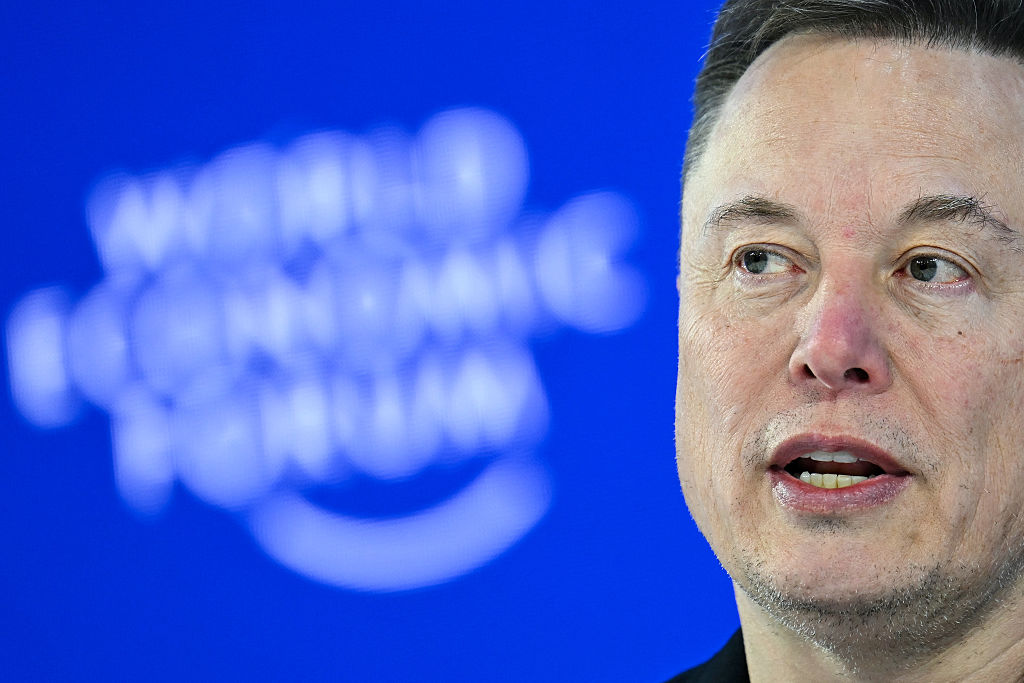
On Tuesday night, Elon Musk gathered the employees of xAI for an all-hands meeting. Evidently, he wanted to talk about the future of his AI company, and specifically, how it relates to the moon.
According to The New York Times, which reports that it heard the meeting, Musk told employees that xAI needs a lunar manufacturing facility, a factory on the moon that will build AI satellites and fling them into space via a giant catapult. “You have to go to the moon,” he said, per the Times. The move, he explained, will help xAI harness more computing power than any rival. “It’s difficult to imagine what an intelligence of that scale would think about,” he added, “but it’s going to be incredibly exciting to see it happen.”
What Musk didn’t appear to address clearly was how any of this would be built, or how he plans to reorganize the newly merged xAI-SpaceX entity that is simultaneously careening toward a potentially historic IPO. He did acknowledge, proudly, that the company is in flux. “If you’re moving faster than anyone else in any given technology arena, you will be the leader,” he told employees, per the Times, “and xAI is moving faster than any other company — no one’s even close.” He added that “when this happens, there’s some people who are better suited for the early stages of a company and less suited for the later stages.”
It isn’t clear what prompted the all-hands, but the timing, whatever its cause, is at least curious. On Monday night, xAI co-founder Tony Wu announced he was leaving. Less than a day later, another xAI co-founder, Jimmy Ba, who reported directly to Musk, said he was bouncing, too. That brings the total to six of xAI’s 12 founding members who have now left the young company. The splits have all been described as copacetic, and with a SpaceX IPO reportedly targeting a $1.5 trillion valuation coming as soon as this summer, everyone involved stands to do very well financially on their way out the door.
The moon itself is a more recent preoccupation. For most of SpaceX’s 24-year existence, Mars was the end game. This past Sunday, just before the Super Bowl, Musk surprised many, posting that SpaceX had “shifted focus to building a self-growing city on the Moon,” arguing that a Mars colony would take “20+ years.” The moon, he said, could get there in half the time.
It’s a pretty big change in direction for a company that has never sent a mission to the moon.
Rationally or otherwise, investors do seem considerably more excited about data centers in orbit than about colonies on other planets. (Even for the most patient money in the room, that’s a long timeline.) But to at least one venture backer in xAI who talked with this editor last year, the lunar ambitions have nothing to do with Wall Street and aren’t a distraction from xAI’s core mission; they’re inseparable from it.
Techcrunch event
Boston, MA
|
June 23, 2026
The theory, laid out by the VC at the time, is that Musk has been building toward a single goal from the beginning: the world’s most powerful world model, an AI trained not just on text and images but on proprietary real-world data that no competitor can replicate. Tesla contributes energy systems and road topology. Neuralink offers a window into the brain. SpaceX provides physics and orbital mechanics. The Boring Company adds some subsurface data. Add a moon factory to the mix and you start to see the outline of something very powerful.
Whether that vision is achievable is a very big question. Another is whether it is legal. Under the 1967 Outer Space Treaty, no nation — and by extension, no company — can claim sovereignty over the moon. But a 2015 U.S. law opened a significant loophole — while you can’t own the moon, you can own whatever you extract from it.
As Mary-Jane Rubenstein, a professor of science and technology studies at Wesleyan University, explained to TechCrunch last month, the distinction is somewhat illusory. “It’s more like saying you can’t own the house, but you can have the floorboards and the beams,” she said. “Because the stuff that is in the moon is the moon.”
That legal framework is the scaffolding on which Musk’s moon ambitions apparently rest, even as not everyone has agreed to play by those rules (China and Russia certainly have not). Meanwhile, for now at least, the team to help him get there keeps getting smaller.