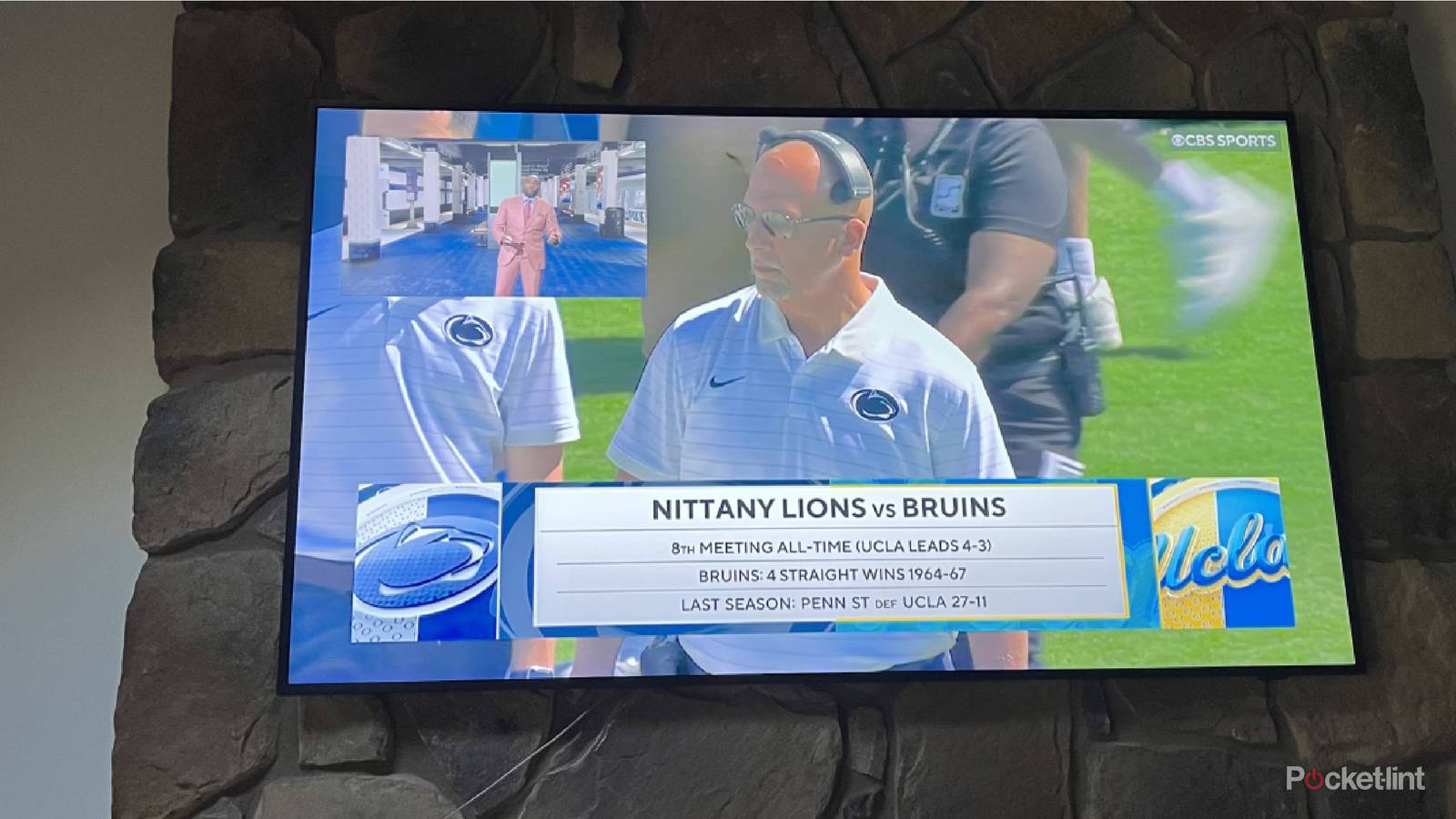
In today’s supersaturated world of streaming, cable, and satellite media distribution channels, it can be easy to forget that traditional antenna TV programming remains readily accessible across much of the United States. Serving as somewhat analogous to AM / FM radio, a simple antenna and coaxial cable are all you need to tune into free, ad-supported shows and movies on your television set.
Of course, the exact number of live terrestrial channels that can be readily tuned into depends on factors like geolocation and HDTV antenna quality / placement. The latter factor can be optimized by opting for a full-featured antenna and by placing it in clear view of the outdoors, while the former poses more of a hurdle.
Essentially, antenna systems are able to tap into broadcast signals from stations located in surrounding regions. This raises an important question: how do I determine which DTV signals are available in my particular area?
Say hello to the FCC’s DTV Reception Map
A free online resource for tracking local station coverage

To make things simple and streamlined, the Federal Communications Commission (FCC) of the United States of America offers an online DTV signal tracking resource in the form of a website. By navigating to the following link, you can view signal strength and up-to-date information on live station locations:
https://www.fcc.gov/media/engineering/dtvmaps The FCC’s DVT Reception Map utility allows you to manually type in an address, zip code, or city within a dedicated search box, or, alternatively, you can grant the website location access to hone in on your precise geolocation. To do so, simply tap on the Go To My Location! button, accept the location permission through your web browser, and allow the data to be calculated on the spot.

According to the FCC, data is predicted based on a “terrain-sensitive propagation model” that is similar (but not the exact same) as the one used by broadcast television stations when determining their own network coverage maps. Additionally, the website notes that signal strength is calculated with the operating assumption that your HDTV antenna is outside and approximately 30 feet (9.14 meters) above ground level.
Note that the FCC’s DTV Reception Map is specifically designed to relay information about US stations and signal coverage — this encompasses both states and territories like Puerto Rico and the US Virgin Islands.
For more details on HDTV antenna systems, the FFC also offers a dedicated Antenna Guide which is worth checking out. There are other resources available that can help you with placing your antenna in an optimal position, too, like the Antenna Point mobile application.