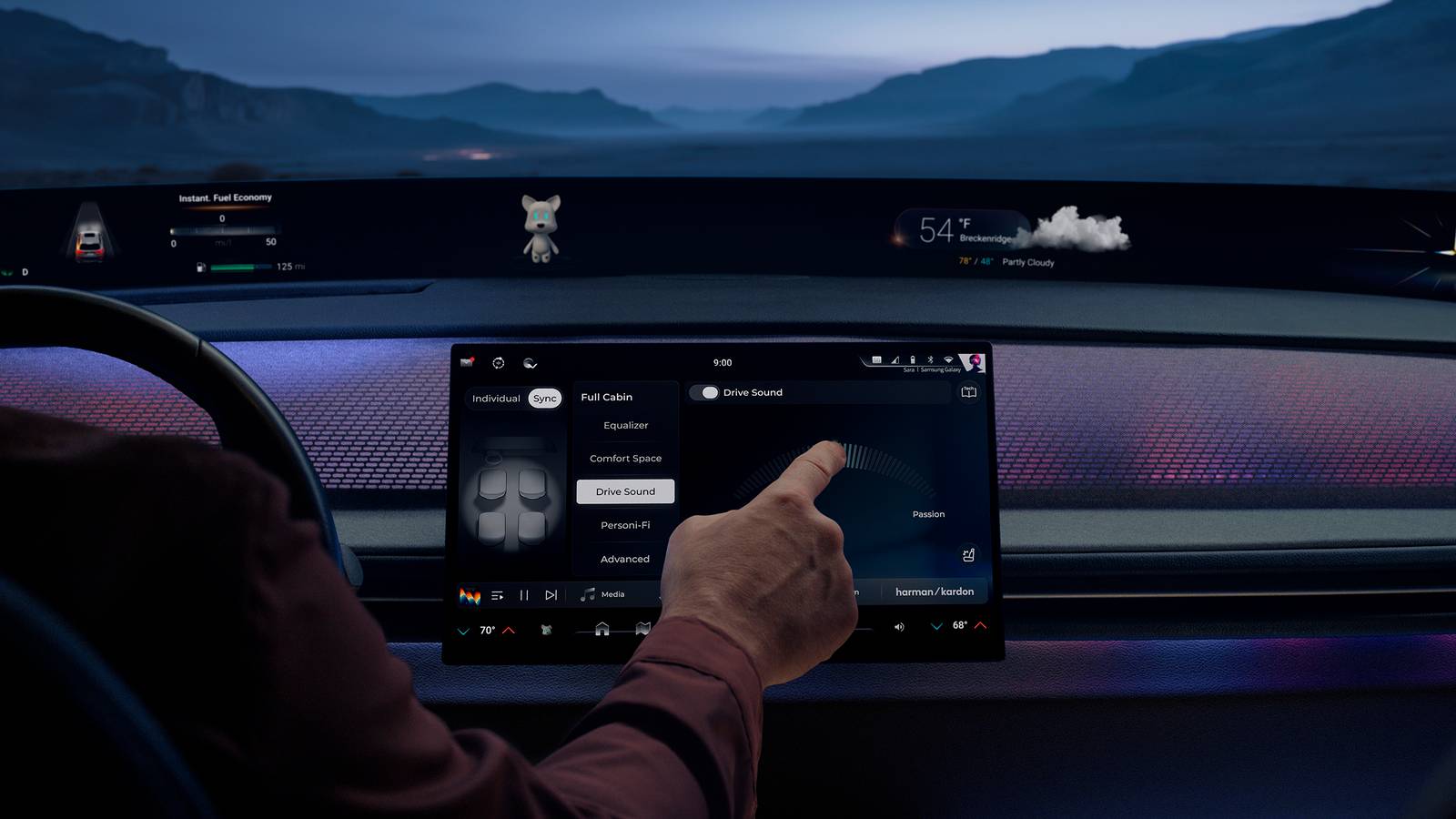
Car buying in 2026 is a bit… well… difficult. With so many brands under the same corporate umbrella, sharing design languages, parts, and powertrains, it may feel like most cars on the lot today come with a somewhat puny 4-cylinder turbo engine, and all sound the same. The sad part here is that the statement is not all that far removed from reality.
I have two cars in my garage right now. One is a compact four-seater SUV for my partner, and the other is my seven-seater VW Atlas, or as I call it, the ‘veedubya’. Both are equipped with small 4-bangers, which do, in fairness, deliver very different amounts of power. However, they both sound the exact same, and personally, I think that should change. Luckily, so do the sound engineers at Harman Automotive, who have devised a way to make every car sound exactly as a driver wants it to.
Harman is full of sound wave wizards
And their latest project impressed me most of all

If you haven’t read any of my previous work covering everything that I saw at Harman Automotive’s recent EXPLORE event, don’t sweat it. You’re only missing out on some of the other cool features they’re working on. This, though, was by far the coolest that I saw at the event, and it’s due in large part to the fact that we actually got to try it out in a test car that Harman kept on-site.
The overall sound project is dubbed HALOsonic Electric Sound Synthesis, colloquially known (by me) as HALOsonic. If you own a vehicle with JBL, Harman Kardon, AKG, Mark Levinson, and really most other upper-tier automotive sound systems, then Harman has already been at work on your vehicle. HALOsonic is the next step up from what we see on most road cars today, and it involves a few audio tricks to personalize your driving experience.
Make your car sound however you like
Personalization is the name of the game

At the HALOsonic display, we were shown that drivers could adjust the way their car sounds in the cabin through a few settings screens. The feature allows drivers to make the ‘exhaust note’ sound however they like and pumps it into the cabin through carefully tuned speaker systems. Whether you want to make your SUV sound more sporty, your two-seater more throaty, or even make it sound like you’re Han Solo piloting the Millennium Falcon, the HALOsonic system can handle it.
You can even adjust the intensity of the sound, so if you want to, say, sound like an X-Wing fighter as opposed to the Falcon, you can make that happen. The point, though, is that HALOsonic can completely change the feel of what, by most accounts, is otherwise a boring car. My puny 4-cylinder no longer has to sound like itself, and if it sounds like this is somewhat gimmicky, I encourage you to find an example of any automotive company that isn’t shifting to smaller, quieter, turbocharged engines. Most already have, in fact.
You might have seen it before, but not this way
All of this should sound familiar, but it’s the packaging that makes a difference

While Tesla and similar EV companies have toyed around with ‘exhaust notes’ before, Harman does it a bit differently. Instead of making these features model-specific, Harman’s goal is to sell road-ready equipment en masse to manufacturers. This means that all of these features can be applied to any car equipped with Harman’s infotainment software, and as a result, can easily be dropped into whatever project manufacturers have going at the current juncture.
This keeps manufacturing costs down, in line with their goal for the Ready StreamShare platform, and makes the case for HALOsonic all the more compelling. Harman’s audio platforms are already in plenty of production cars, and the rolodex of potential customers looks set to grow in the years to come.
Infotainment is the next biggest automotive battleground
The battle for one of the most-viewed screens in your arsenal is heating up

There’s only one screen in your life that is still a wide-open battleground for control, and it’s the one in your car. With companies like General Motors breaking off their relationships with Apple CarPlay and Android Auto, third-party companies with deeper automotive ties, like Harman, are waiting in the wings to provideinfotainment services that are more tailored to the automotive user than what is essentially an extension of the cell phone in drivers’ pockets.
There are plenty of key bullet points that warrant attention going into Q1 of 2026, but aside from another impending chip shortage, infotainment at large is trending toward a kitchen-table issue for manufacturers in terms of what they want and need from their own production lineups in the coming model years.