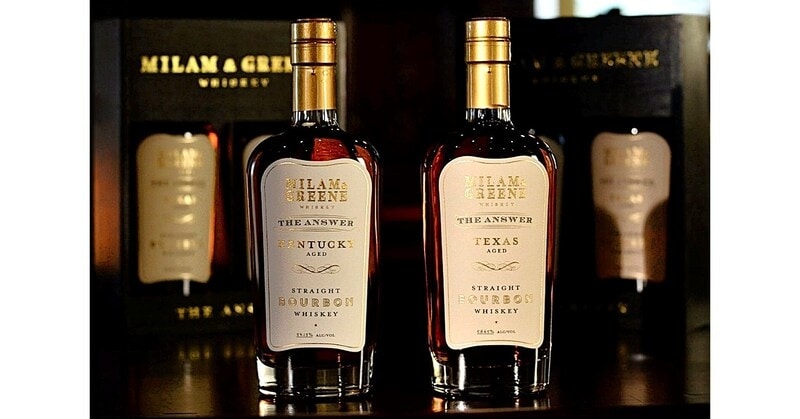

The Answer involved aging identical distillate simultaneously in Kentucky and Texas environments, providing empirical evidence about how temperature fluctuations and humidity levels influence flavor development and alcohol concentration. The study’s methodology was rigorous, with the same mash bill — 70% corn, 8% malted barley, 22% malted rye — and distillation process used for both samples. Chemical analysis of the bourbon climate experiment revealed measurable differences in key flavor compounds, with Texas’ hotter, drier climate producing woodier characteristics while Kentucky’s more humid conditions yielded fruitier, floral notes from ester development. The Texas-aged bourbon reached a higher natural proof (116 vs 108) due to greater evaporation rates, as well.
Image Credit: Milam & Greene Whiskey