


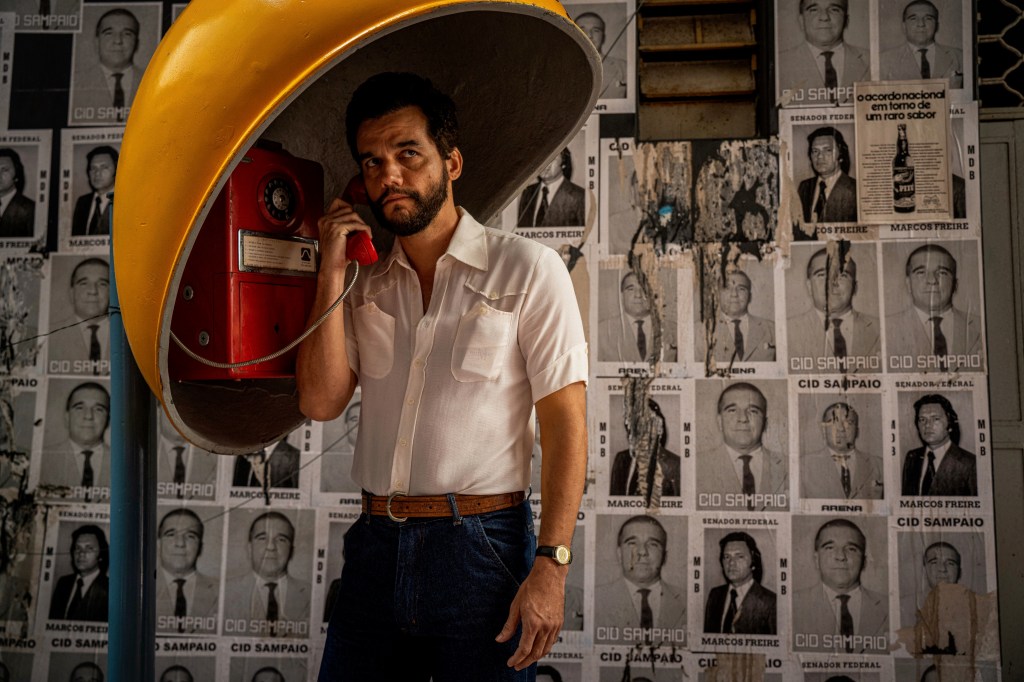
EXCLUSIVE: Brazilian director Kleber Mendonça Filho is back in Competition in Cannes for the third time with 1977-set thriller The Secret Agent, and Deadline can reveal a first clip.
Wagner Maura (Civil War, Narcos: Mexico) stars as a technology expert in his early 40s, is on the run.
He travels to Brazil’s northeastern port city of Recife during carnival week, hoping to reunite with his son but soon realizes that the city is far from being the non-violent refuge he seeks.
Like Walter Salles’ recent Oscar winner I’m Still Here, the drama is set against the backdrop of Brazil’s the military dictatorship, which lasted from 1964 to 1985. However, Filho, who hails from Recife, says his film takes a different approach to that period.
“Every time I told people the film would be set in 1977, the first word that comes out is ‘dictatorship’. Which is fine, but in Brazilian cinema, and Argentinian cinema as well, there is a sub-genre of the dictatorship movie,” says Filho.
“The challenge was to make a film about the logic of that time without ticking all the boxes of the dictatorship movie. I’m not against those films. In fact, we just had a very strong and beautiful film in Brazilian cinema, I’m Still Here, by Walter Salles, which did wonders for many young people who were not even aware of that moment in history. But with this film, it’s very much about the atmosphere, the fumes.”
The Brazilian, French, German and Netherlands Film is produced by Cinemascópio, MK Productions, Lemming Film, One Two Films. Paris-based mk2 films is handling international sales.



The intersection of food safety and anti-doping is indeed a unique angle that deserves more attention. It’s fascinating how these two seemingly unrelated fields can influence each other. The traditions surrounding the election of a pope are equally intriguing, with their rich history and air of mystery. It’s amazing how such ancient practices continue to hold significance in the modern world. I wonder if there are any parallels between the secrecy in the papal election and the confidentiality in anti-doping investigations. What do you think about the potential impact of food safety on anti-doping efforts? Could there be more collaboration between these fields?