Let’s not sugarcoat it — navigating MIUI is like trying to solve a Rubik’s cube blindfolded. It’s flashy, it’s fast (most of the time), and it’s everywhere. Whether you’re clutching a slick POCO X6 Pro on your commute or still nursing that trusty Redmi Note 10 like a digital pet, there’s a high chance you’re wrapped in Xiaomi’s quirky, custom Android universe: MIUI.
But then — plot twist — you hear whispers:
“Is that the China ROM?”
“Oh no, that one doesn’t have Google Play…”
Wait. What? Why are there two (or more) versions of MIUI? Should you care?
Well, yes. Unless you like the thrill of bricking your phone on a Tuesday night, you probably should.
So… What Is MIUI, Anyway?
Picture Android, but if it binge-watched anime, drank too much coffee, and then decided to dress like iOS. That’s MIUI.
Launched in 2010, MIUI (it’s pronounced “Me You I,” which sounds weirdly romantic) is Xiaomi’s customized Android skin. It’s bright. Loud. Packed with features — some delightful, some absolutely maddening. There are privacy tools buried in settings you didn’t know existed, themes that make your phone look like a K-pop fan’s scrapbook, and battery optimizations that are both genius and… borderline aggressive.
Honestly? MIUI is like a high-maintenance friend: a bit much, but still lovable. At least most days.
A Quick Table for the TL;DR Crowd
| Feature | MIUI China ROM | MIUI Global ROM |
|---|---|---|
| Target Users | Mostly in China | Everyone else — the rest of us |
| Language Support | Mostly Chinese, sparse English | Multilingual — from Spanish to Swahili |
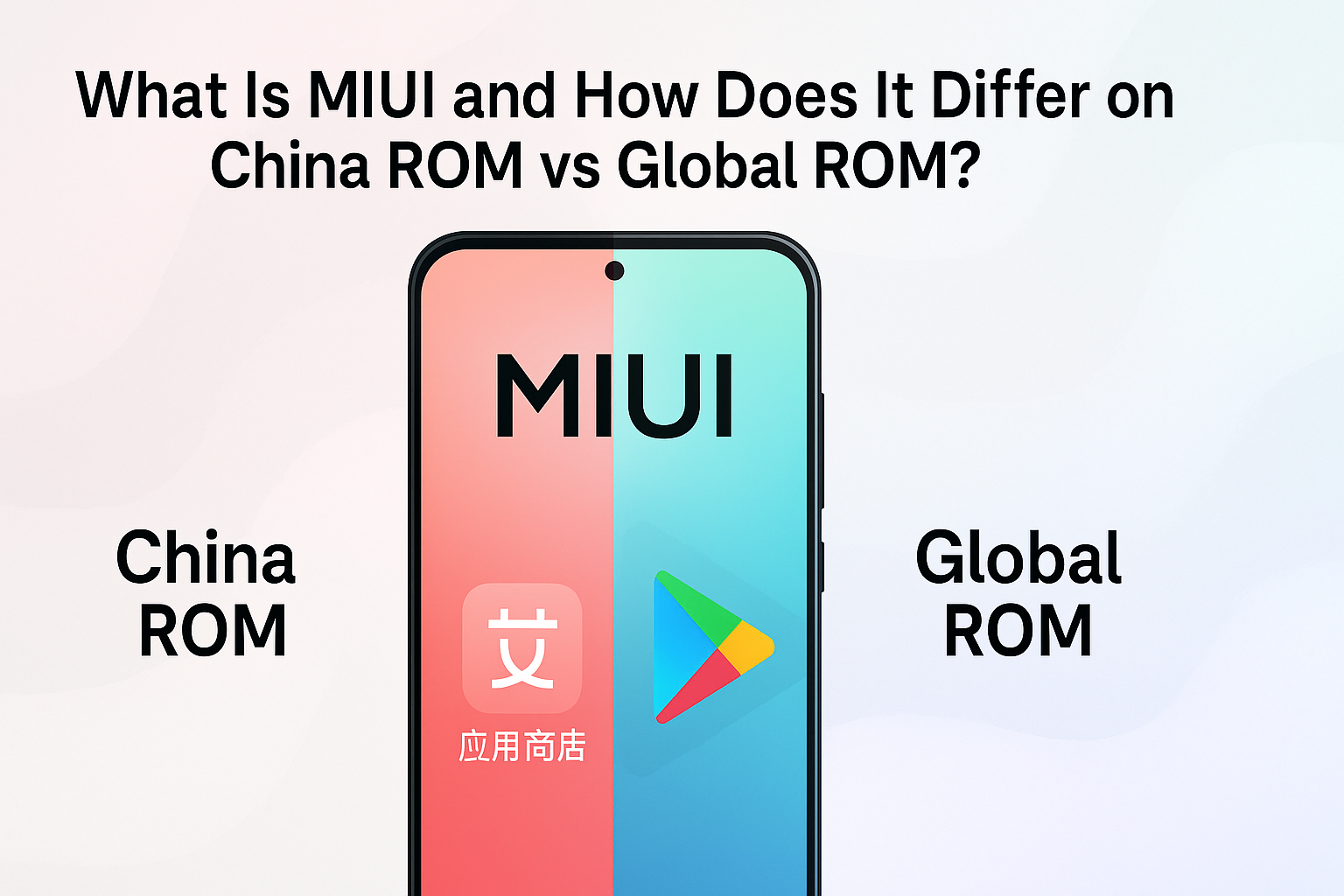
| Google Stuff | Nope. Nada. Install it yourself | All there, ready to tap |
| App Store | Xiaomi’s Chinese store — it’s… different | Google Play — familiar, comforting |
| Bloatware | A forest of Chinese apps you can’t delete | Cleaner, but still some stubborn pre-installs |
| Updates | Fast and furious, often beta-like | Slower, more polished (but not always perfect) |
| Themes | Wild and wonderful, but often behind a paywall | Freebies galore, though slightly limited |
| Fonts & Styling | Total freedom — if you like Comic Sans, go wild | Nope, you’re stuck with what you’ve got |
| Rooting Options | Sometimes even encouraged (what year is it?) | Locked tight, like Fort Knox |
| Performance | Feels snappy, maybe reckless | Stable, predictable, a bit sleepy sometimes |
Now the Real Talk: What’s Actually Different?
Let’s break this down, not with tech jargon — but with gut feelings, real use cases, and yes, some emotional overreactions. Because choosing a ROM is personal. Like picking out the right running shoes. Or deciding to move to another country.
1. Google? What Google?
If you pick up a phone running China ROM and expect to see the Play Store — guess what? You won’t.
There’s no Gmail, no Google Maps, no YouTube. Instead, you get Mi Browser (which feels like Internet Explorer and Chrome had a moody child), Baidu, and a dozen apps you can’t read unless your Mandarin is at HSK level 5 or above.
Global ROM? No worries. It comes pre-loaded with the Googleverse. Just sign in, and your Android soul is at peace. It’s warm. Familiar. Like logging into Facebook in 2008.
SEO drop: Install Google Play on MIUI China ROM
2. Language: Lost in Translation
China ROM supports… well, Chinese. There’s usually some English, sure — but awkwardly translated. Settings that say things like, “Enter gently into your data,” or “Application float window open maybe.” (Yes, these are real.)
Global ROM, meanwhile, is fluent in almost everything. French? Sure. Hindi? Absolutely. Klingon? Okay, maybe not. But the point stands — it’s globally friendly.
3. Updates: The Hare and the Turtle
China ROM gets updates like it’s on an IV drip of adrenaline. Sometimes weekly. New features drop there first. It’s where Xiaomi experiments.
But beware — you might be beta testing, whether you know it or not.
Global ROM plays it safe. It’s the tortoise. Updates come slower, often filtered and refined to avoid legal backlash or lawsuits in the EU. (Looking at you, GDPR.)
4. Apps Galore or App Fatigue?
Turn on a China ROM phone and — boom — the home screen explodes with icons: Mi Chat, Mi Wallet, Mi Video, Mi Store, Mi Bunny… You get the idea.
And removing them? Not always an option.
Global ROM cuts back on this — still has bloat, but fewer apps scream at you in Simplified Chinese.
5. Customization: Aesthetics vs. Accessibility
Themes. Fonts. Wallpapers that move with your breath (not really, but close). MIUI China ROM owns customization. You can change everything — even the default font.
Though — small catch — many themes cost Mi Credits. And guess what? You can’t buy them outside of China without jumping through hoops.
Global ROM? More basic. You still get a theme store, but customization’s on a leash. Fonts are locked. Icons behave. It’s neat, but less “you.”
6. Performance: The Unsung Variable
This one’s tricky. Anecdotally (and from Reddit threads longer than college essays), China ROM feels faster. Possibly because it cuts fewer corners when optimizing, or maybe because it doesn’t run Google’s always-on surveillance suite.
But then — Global ROM holds up well. It’s more stable, less prone to glitches. And at least you won’t wake up to random Chinese notifications at 3am.
Personal Note: My Brush With MIUI Madness
I once bought a Mi 11 Ultra from a reseller, thinking I scored a bargain.
Guess what I got? China ROM. No Google. Half the apps were in Mandarin. I spent two days installing Google Services through a third-party script, and then it still wouldn’t sync my contacts properly.
Eventually, I flashed the Global ROM. It felt like stepping out of a noisy club into a quiet library. Peaceful. Predictable. A bit… sterile.
But sometimes I miss the chaos.
Wrapping This Up (Kind of)
So… which one should you get?
If you love tweaking every pixel, chasing the latest features, and don’t mind fixing problems as they come — China ROM is your playground.
If you just want things to work — reliably, globally, and with minimal setup — Global ROM is your sanctuary.
But whatever you do, don’t buy a China ROM thinking it’ll behave like a Global one. It won’t. It’s like dating someone based on their Instagram highlights — there’s a whole other reality underneath.