You probably told yourself, “This phone’s fine. I don’t need the latest one.” And I get it. I really do. I used to scoff at people who bought a new flagship phone every year, like it was some kind of religious ritual. But here we are in 2025, and let me tell you—it’s not the same world. TikTok edits need power. Google’s AI is practically a psychic. And if your phone takes 6 seconds to open the camera app… that’s 5.5 seconds too long.
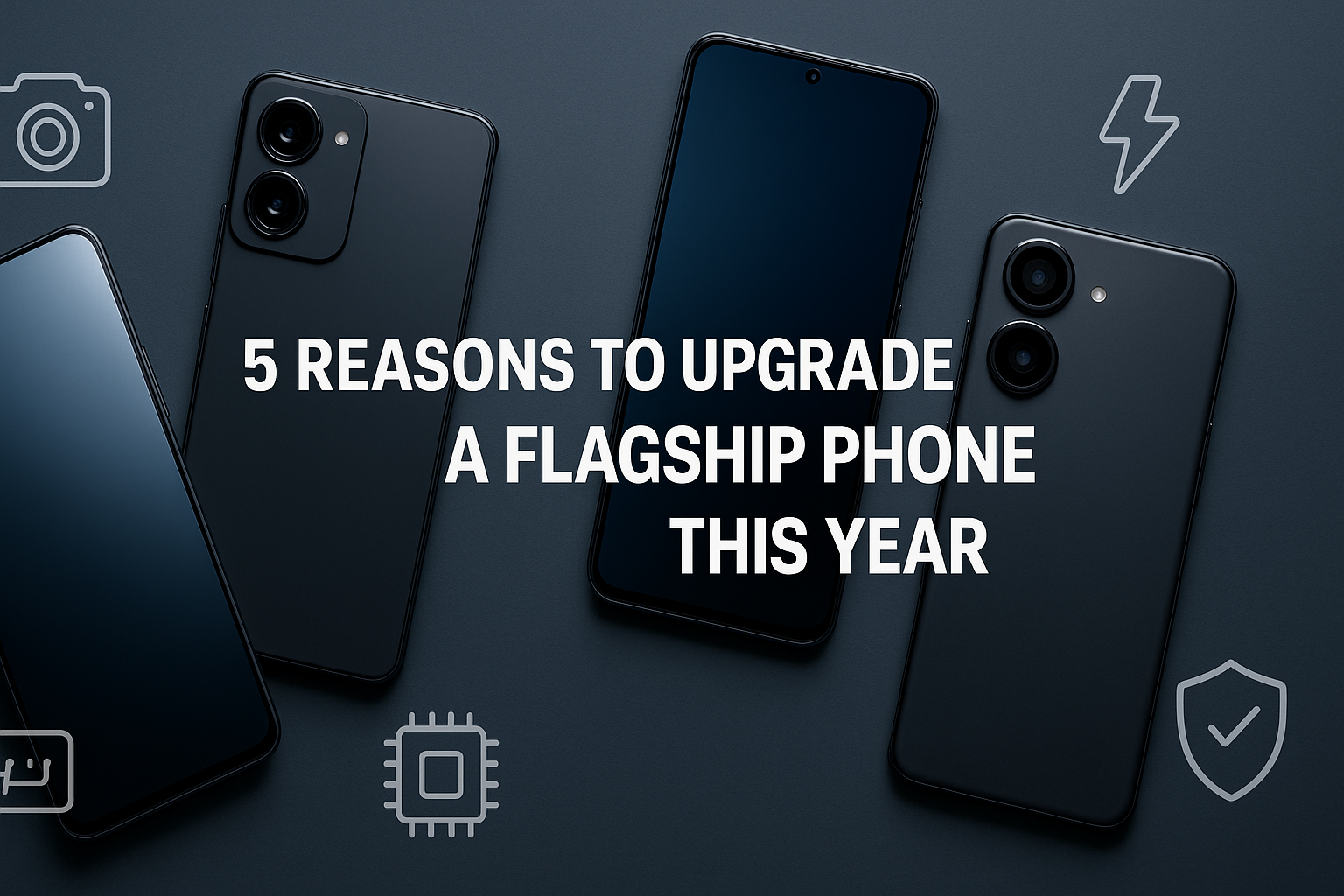
So before you roll your eyes, here are five reasons (plus a few rambles) why now might—no, definitely is—the time to jump into flagship territory.
1. They’re Crazy Fast Now. Like, Creepy Fast.
Ever open your phone and the app is already there before your thumb even hits the screen? Yeah, that’s what the Snapdragon 8 Gen 3 Elite is doing now. It’s basically turning smartphones into pocket-sized supercomputers. I mean, remember when computers used to wheeze just opening a YouTube video? Not anymore.
And don’t even get me started on AI. Real-time call translation? Yup. Your mom can now talk to your Spanish-speaking partner, and the phone will play interpreter. AI photo editing? It’s a mix of witchcraft and Photoshop. I took a photo of my cat licking the window (don’t ask), and the phone turned it into something out of National Geographic. No idea how.
2. The Cameras? They’re Basically Lying to You. And That’s… Awesome.
Okay, honesty time: these cameras cheat. They don’t capture reality; they enhance it. Embellish it. Glamorize it. And I love them for it.
Take the Samsung Galaxy S25 Ultra or the iPhone 16 Pro Max—both are wielding some kind of 50MP ultrawide sorcery, with AI that somehow knows what kind of mood you want the photo to have. It’s less like taking a photo and more like directing a movie scene. Soft light, shadows, saturation—it does it all before you even blink.
That shot of your latte? Now it looks like a coffee ad. Your dog’s muddy fur? Somehow… soft, majestic, regal. This isn’t photography anymore. It’s emotional manipulation via pixels.
3. Battery Life Isn’t Just Better—It’s Suspiciously Good
I went two days without charging my phone last week. Two days. What is this sorcery?
Flagships now use these silicon-based batteries that sound like something Tony Stark invented. They’re smarter, cooler (temperature-wise and vibe-wise), and—this is wild—they learn your habits. Like, they figure out when you usually charge your phone and adjust performance accordingly. Orwellian? Maybe. Convenient? Extremely.
Also: fast charging is no longer a feature. It’s expected. You plug your phone in, go brush your teeth, come back—it’s basically full. And that reverse charging thing? I powered my earbuds while waiting in line at Trader Joe’s. Felt futuristic and slightly smug.
4. Flagship Phones Are in It for the Long Haul (Kinda Like a Relationship That Works)
You ever fall for a phone and then it ditches you after two years of software support? Feels personal. But the new flagship trend? Eight years of OS and security updates. That’s longer than my last apartment lease. Longer than most TikTok trends. Probably longer than half of my friendships if we’re being real.
This kind of longevity isn’t just about avoiding updates—it’s about trust. Knowing that your phone won’t become obsolete the moment a new model drops. Also, resale value? High. Very high. Like, people are flipping used flagships like they’re crypto (but more stable).
Oh, and security. These phones practically come with their own bodyguards. Encrypted processors, facial scans that aren’t fooled by your twin, and biometric authentication that knows when you’re stressed. Not even kidding.
5. Design That Feels… Expensive. And Cool. And Like It Shouldn’t Be in Your Pocket.
I held the OnePlus Open 2 last week and—no joke—it felt like touching the future. Titanium frame, Gorilla Armor glass, this foldable form factor that shouldn’t work but somehow does. It was like holding a luxury watch that folds into a screen.
And durability? These things are tanks dressed like runway models. IP69 water resistance means you can drop it in a puddle, pick it up, and it’ll still make you look good. It’s weird, but true—these phones look better after a little wear and tear. Like a good pair of leather boots.
Also—totally random, but—some foldables now click shut with a magnetic snap that’s oddly satisfying. ASMR but for your palm.
Look—Do You Need a Flagship Phone in 2025?
No. Technically no. You also don’t need a warm croissant with your coffee, or soft lighting in your living room, or noise-canceling headphones on a crowded flight. But once you have them—man, it’s hard to go back.
This year’s flagships aren’t just about specs or status. They’re about experience. About knowing your phone can keep up with your chaos—and maybe even organize it a little. If you’re wondering whether the upgrade is worth it, well… do you want the best? Because this is it.
Bonus Table I Doodled During a Zoom Call:
| Thing | Flagship 2025 | Mid-Range 2025 |
|---|---|---|
| Processor | Snapdragon 8 Gen 3 / A19 Bionic | Snapdragon 7 Gen / Dimensity 8200 |
| Camera | 200MP with AI vibe filter | 64MP and decent color |
| Battery | 2 days (somehow) + warp-speed charging | One day + meh charging |
| Updates | 8 years—yes, seriously | Maybe 3 if you’re lucky |
| Build | Titanium, IP69, foldable/flex magic | Plastic, IP67 if generous |
| Cool Factor | 10/10, your friends will ask | 6/10, your uncle might ask |
What’s Next?
Are you upgrading? Still clinging to your Pixel 6 because “it’s fine”? No judgment—I’ve been there. But hey, tell me what matters most to you. Battery? Camera? Folding like a sci-fi communicator? Drop your thoughts in the comments—or don’t. I’ll still be here, watching videos on my suspiciously fast, overpowered rectangle.