Conny Waters – AncientPages.com – How unequal were prehistoric societies? How do archaeologists determine wealth in cultures that left no written records, tax lists, or census information?
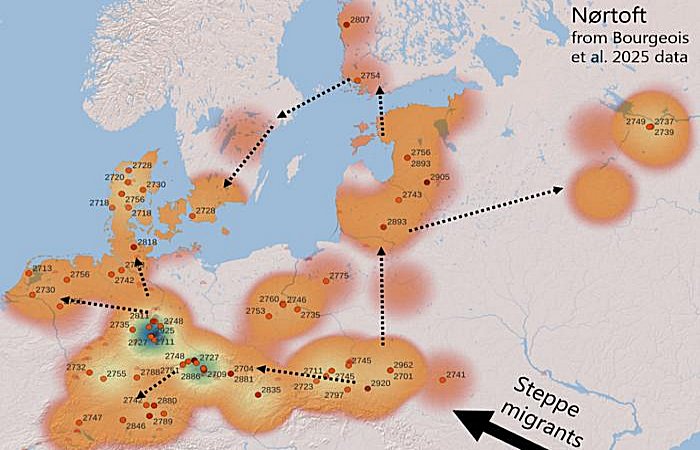
Early radiocarbon dates (range midpoints) for the Corded Ware culture incl. potential “proto-Corded Ware” in Southern Poland, data from Bourgeois et al. 2025, adapted and edited by Mikkel Nørtoft. Image credit: Illustration: Mikkel Nørtoft
A researcher at the University of Copenhagen created QuantWealth, a method that uses different types of grave evidence to piece together social status, wealth, and inequality from thousands of years ago.
In a recent study published in the Journal of Neolithic Archaeology, researchers used QuantWealth to study almost 300 graves from 4,000 to 5,000 years ago in what is now Bohemia. They compared the grave findings with genetic ancestry and Y-chromosome patterns to trace paternal lines, and also looked at health, age, and gender. This gave new insights into the Corded Ware culture.
The researchers found that social inequality in Bohemia grew slowly over several centuries after people migrated from the steppe. Although these migrations helped spread early Indo-European languages across Europe, inequality in Bohemia remained limited.
“Archaeologists have long debated whether steppe populations migrating across Europe from Ukraine brought with them a highly unequal social system and patriarchy,” said University of Copenhagen archaeologist Mikkel Nørtoft, the study’s main author, who developed the QuantWealth method in his PhD thesis.
“Our results suggest a much more dynamic picture, where social differences developed gradually. Achieving status through life-actions appears to have been more important than through inheritance, at least during the first 400 years”.
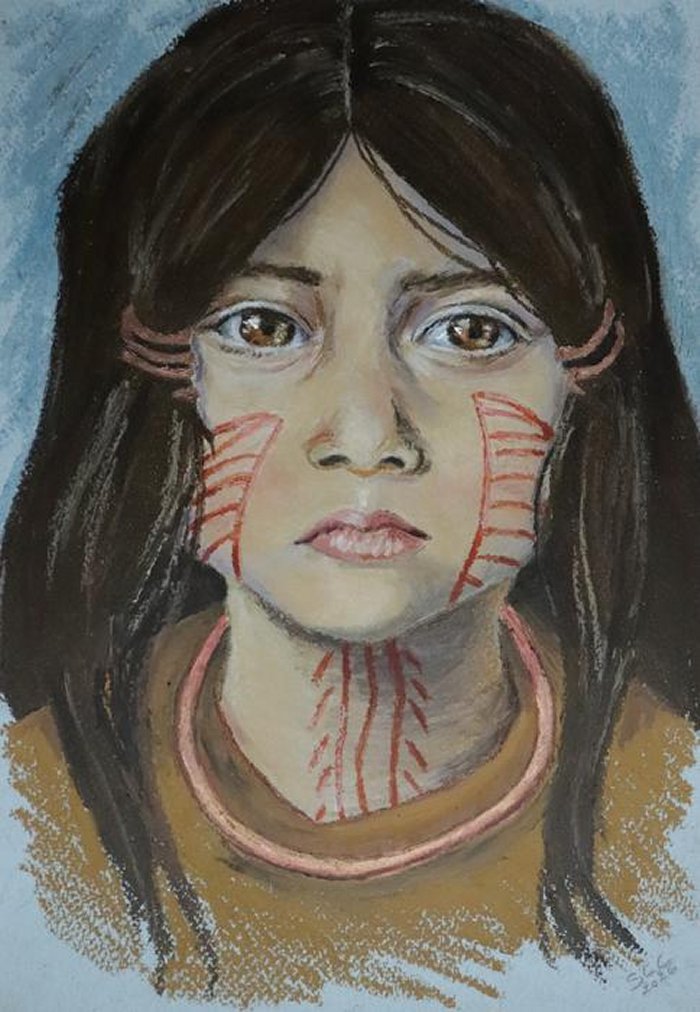
Artistic reconstruction of the young girl with the copper neck ring (and hair spirals) in grave 41 at Cachovice. Red ochre face paint inspired by the pottery decorations in her grave. Image credit: Oil pastel by Solveig Chaudesaigues-Clausen
Mikkel Nørtoft and his colleague Adam B. Rohrlach analyzed 296 burials from the Corded Ware culture in Bohemia, dating to approximately 2,900-2,300 BCE.
“Following a few harsh years of “dark sun” clouded by a devastating volcanic eruption in 2,900 BCE, the earliest herder communities, settling in Bohemia around 2,900-2,700 BCE, seem to have focused mostly on building social cohesion across this new network of migrants in Central Europe. In Bohemia, they did this through shared burial rituals and building earthen mounds, but with few grave goods”, Mikkel Nørtoft explains.
Wealth differences were minimal and primarily age-related. Power appears to have been shared among several steppe-derived lineages, with little evidence of gender inequality.
Around 2,700 to 2,500 BCE, funerary competition in Bohemia grew stronger after a new lineage emerged.
Researchers noticed more prestige items and meat offerings in graves, wider exchange networks, and greater gender inequality. Adult men were often buried with richer grave goods, and younger adults appeared more often in graves, but there was no clear rise in skeletal injuries.
“In the final phase, roughly 2,500-2,300 BCE, we see a few rich displays of family wealth through children, and the previously new lineage now dominated the burial record. So maybe the new lineage had gained the most followers and power through the competitive burial parties, and their descendants were now competing among themselves”, Mikkel Nørtoft points out.
“The few rich child graves and this prevailing lineage could indicate more inherited wealth and emerging traits of persistent inequality. Ethnographic parallels could also support the idea that parents adorned their children with ornaments to increase their social value in future marriage exchange. Brides often moved into the husband’s household in Corded Ware societies, and bridewealth or dowry is preserved in early Indo-European vocabulary, and historically common in Indo-European societies.”
See also: More Archaeology News
One example is a particularly rich grave of a female child from the late phase at the Cachovice site, which is the richest Bohemian grave in the study. This grave contained a very rare copper neck ring, a symbol of the upper class known as a “torc” in the later European Bronze and Iron Ages.
Researchers believe these findings point to increasing social competition and the possible rise of more lasting forms of inequality in late Corded Ware communities.
However, for now, it’s hard to say whether this development means the early beginnings of the family dynasties seen later in the Bronze Age.
Therefore, more data are needed on both the Corded Ware Culture and the Bell Beaker Culture that followed them in Central Europe.
Source via EurekAlert
Paper
Written by Conny Waters – AncientPages.com Staff Writer