


Follow us
Add us as a preferred source on Google
Every autumn, I conduct an eyesight test that no reputable optometrist would understand.
I go outside, find the Pleiades and count how many stars I can see. Usually I start confidently. One, two, three, four, five. Then things become contentious. Is that another star? Did I actually see it, or did I decide I ought to see it because I know it’s there? I look away, look back and begin again.
This is not, I should emphasize, a meaningful test of eye health. What it tests, rather, is how badly I’ve prepared for looking at the night sky.
The Pleiades sit roughly 444 light-years away in Taurus and are right now becoming extremely convenient in the evening sky. You don’t need a telescope to find them. You don’t even need binoculars. In fact, you’re likely to catch their collective brightness in your peripheral vision every time you go outside and look up.
But every November the Pleiades remind me that naked-eye observing isn’t as simple as opening the back door and looking up. How many Pleiades I can see can change depending on what I do during the next 10 minutes.
What’s happening and when to look
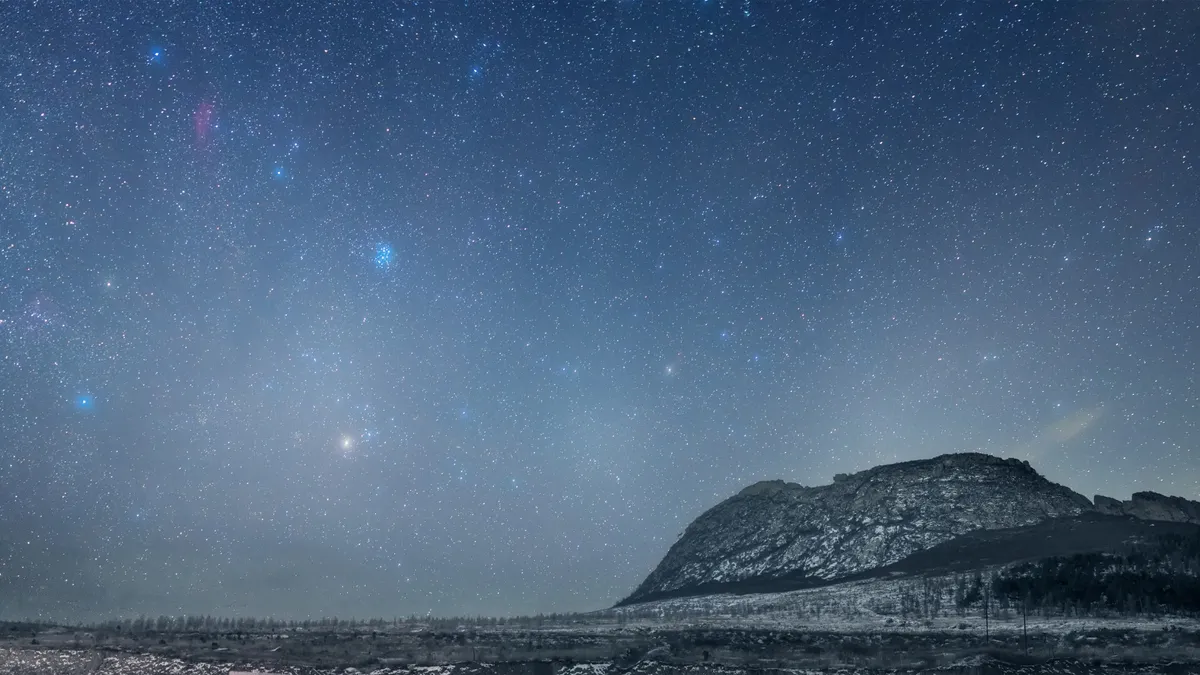
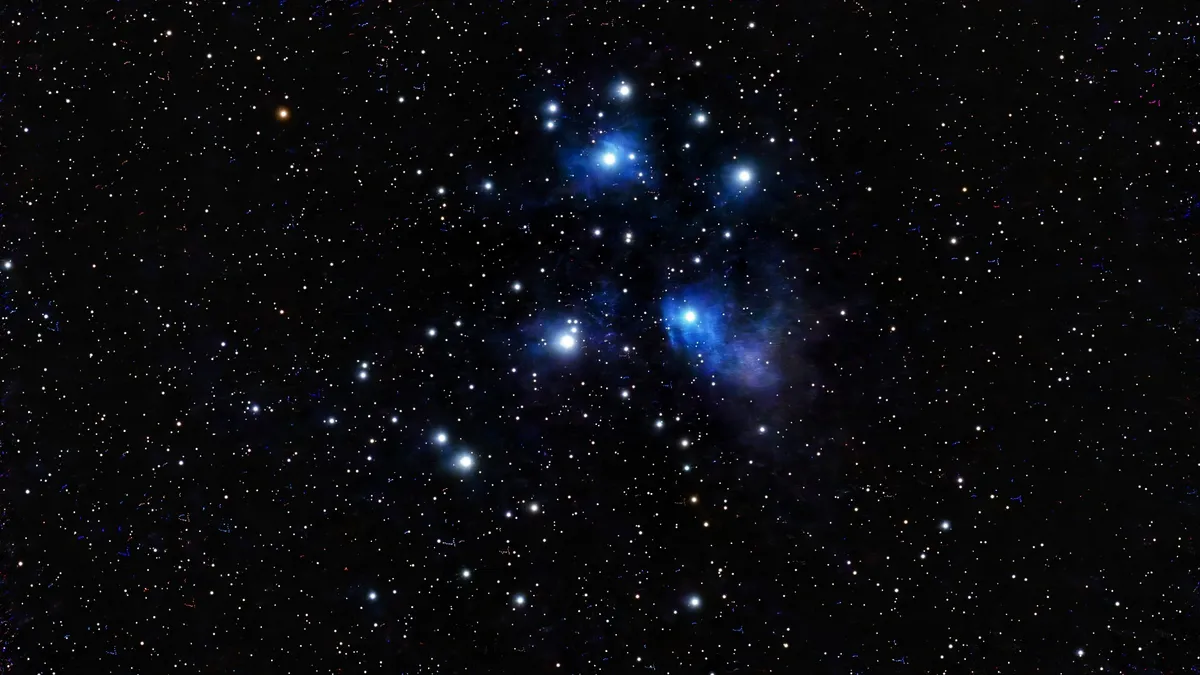
The Pleiades, also known as Messier 45 (M45) or the “Seven Sisters,” are an open star cluster in Taurus. They’re one of the closest clusters to the solar system and some of the youngest stars you can see with the naked eye — just 100 million years old. They’re basically newborns.
In mid-November, they rise in the east in the early evening and climb higher as the night progresses, making this an excellent time to get acquainted with them. Look east after dark for a tiny, compact group of stars. If you know Orion, which rises later, the Pleiades are above and to the right of it from mid-northern latitudes. Nearby you’ll also find orange Aldebaran and the much broader V-shaped Hyades cluster. The Hyades are closer to the sun, but their stars are about 625 million years old.
The name “Seven Sisters” creates an immediate observational trap: people assume they’re supposed to see seven stars. That’s not necessarily true. In fact, six is a common naked-eye result under decently dark conditions (note that the shape of the six brightest is like a mini Big Dipper/Plough), while people with sharp eyesight under darker skies may see more. The cluster itself contains about 1,000 stars. The number you personally distinguish depends on eyesight, sky brightness, atmospheric conditions and how well your eyes have adapted to darkness.
That makes M45 much more interesting to me than a simple tick-box target. So tonight, don’t just find the Pleiades — count them.
How and when I’m watching it
I’m going to run my Pleiades eye test in stages. First, I’ll step outside and look almost immediately. I’ll count the individual stars I can distinguish without spending ages convincing myself about marginal ones. Then I’ll wait. After about 10 minutes (without looking at my phone or bright outdoor lights, of course), I’ll count again. Full dark adaptation takes considerably longer, but even 10 minutes can make an obvious difference when you’ve just come from a brightly lit house.
I’ll then try my trusty 10×50 binoculars. This is where the experiment stops being subtle. The little naked-eye knot of brightness suddenly becomes a field filled with stars. The Pleiades don’t just become brighter through binoculars. Their whole character changes because stars that were below my naked-eye threshold appear. I’ll also use the averted vision technique, looking slightly to one side rather than directly at M45. It’s one of the best demonstrations of the technique, with its fainter stars seemingly popping into view as your more light-sensitive peripheral vision takes over.
Stargazer’s corner: November 13-19, 2026
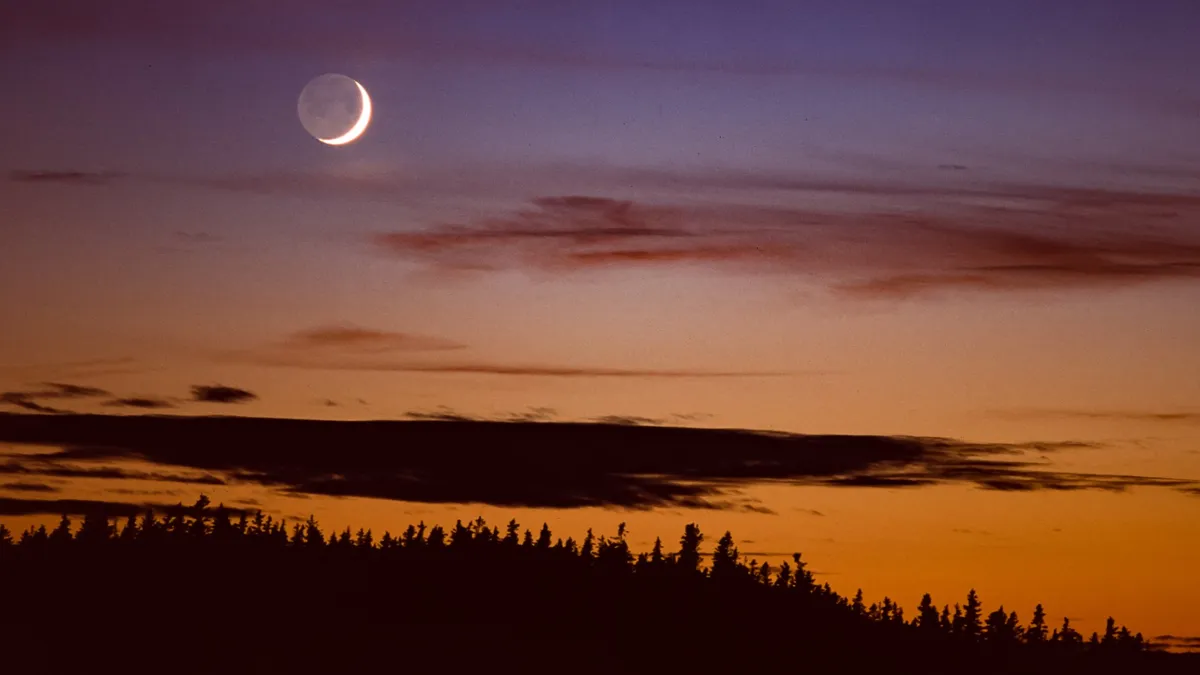
The moon is returning to the evening sky this week, waxing from a thin crescent toward first quarter. It reaches first quarter around Nov. 17, so moonlight becomes progressively more noticeable during the first half of the night. Look southwest during twilight, and you’ll see the beautiful sight of a crescent moon sporting Earthshine, sunlight reflected from Earth onto the moon’s night side.
Overnight, Nov. 15-16, don’t miss Mars and Jupiter in conjunction. The two planets will appear just over a degree apart, rising in the east during the evening before climbing high into the southern sky in the hours before sunrise.
The following night, Nov. 17-18, the Leonid meteor shower peaks. This is one shower where staying up later actually matters. Leo, the constellation containing the shower’s radiant, doesn’t rise until late, so the better opportunity comes after midnight and toward the predawn hours.
Asterism of the week: The Kids
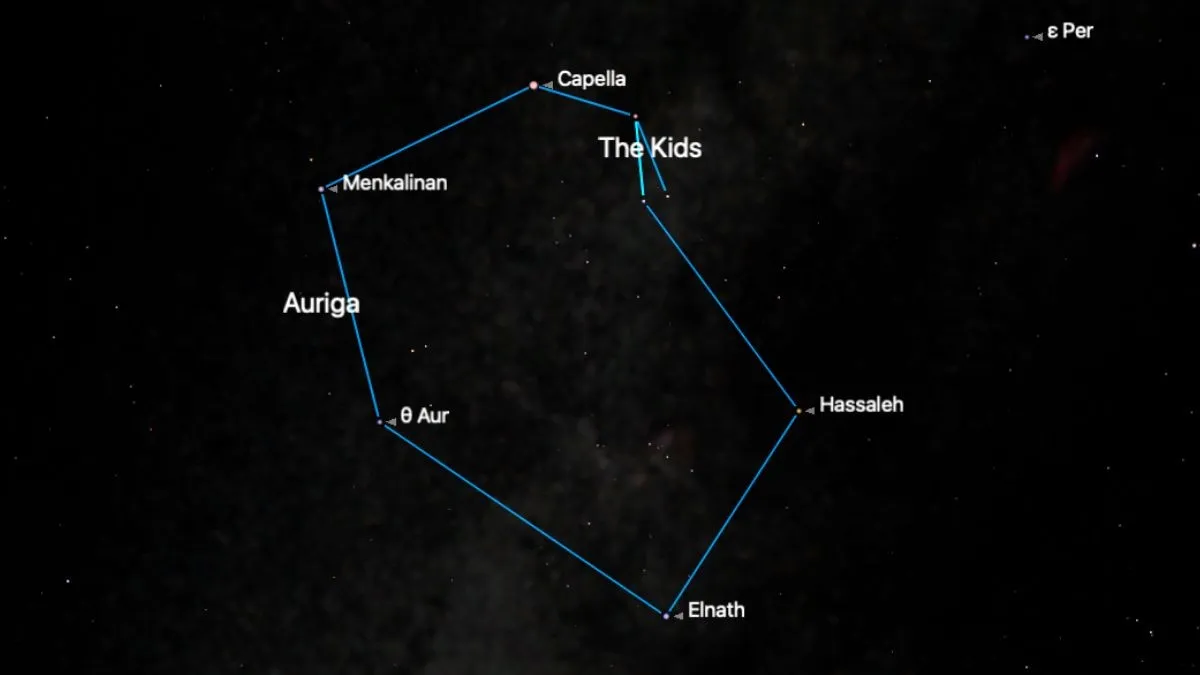
Auriga, “the Charioteer,” is easy to see in the northeastern and eastern sky during November evenings, but have you spied the asterism close to its brightest star, Capella? It’s known as the “Goat Star,” though its Latin name is the diminutive of capra, meaning “little she-goat.” The reason is esoteric — Capella represents Amalthea, the mythological goat that suckled the infant Zeus — but there is a neat asterism (shape of stars) nearby that suddenly makes sense. Close to Capella is a triangle of faint stars that are known as The Kids — Epsilon, Zeta and Eta Aurigae — traditionally imagined as the offspring of Capella. It’s one of those little patterns that makes a constellation much easier to recognize.

