


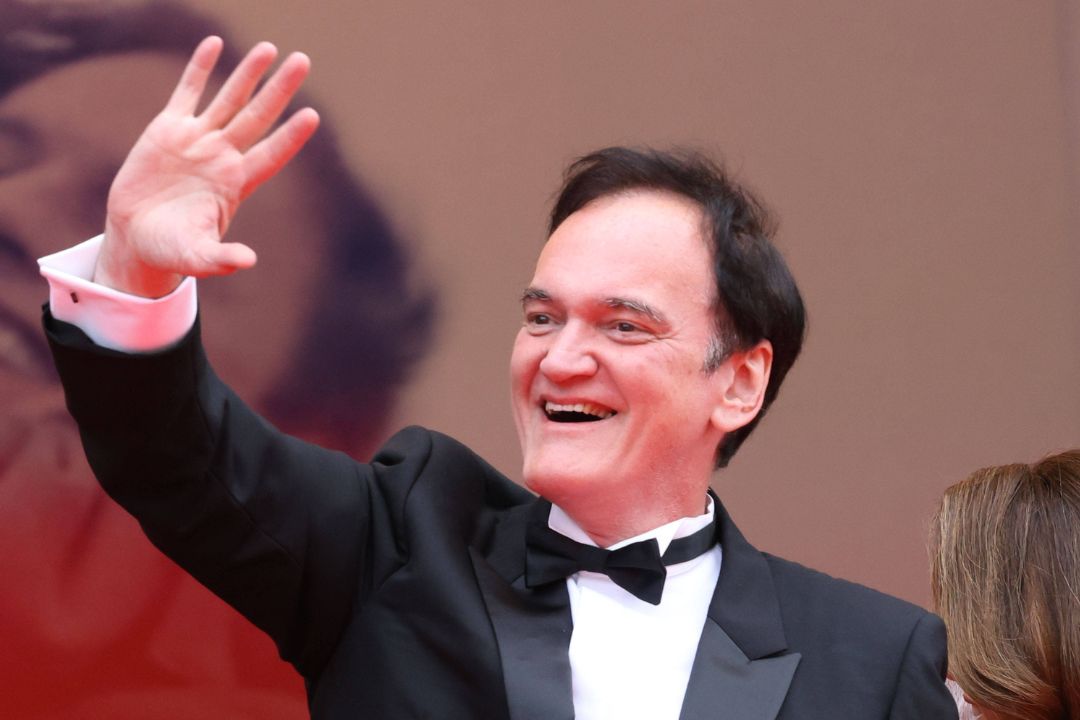
Quentin Tarantino has a seven-film collection of cinematic perfection, featuring everything from Steven Spielberg’s Jaws and William Friedkin’s The Exorcist to Woody Allen’s Annie Hall and Mel Brooks’ Young Frankenstein. It is a wonderfully unpredictable selection, bringing together horror, comedy, romance, science fiction, and the Western in one cinematic time capsule. The list is not new, having circulated since 2022, but its unusual combination continues to travel online, revealing plenty about how one of Hollywood’s most cinephilic filmmakers looks at movies.
His own filmography is practically a mixtape of pop culture, from Pulp Fiction to Kill Bill. So, what makes these seven films worthy of his admiration? Here is a closer look at the movies that make up this eclectic collection.
1. Jaws (1975)
Before sharks became aquatic horror clichés, Steven Spielberg made audiences afraid to dip their toes into the ocean. Released in 1975, Jaws follows Martin Brody (Roy Scheider), the police chief of Amity Island, who discovers that a great white shark is terrorizing the seaside community. When local authorities hesitate to close the beaches, Brody joins marine biologist Matt Hooper (Richard Dreyfuss) and shark hunter Quint (Robert Shaw) on a dangerous expedition to kill the predator.
With John Williams’ instantly recognizable score doing half the terrifying, Spielberg turned an unseen threat into blockbuster mythology.

The idea of cinematic perfection entered Quentin Tarantino’s conversation through his book Cinema Speculation, where he wrote that very few movies achieved that distinction and singled out The Texas Chainsaw Massacre. During his subsequent appearance on Jimmy Kimmel Live to promote the book, Kimmel asked him to name the others, prompting Tarantino to run through several titles.
But Tarantino’s idea of perfection is not confined to spectacle, suspense, or larger-than-life action. His next choice trades the open waters and primal terror of Spielberg’s thriller for the tangled emotions, neurotic humour, and romantic misadventures of New York.
2. Annie Hall (1977)
Switching from a man-eating shark to the messy business of falling in love, Woody Allen’s Annie Hall demonstrates just how broad Quentin Tarantino’s cinematic appetite can be. The 1977 romantic comedy follows Alvy Singer (Allen), a neurotic New York comedian reflecting on his relationship with aspiring nightclub singer Annie Hall (Diane Keaton).
Through flashbacks, fourth-wall breaks, animated sequences, and conversations that wander into unexpected territory, the film examines romance without dressing it up as a fairytale. Its Academy Award-winning screenplay helped redefine the modern romantic comedy.
3. The Exorcist (1973)
If Annie Hall makes awkward conversations entertaining, William Friedkin’s The Exorcist makes an ordinary staircase feel like a portal to hell. Released in 1973, the horror landmark follows 12-year-old Regan MacNeil (Linda Blair), whose increasingly disturbing behavior convinces her mother, Chris (Ellen Burstyn), to seek medical help.
When conventional explanations fail, two Jesuit priests, Father Karras (Jason Miller) and Father Merrin (Max von Sydow), attempt to confront the demonic possession. Adapted from William Peter Blatty’s novel, the film earned 10 Academy Award nominations and permanently changed the language of supernatural horror.
4. The Wild Bunch (1969)
Sam Peckinpah’s The Wild Bunch takes the Western away from its polished frontier mythology and drops it into a world where violence has become almost routine. Released in 1969, the film follows aging outlaw Pike Bishop (William Holden) and his gang as they attempt a railway robbery before being ambushed by bounty hunters led by their former associate, Deke Thornton (Robert Ryan).
Set against the Mexican Revolution, the story examines loyalty, obsolescence, and men struggling to survive in a changing world. Its groundbreaking use of slow motion and graphic violence helped reshape the Western.
5. Back to the Future (1985)
Robert Zemeckis trades dusty outlaw trails for a DeLorean capable of sending audiences three decades backwards. Released in 1985, Back to the Future stars Michael J. Fox as Marty McFly, a teenager accidentally transported from 1985 to 1955 by eccentric inventor Doc Brown (Christopher Lloyd). Marty must ensure his teenage parents fall in love, or risk erasing his own existence.
6. Young Frankenstein (1974)
Mel Brooks proves that sometimes the best way to celebrate horror is to give it a hilariously ridiculous makeover. His 1974 comedy Young Frankenstein stars Gene Wilder as Dr. Frederick Frankenstein, a respected neurosurgeon who inherits his grandfather’s Transylvanian estate.
Despite distancing himself from the family’s monstrous reputation, Frederick becomes fascinated by his grandfather’s experiments and attempts to bring a corpse back to life.
7. The Texas Chainsaw Massacre (1974)
Finally, Tobe Hooper’s The Texas Chain Saw Massacre brings the selection back to the grimy, independent horror filmmaking that helped shape Quentin Tarantino’s own cinematic sensibilities. Released in 1974, the film follows five young travelers whose journey through rural Texas becomes a nightmare after they encounter Leatherface and his violent family.
With Marilyn Burns playing Sally Hardesty, the film relies on an oppressive atmosphere, frantic editing, and unsettling sound design rather than elaborate special effects. Its low-budget ingenuity transformed Leatherface into an enduring horror icon and demonstrated how terror could emerge from the most ordinary surroundings.
Tarantino’s selection ultimately feels like a miniature history of everything cinema can accomplish, from making audiences scream and laugh to breaking their hearts and transporting them through time. Seven films, seven different filmmaking philosophies, and one director who clearly believes that movie magic has no single formula.
Which of these would make your own list of perfect films? Share your picks in the comments.


