


Leather shoe scuffs are inevitable. If you wear your shoes, eventually you are going to scuff them. This compounds exponentially if you are the type of person who wears the same shoe daily and does not rotate.
That probably sounds painfully obvious, yet after spending most of my adult life in the shoe industry, I can assure you that scuffing remains one of the more misunderstood aspects of owning leather shoes.
I originally wrote about this back in 2017 as part of my Pet Peeves in the Shoe Industry series. The pet peeve was simple: people would discover a scuff on their shoes, have absolutely no idea how it got there, and somehow conclude that the leather or manufacturer was responsible. It was absurd then as it is now. But as people don’t often change, this post needed updating and elaboration.
Not only because scuffs are normal, but because different leathers scuff very differently; some marks that look terrible are surprisingly easy to remove, and others are genuine scratches that cannot simply be polished away.
So, let’s understand what is actually happening.
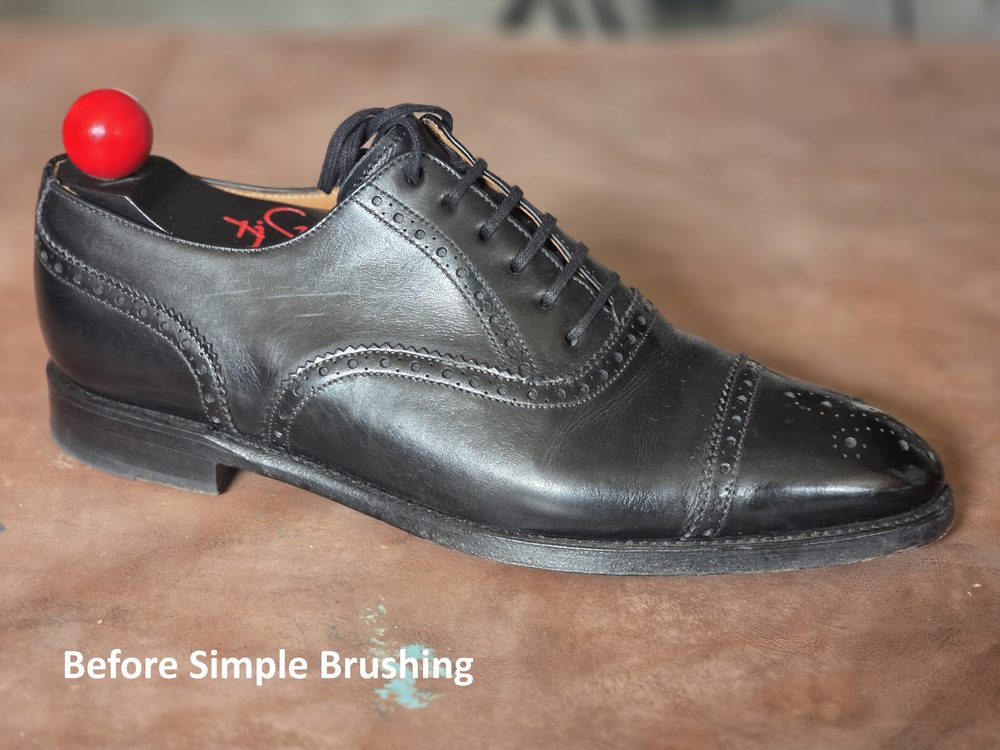
Why Do Leather Shoes Scuff?
Here is the fundamental principle: Leather cannot scuff without coming into contact with something.
Scuffs do not spontaneously develop while your shoes are sitting untouched in the closet.
Something has rubbed, scraped, bumped, dragged, or kicked against the surface of the leather.
The problem is that we take thousands of steps throughout the day and pay almost no attention to what is happening around our feet.
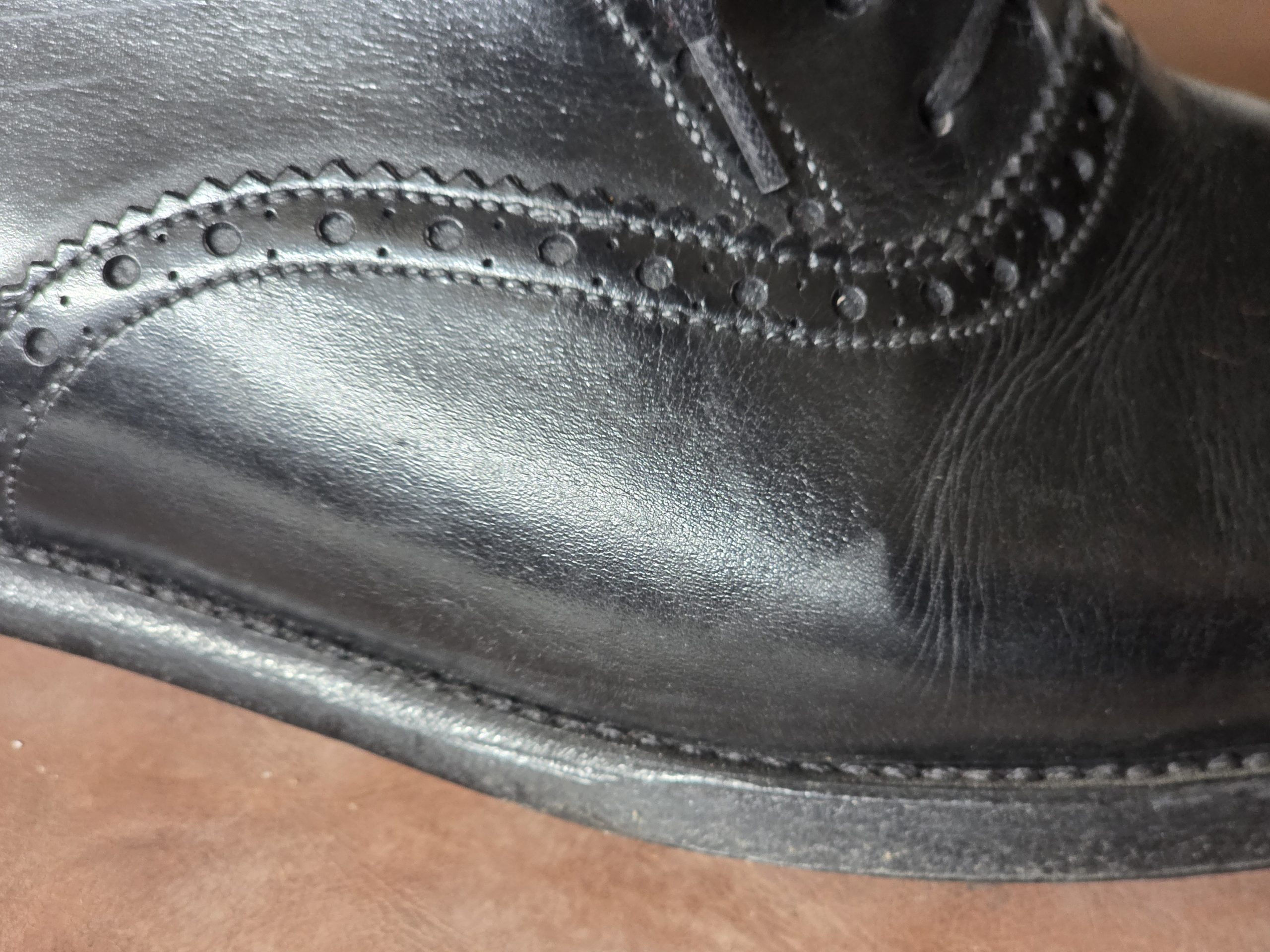
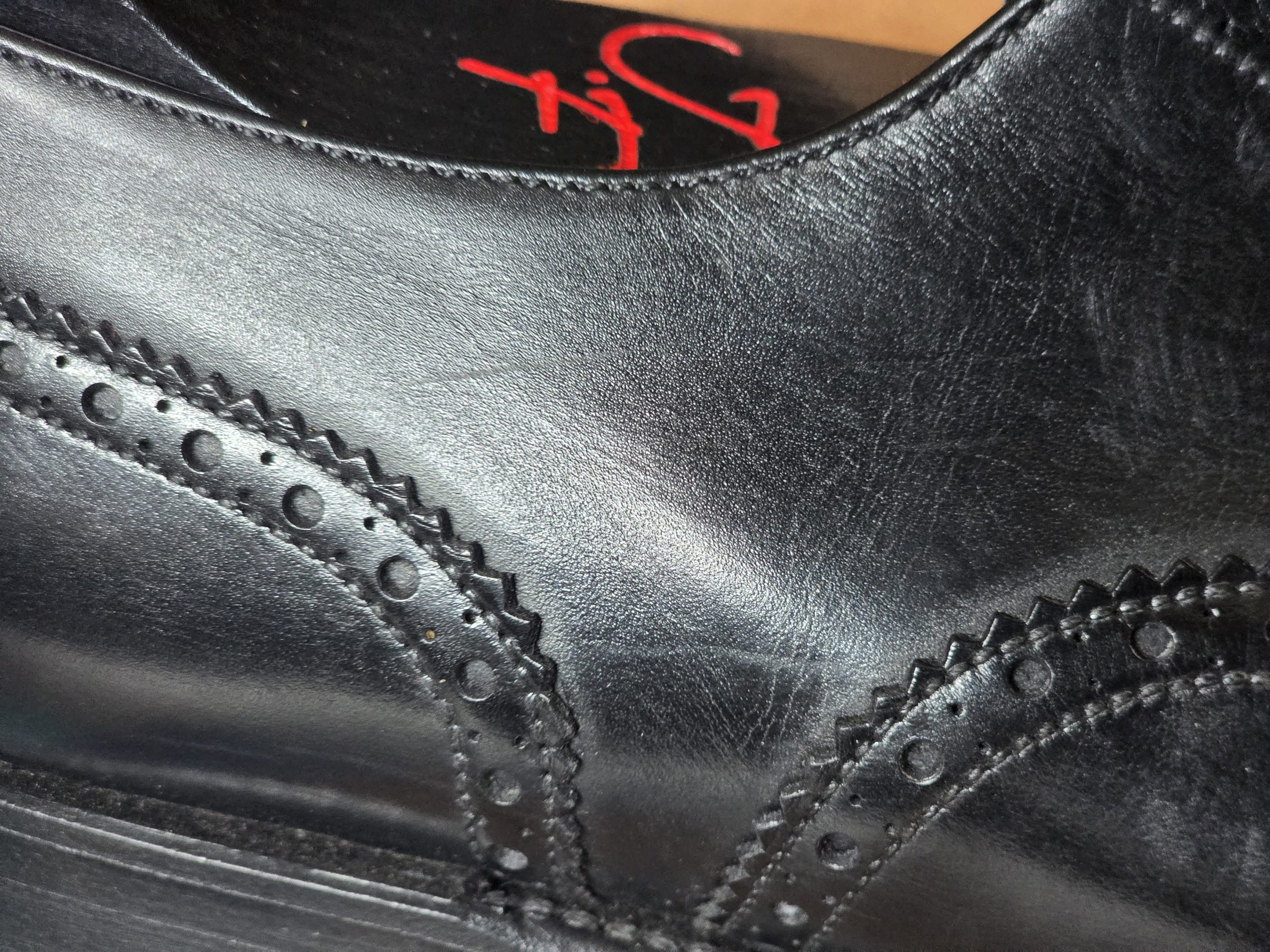
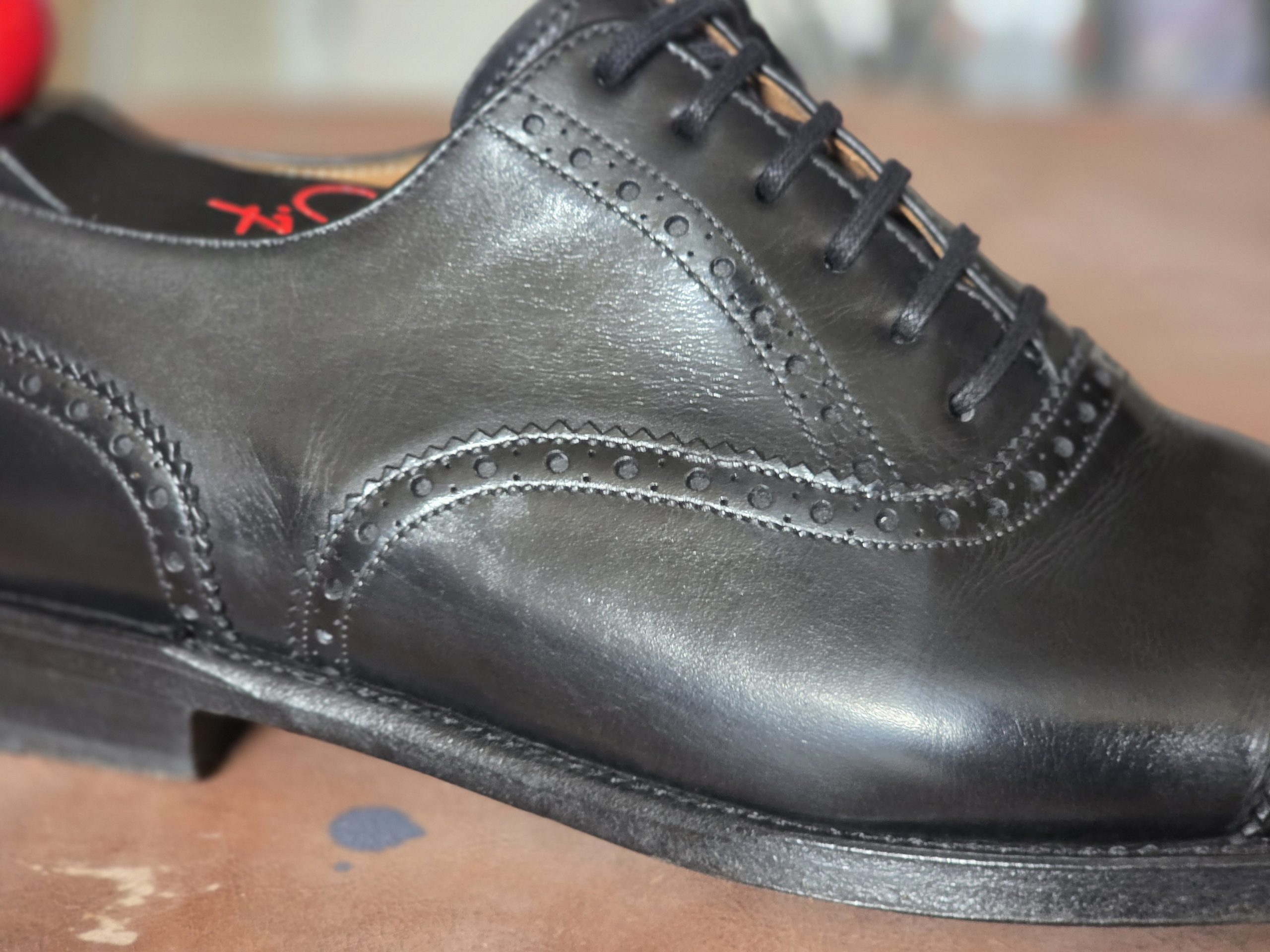
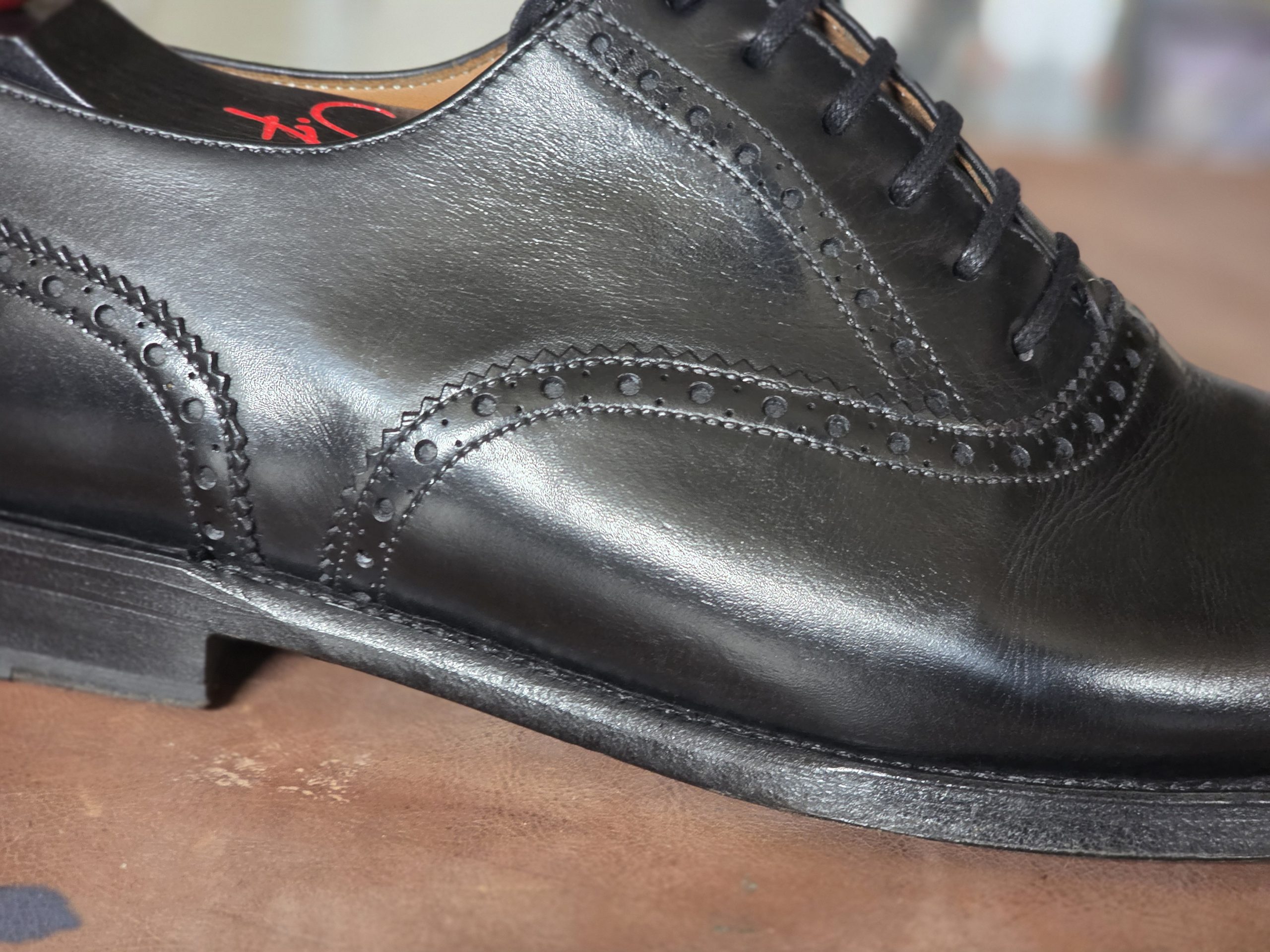
You might brush one shoe against the heel of the other. Catch the toe against a stair. Rub your heel against the leg of your office chair. Clip the underside of a desk. Kick a curb. Brush against somebody else’s shoe. Walk across cobblestones and catch one on the toe. The possibilities are nearly endless.
And nine times out of ten, you will have absolutely no recollection of doing it. That is normal. I have done it myself.
I am extremely conscious of my shoes. I have spent decades working with footwear. And yet, I still scuff mine.
Unless you intend to stare at your feet during every step you take—which I certainly don’t recommend—you are eventually going to mark your shoes.
The Saint Crispin’s Story That Inspired The Original Rant
One of the examples that has always stuck with me came from Styleforum years ago.
A gentleman had purchased a pair of Saint Crispin’s shoes — very high-end, largely handmade footwear — and was complaining on the Saint Crispin’s thread about scratches and scuffs appearing around the heels of his shoes.
The implication was that there was somehow something wrong with the leather. What baffled me even more was seeing other people essentially validate the complaint by agreeing that the scuffs shouldn’t have happened. I couldn’t believe the amount of ignorant groupthink that was occurring.
And I remember thinking: has anyone stopped to consider that he is simply scuffing his own shoes?
That was the entire point. A scratch appearing on the heel does not materialize because Saint Crispin’s used bad leather. Something has to come into contact with that heel. And the heel is probably one of the easiest areas of a shoe to damage without realizing it. It’s the part that I definitely damage the most.
You sit at a desk and catch it against an office chair. You cross your feet underneath you. You brush one shoe against the other. You catch the edge of a stair. You hit a table leg. You walk through a crowded pub, restaurant, train station, or city street.
Then later you look down, discover a scratch, and think, “How did that get there?” Not remembering how something happened does not mean that nothing happened and it just magically appeared.
That Styleforum discussion was a perfect example of something I have seen repeatedly throughout my years in the shoe industry: when people spend a lot of money on shoes, and their expectations start to verge on fantasy rather than reality.
They think: “I paid a lot for these. They shouldn’t scuff.”
But the price of a shoe does not change the laws of physics. In fact, Saint Crispin’s is actually a great example because you are dealing with beautiful, natural leathers rather than some heavily coated synthetic-looking material designed to withstand abuse without showing much character.
Expensive leather is still leather. And sometimes the very characteristics that make a leather beautiful, natural, and interesting are also the characteristics that allow it to show wear. That does not make the leather defective. It means you are wearing it, as intended.
Some Leathers Scuff More Easily Than Others
There is no universal answer to how easily a shoe should scuff. Smooth calfskin can generally handle normal wear very well, particularly darker box calf. A small mark can often disappear after nothing more than brushing and polishing.
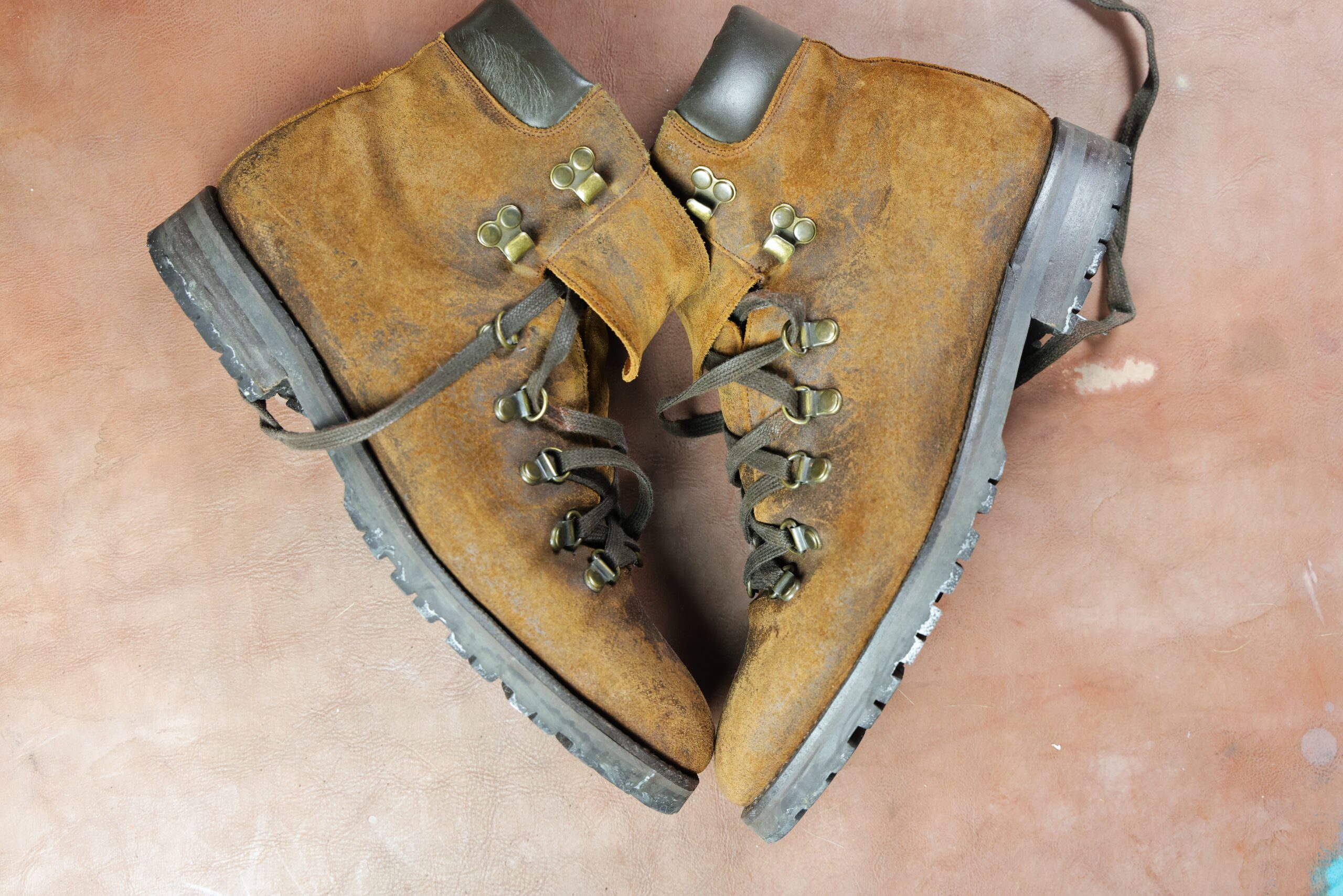
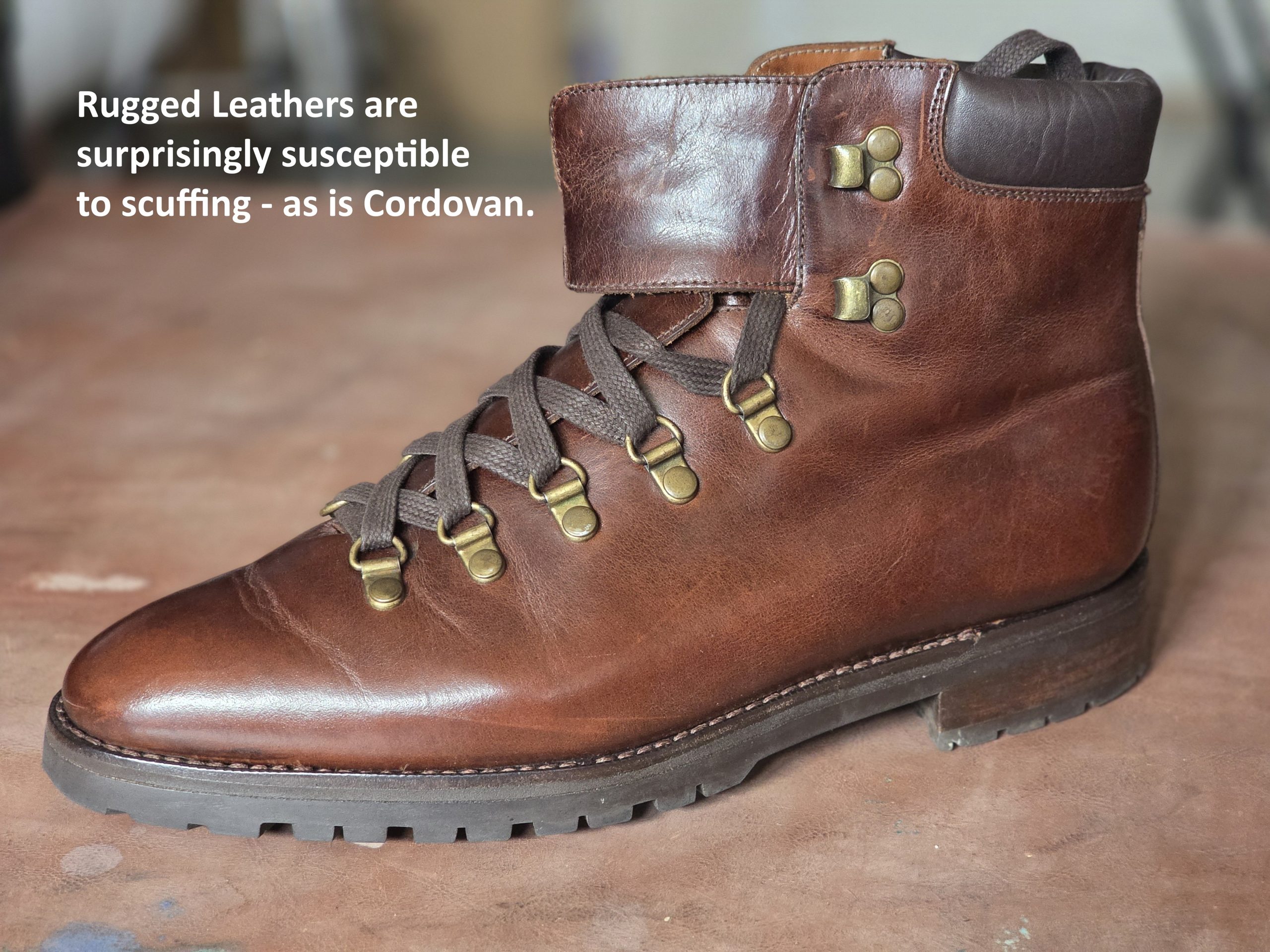
Other leathers can be considerably more reactive. Vegetable-tanned leathers, certain crust leathers, shell cordovan, pull-up leathers, oily leathers, and various grain leathers can all show scratches or changes in surface appearance differently. Just look at my lovely waxy commander boots in the main image. Scuffed to death!
And then there are patinated shoes. A hand-applied patina is quite literally created by manipulating color at the surface of the shoe. Part of the appeal is that the color is nuanced rather than perfectly uniform. Naturally, how that finish reacts to abrasion can also be different from a deeply dyed, uniform black box calf. This variation is part of leather.
We seem to have reached a strange point where people want natural materials while simultaneously expecting them to behave like synthetic ones. You cannot really have both.
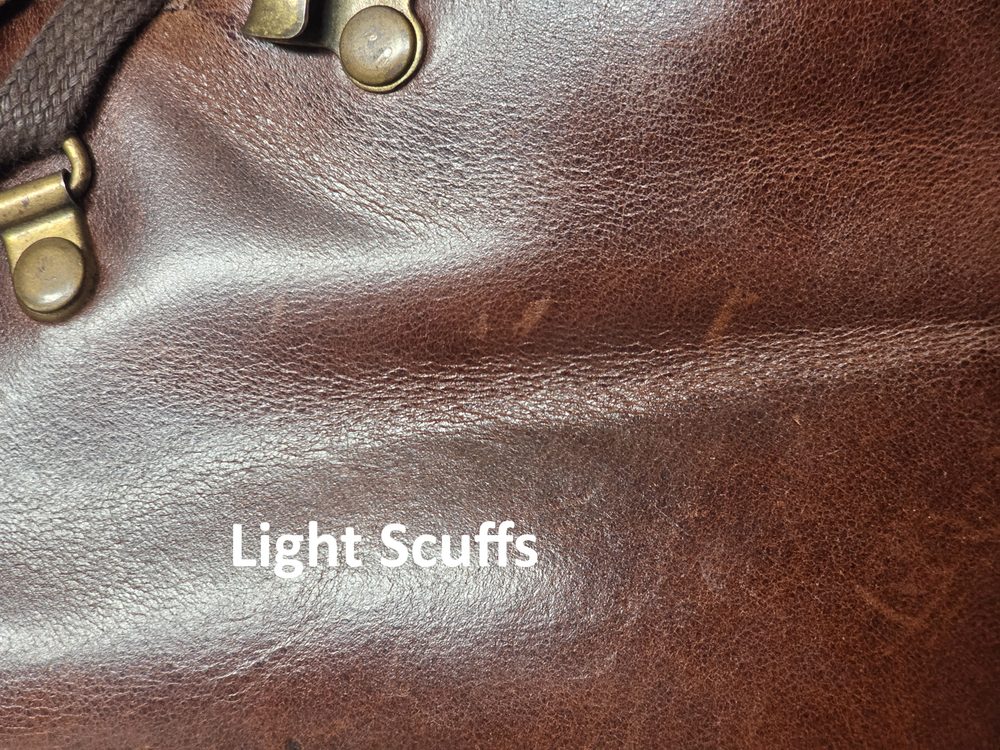
Scuff vs. Scratch: They Are Not Always the Same Thing
It is also important to determine whether you actually have a scuff.
People tend to use “scuff” for virtually every mark that appears on a shoe, but there is a difference between surface transfer and physical damage.
A light scuff normally affects the surface of the leather or its polish. Sometimes material from whatever you hit has actually transferred onto the shoe. This can be fixed.
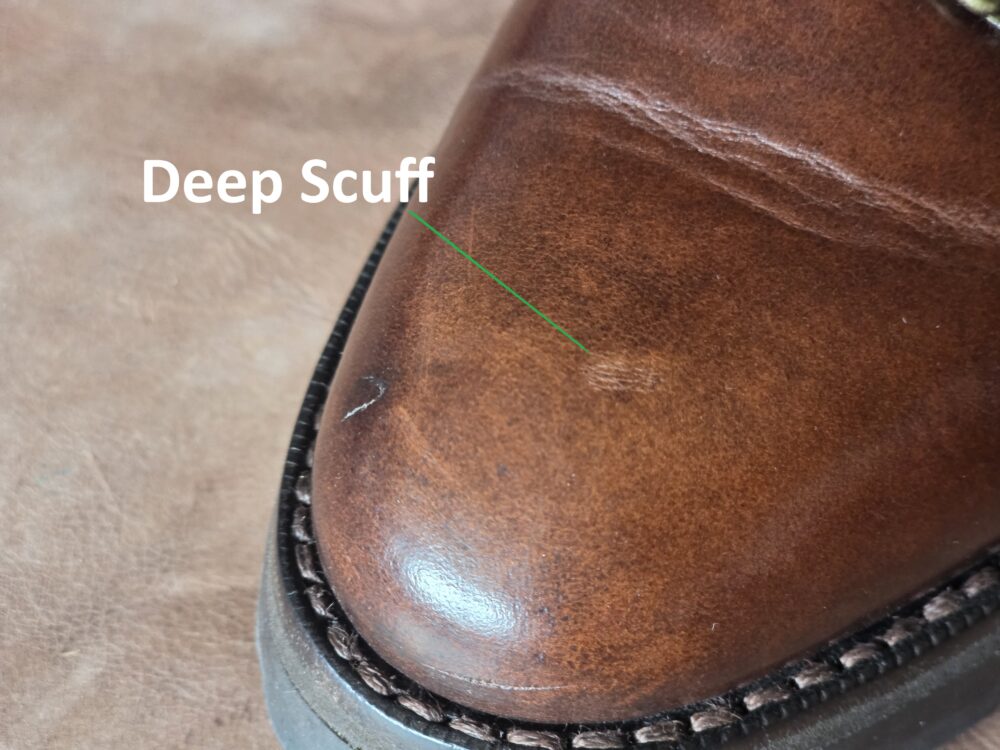
A deeper scuff may have disturbed some of the leather’s finish or color. This can also be fixed.
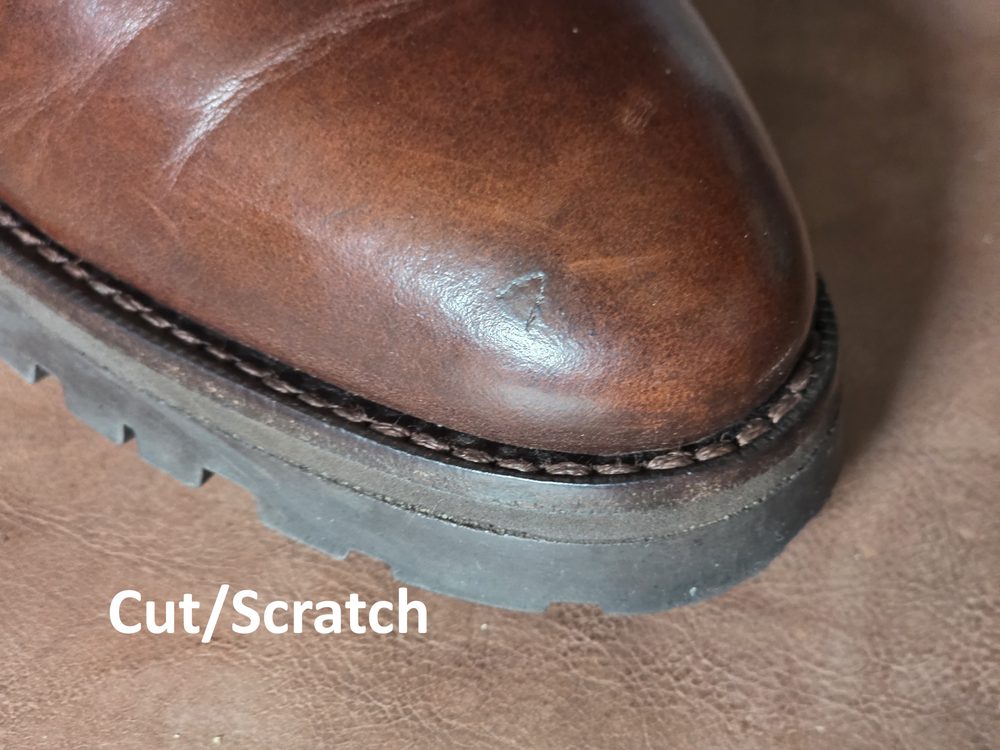
A scratch physically cuts or abrades the leather itself. This is much harder to fix, if at all.
Those are three different things and require different expectations.
If somebody’s rubber sole drags across your toe and leaves a black streak, your leather may be completely unharmed beneath it.
If you drag that same toe against exposed concrete and remove the outer surface of the leather, no amount of brushing is going to magically put the missing material back. Scuffs are fine. Scratches are what you need to avoid.
How to Remove Light Scuffs From Leather Shoes
Before reaching for every shoe-care product you own, start simple.
This is something I continue to stress with shoe care in general: do not overdo it. A little goes a long way.
1. Brush the Shoe
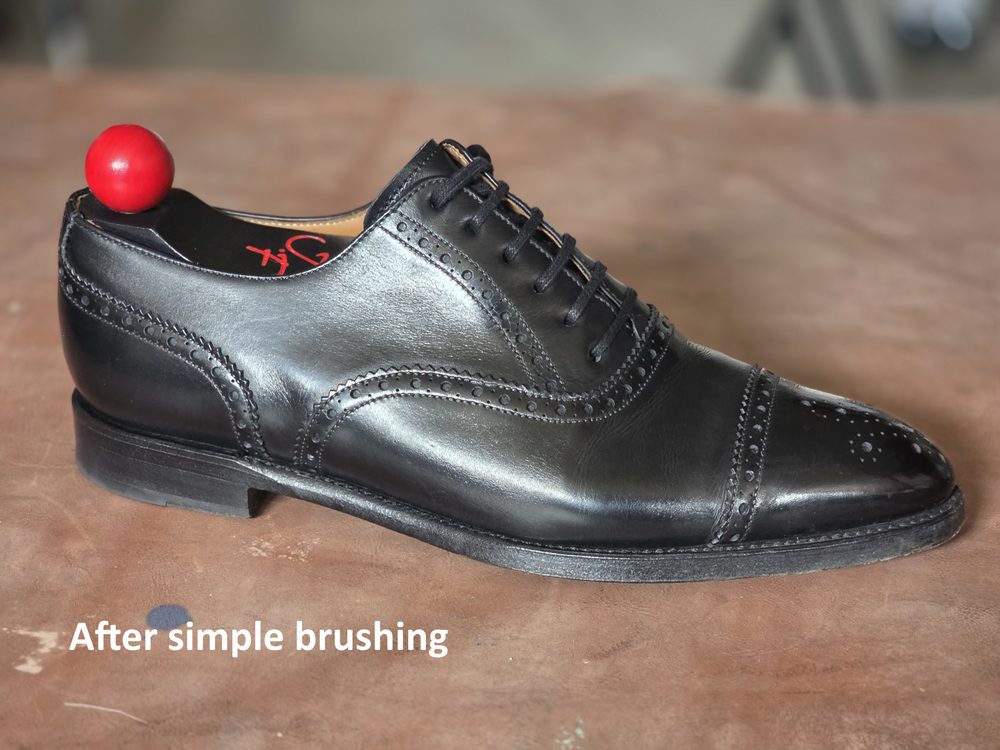
Start with a good brushing. You would be amazed at how many apparent “scuffs” are simply dirt, dust, or foreign material sitting on top of the leather. A horsehair brush is perfectly adequate for this.
Brush firmly and see what remains.
2. Try a Cloth
If the mark remains, take a clean, soft cotton cloth and gently buff the area in circular motions.
Again, you are determining whether something has transferred onto the shoe or whether the leather itself has been affected.
Do not immediately start rubbing aggressively. More force is not automatically more effective. You can remove the finish with too much elbow grease, especially on a crust leather shoe.
3. Apply Cream Polish When Color Has Been Lost
If the scuff has removed some color but has not physically damaged the leather, cream polish is usually your friend.
Cream polish is primarily useful for nourishing and rejuvenating color.
Apply a small amount in the appropriate color, work it gently into the area, allow it to settle, and brush. You may be surprised how much disappears.
And remember that you do not necessarily need a 100% identical color match. Shoe polish can also be used to develop and subtly alter the character of leather over time.
4. Use Wax for Protection and the Final Finish
Wax polish serves a somewhat different purpose.
Cream is more useful for restoring color. Wax is more useful for shine and creating a protective surface (to help prevent further scuffing).
Once the scuffed area has been tidied and the color looks right, you can reapply your wax finish if needed. It is not mandatory to do this.
If you maintain a mirror shine on the toe, you may need to rebuild part of that shine where the scuff occurred. You can read this post about fixing your mirror shine.
That is normal. A mirror shine is essentially layers of wax sitting above the leather. If something scrapes against it, those layers can be disturbed.
The good news is that sometimes the thing that looks horrifying is mostly damage to the polish rather than the leather underneath it.
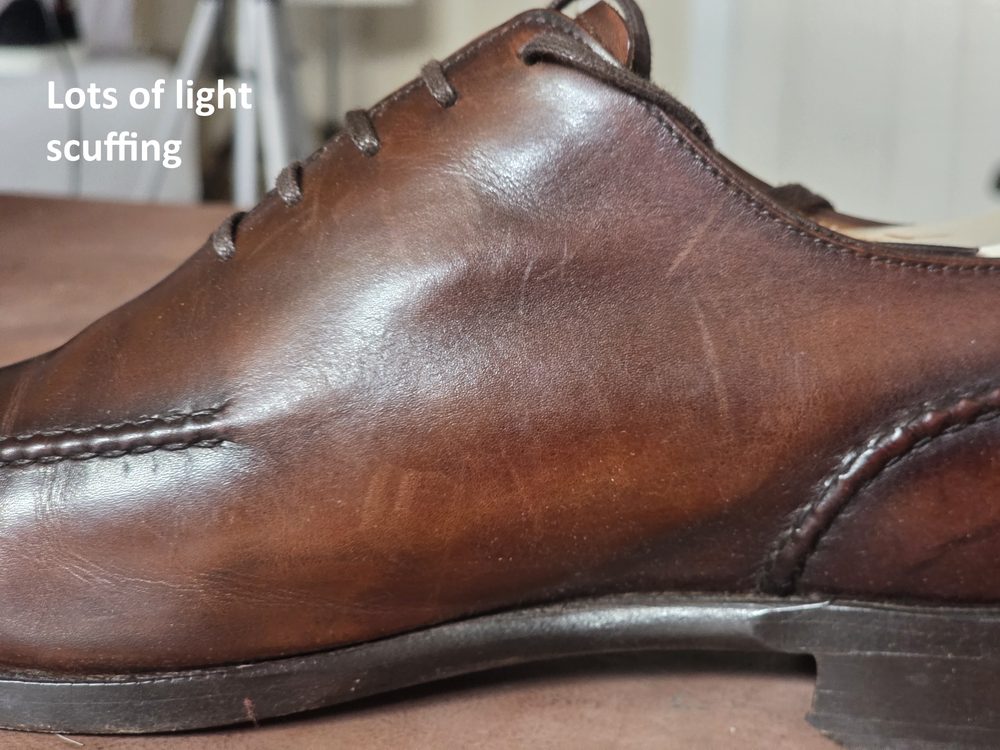
Do You Need Conditioner for a Scuff?
It depends. Some scuffs just need a quick conditioning. Some leathers cannot be waxed or have cream polish added. Newly popular Waxy Commander leather is an example. It needs a conditioner. See here how I fixed up my pair.
This is another area where people tend to attack a simple problem with too many products, particularly on crust or veg-tanned leathers. A quick scuff fix does not always require a full rejuvenation treatment.
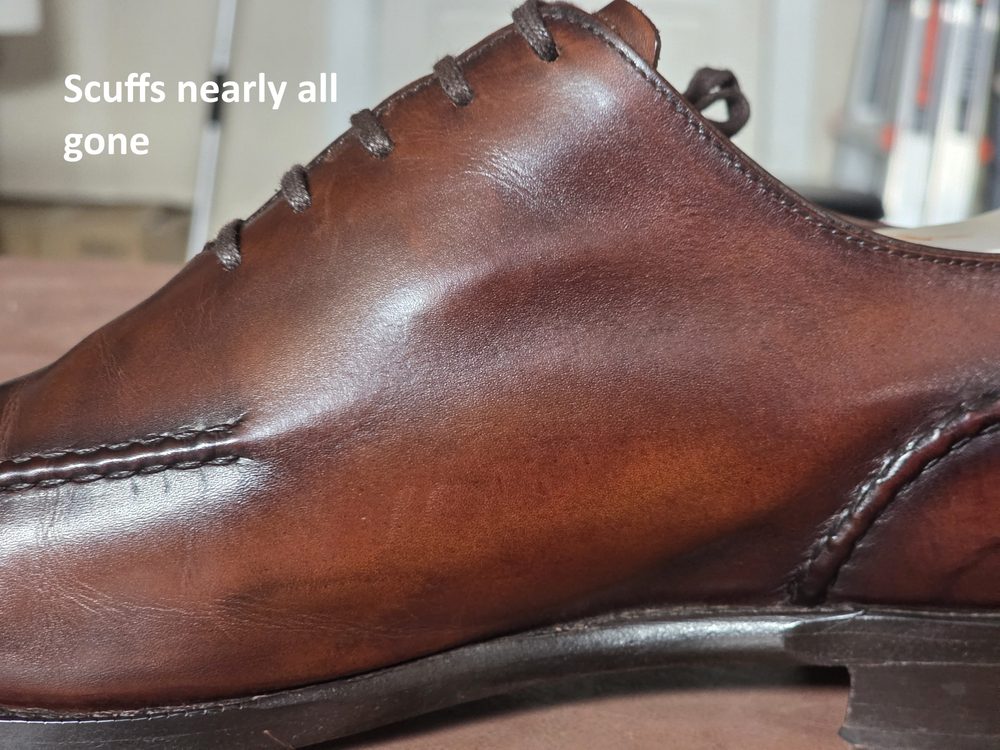
Conditioner is not a magic scuff remover, but a good conditioner can greatly help. Deeper, penetrating conditioners, such as Saphir’s Mink Oil Renovateur, are great at assisting in scuff removal. Lighter conditioners, less so.
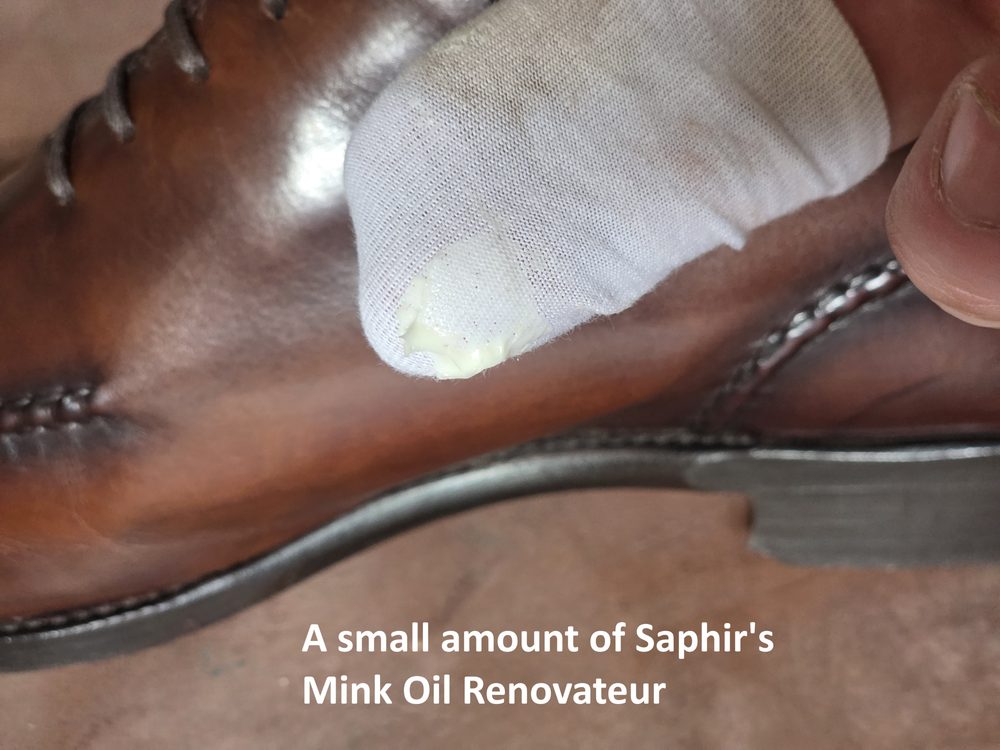
If the leather genuinely needs conditioning because it is dry, then condition it. But do not condition your entire pair of shoes simply because you discovered one little mark on the toe. First try the other methods listed above.
Over-conditioning leather can create its own problems, particularly with more reactive leathers.
Use shoe-care products because the leather needs them—not because you feel obligated to perform six steps every time the shoes leave the house.
Sometimes brushing is enough. Sometimes cream is enough. Knowing when to stop is as important as knowing what to apply.
What About Deep Scratches?
Deep scratches are different.
If the grain has physically been cut, gouged or removed, you are dealing with damage to the leather itself rather than a superficial scuff. Shoe care can often make that damage significantly less noticeable but not necessarily fix it entirely.
Cream can restore lost color. Wax can help visually smooth the surface.
A skilled shoe shiner, patina artist or cobbler may be able to disguise the area remarkably well.
But there is a point at which leather cannot simply be “restored” to factory-new condition.
Again, leather is skin. If you cut your skin, moisturizing it does not make the cut cease to have happened. A scar may develop and remain permanent (and our skin is living; shoe leather is not, so it doesn’t heal by itself).
The same logic applies here. And personally, unless the damage is severe, I wouldn’t obsess over it.
Good shoes that are actually worn will eventually tell a story.
Scuffs on Suede and Nubuck Are Different
Suede and nubuck should not be treated like smooth calfskin.
Please do not take cream and wax polish and start smearing it onto your suede because you saw the word “scuff.”
Most apparent marks in suede concern the nap rather than damage to a smooth surface finish.
Start with a proper suede brush and work the fibers back into position.
For dirt or stubborn marks, use products specifically intended for suede and nubuck.
These leathers require their own care routine, so keep that distinction clear. But that is another post for another time.
Don’t Forget the Sole Edges
There is another kind of scuffing that people often ignore completely: the sole and heel edges.
You can have a beautifully polished upper and completely battered sole edges, and the shoes will still look neglected.
I actually think worn sole edges are one of the biggest giveaways of a shoe that needs attention. Fortunately, they are also easy to tidy, especially with Saphir’s new Edge Dressing Pen.
Cream polish, edge dressing, or a dedicated edge and heel dressing product can restore the color very quickly.
It is a tiny detail that can dramatically change how presentable the entire shoe looks.
Can You Prevent Shoe Scuffs?
You can reduce them. You cannot eliminate them. But the only way to prevent them is to be more mindful. People often hate to hear that accountability is the only way to prevent something, but 99% of the time, it is the only truth. No one scuffed your shoes but you.
Being aware of how you cross your legs, where you place your feet beneath a desk, how closely you walk behind someone, or how you navigate stairs will certainly help.
Wax polish can also provide some protection to smooth leather because whatever brushes against the shoe may initially encounter the wax layer instead of the leather itself.
But ultimately, shoes live approximately one inch above the ground and below many surfaces much stronger than leather.
Think about that.
We voluntarily strap expensive leather objects to the lowest point of our bodies and then walk them through streets, offices, restaurants, trains, airports, sidewalks, rain, dirt, and crowds.
And somehow we are surprised when they acquire marks.
That expectation needs adjusting.
Scuffs Are Part of Wearing Good Shoes
The obsession with keeping shoes permanently pristine has always been slightly strange to me. Take care of them, absolutely.
Use shoe trees. Brush them. Polish them. Condition them when they actually require conditioning.
Repair them. Protect your investment. But also wear them without overthinking every issue you run into. The only way they remain perfect is on the mantlepiece. Nowhere else.
Leather evolves. Color changes. Creases develop. Soles wear down. Small scratches appear. Polish builds up and gets removed. It’s all part of the process.
We cannot praise beautifully aged twenty-year-old leather while simultaneously panicking over every tiny mark that occurs during the journey to getting there.
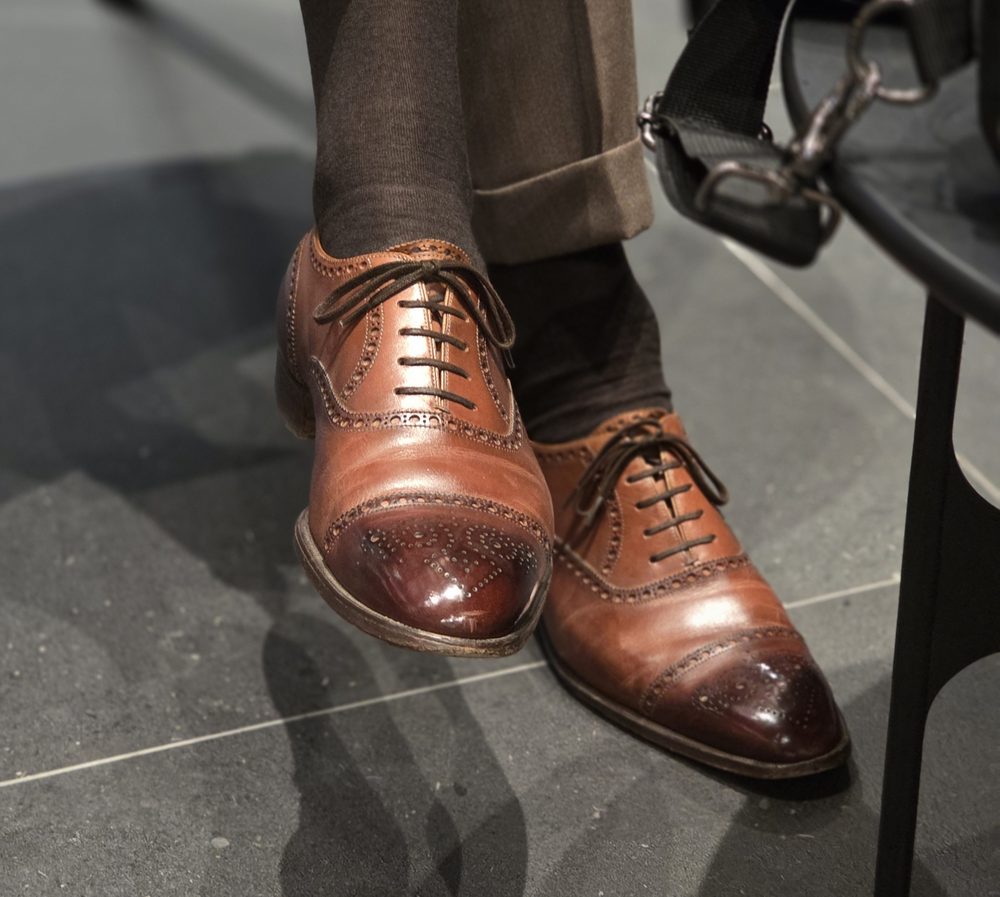
A scuff is usually not evidence of defective leather.
It is evidence that you wore your shoes.
And most of the time, with five minutes, a brush and a little shoe polish, nobody but you will ever know it was there.
If you enjoy our educational posts, make sure to check out the rest of them here.
—Justin FitzPatrick, The Shoe Snob
Shop · Marketplace · Patreon


