


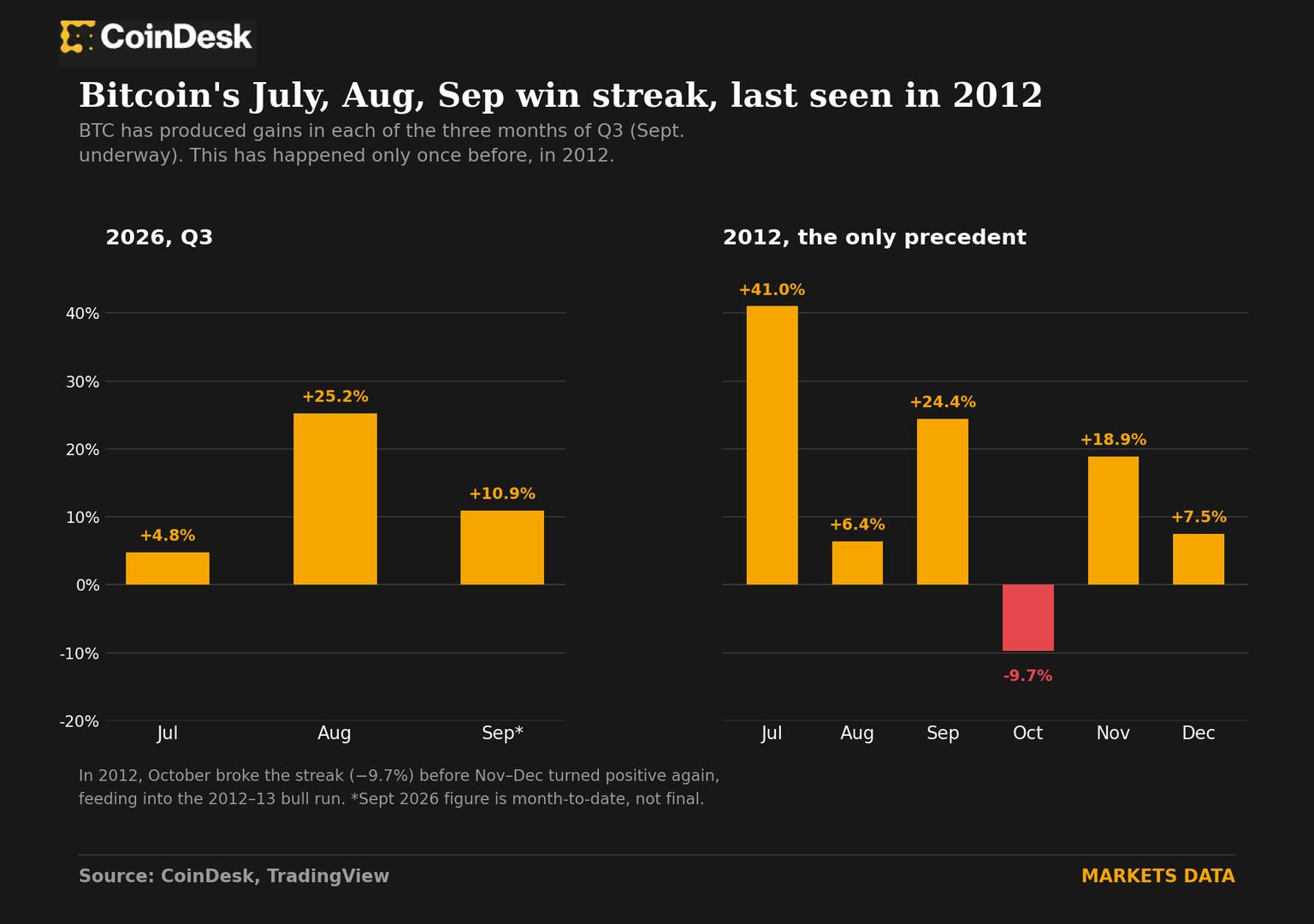
Whether this year follows a similar path – a red October followed by a big bull run – or takes a different route entirely, isn’t something the 2012 precedent can settle on its own. The sample size is too small. Bitcoin has been trading from at least late 2010 and since then, this pattern has shown up only once. So, there isn’t enough repetition to draw a meaningful conclusion about what happens next.
Still, the setup is noteworthy because of its rarity, the outsized rally that followed the 2012 example and bitcoin’s broader four-year market cycle. Some cycle models point to a potentially bullish phase beginning around October or November, although historical cycle patterns are approximate rather than fixed calendar rules
The magnitude of any rally may also be smaller than in bitcoin’s early years. In 2012, bitcoin was a thinly traded asset worth barely $10, and its market could be moved by a relatively small number of buyers.
Today, bitcoin is part of a multi trillion dollar market with substantial institutional participation, deep spot and derivatives liquidity across dozens of venues, and a broad range of directional and relative-value strategies, including options, futures and basis trades. Those markets did not exist at comparable scale in 2012, making a rally of similar percentage magnitude much harder to achieve today.


