


Conny Waters – AncientPages.com – Around 1 in 10 people worldwide chew betel nuts. However, the earliest beginnings of this widespread drug-use habit are unknown.
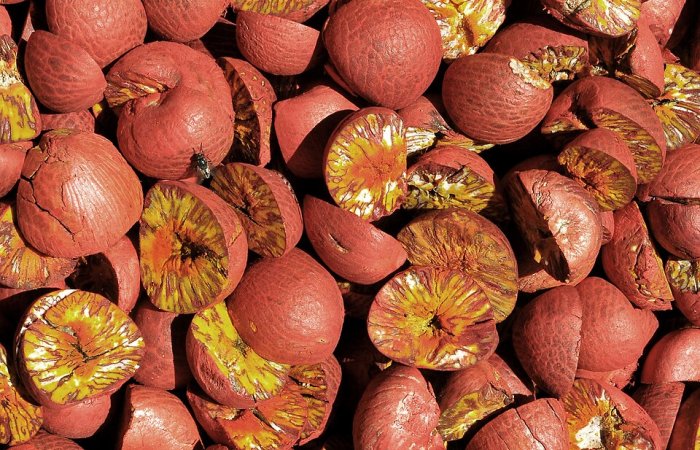
Colored areca nuts [Areca catechu] in the market. Bago, Burma [Myanmar]. This red color determines the color of the spits of people who consume “paan”. Image credit: LBM1948 – CC BY-SA 4.0
A recent study by scientists from the University of Griffith, together with colleagues from Indonesia, reports rare skeletal remains of two preagricultural foragers from Sulawesi, Indonesia, both showing dental pathology attributed to a previously unknown habit of sucking on whole betel nuts.
A psychoactive plant source, betel nut, is recorded among the world’s oldest known drugs.
Although poorly known in Western societies, betel nut is widely used throughout tropical Asia and the Pacific; it is reputed to be the world’s fourth most popular psychoactive substance after alcohol, caffeine, and nicotine.
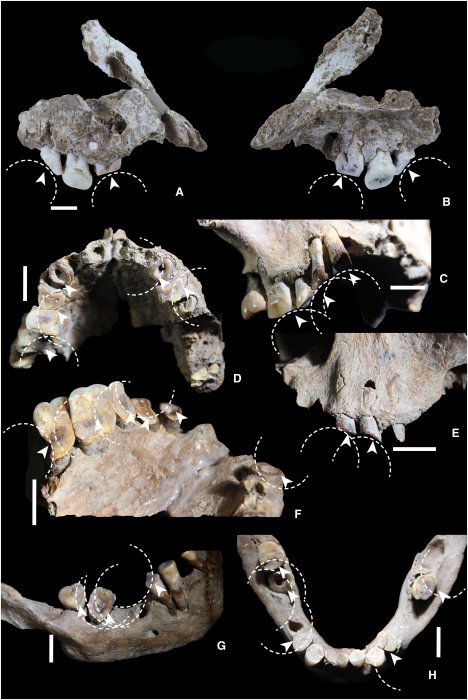
Drug use-related dental wear in early Sulawesi foragers. Image source: Science Advances
Areca catechu L. is the most widely used variant, and people consume it as both a recreational drug and a traditional medicine across a wide region, from the South Pacific islands to eastern Africa, including the Indian subcontinent, Southeast Asia, much of Melanesia and Micronesia, and parts of coastal southern China. It plays a significant role in social bonding and is integral to greeting customs and communal ceremonies, such as wedding rituals, in many communities throughout the region.
People mix the crushed seeds with slaked lime and betel pepper leaf. Chewing this mix makes them feel more alert and can cause mild euphoria. Lime helps the body absorb alkaloids, and the reaction gives the teeth a reddish-brown color.
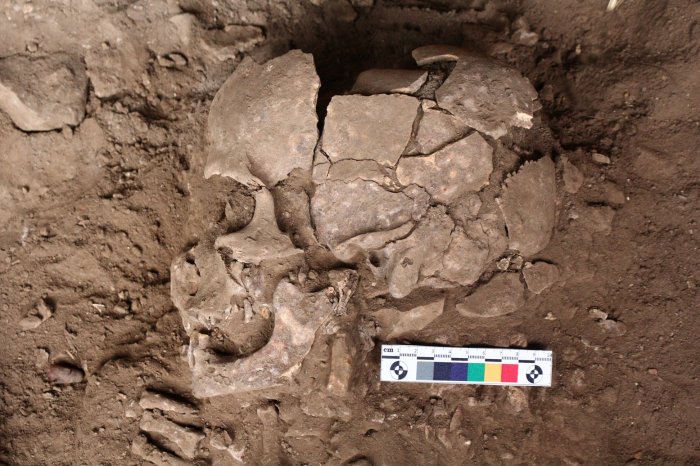
Uncovered evidence of betel’s use in skeletal remains of two early hunter-gatherers from the Indonesian island of Sulawesi. Image credit: University of Griffith
In this study, researchers examined the skeletal remains of two adult foragers from preagricultural Sulawesi, both of which exhibit a form of dental pathology (rounded, hollow-out tooth grooves) that has not previously been recognized or formally described in the literature.
The oldest of them–25,000 to 16,000 years ago- came from the cave of Leang Bulu Bettue. Younger remains, from 7,600 to 6,300 years ago, were found at the Leang Cappalombo 1 site. Both teeth have deep, rounded grooves. Their shape and position suggest that people often held a hard, round object in their mouth and moved it between certain teeth.
The team used a highly minimally invasive soak technique to extract biomolecules from ancient dental remains without cutting, grinding, or acid-etching.
Additionally, chemical analysis showed arecoline in the tooth samples. Arecoline is known to reduce the pain and discomfort associated with periodontitis (a serious gum infection that damages the soft tissue around teeth). Therefore, the foragers may have intentionally used areca seeds as “painkillers.”
See also: More Archaeology News
Using seeds led to tooth damage and pain. Continued use made the pain less noticeable but caused more damage, which led to chewing.
In other words, analysis of two unusually rare skeletons from the Indonesian island of Sulawesi showed that these people used a self-treatment that initially helped but later caused serious tooth problems.
Because the study included just two people, it cannot determine how common this habit was or what caused it.
References:
Source – University of Griffith
Paper – Science Advances
Written by Conny Waters – AncientPages.com Staff Writer

