


Conny Waters – AncientPages.com – While working with old manuscripts in Utrecht University’s Special Collections, Dr Mark de Kreij, an assistant professor of Ancient Greek and Papyrology at the University, made a remarkable find.
The scientist teaches Greek language and literature, and his research focuses on the history of the ancient book. Since 2021, he has focused his work on uncovering forgotten papyrus collections.
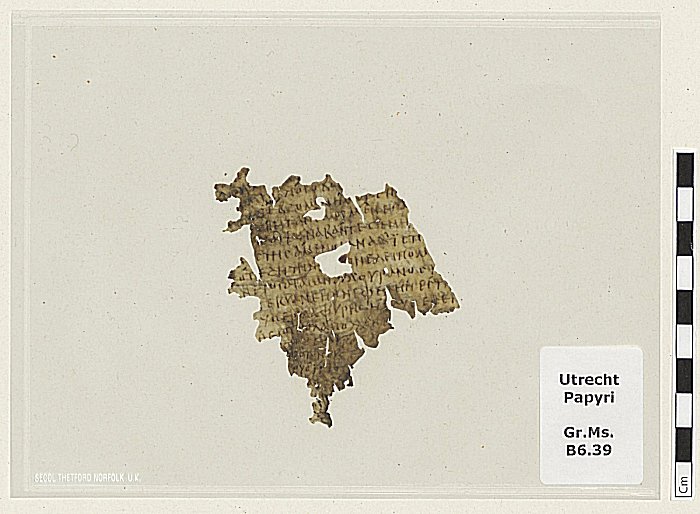
A fragment of the “Odyssey” on parchment. Image credit: Utrecht University
During his project, de Kreij found a small fragment of a parchment codex dated to the 3rd or 4th century CE, which contains verses from Book 12 of the Odyssey, one of only about thirty such fragments known worldwide. The unique fragment is written on both sides.
In the mid-20th century, Utrecht University purchased a collection of early Christian manuscripts from the heirs of the German scholar Carl Schmidt.
Most of these texts were written on parchment in Coptic, the Egyptian language that uses the Greek alphabet. The collection also included several Egyptian and Greek papyri, including a damaged, discolored fragment with small, neat letters that was initially considered an unremarkable 7th-century piece.
However, the scientist soon identified words characteristic of the Homeric famous epics.
His additional research made it possible to link the discovered verses to Book 12 of the Odyssey.
Book 12 is the last part of Odysseus’ story within the story, just before he returns to Ithaca. In Book 6, he reached the island of Scheria, where the Phaeacians live, after a storm destroyed his ship and killed all his friends. After he arrives, Odysseus tells his hosts in books 9-12 about the trip that took him from Troy to Scheria. He tells stories about the Lotus Eaters, Polyphemus the Cyclops, Circe and Calypso, and how he lost his ship.
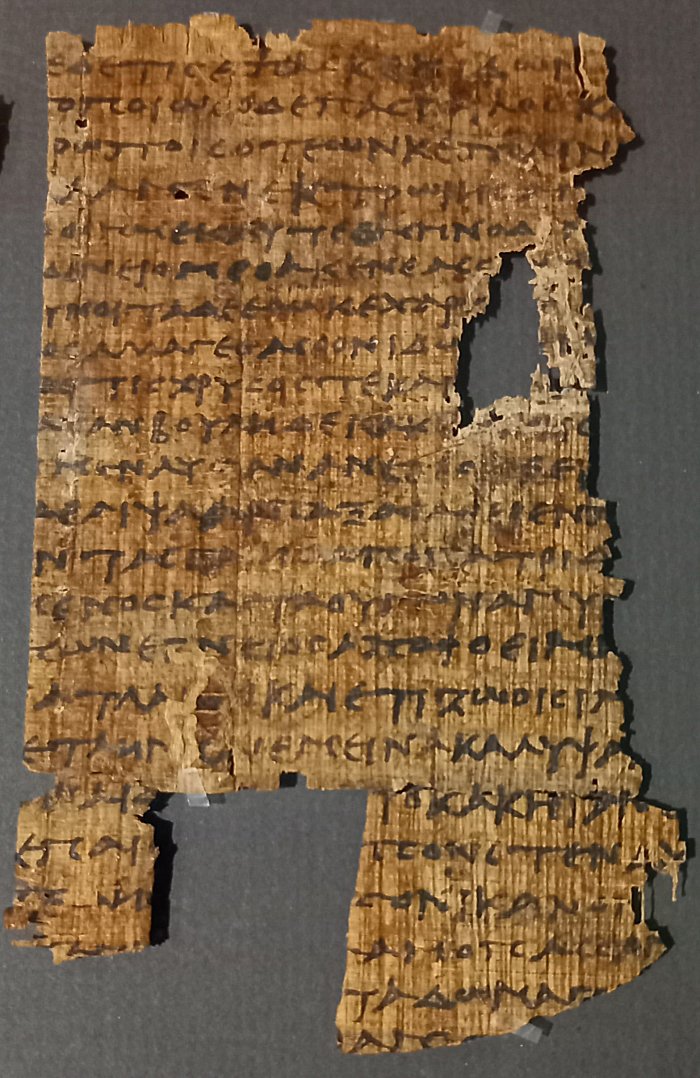
Oldest-known manuscript fragment of the Odyssey, produced in Ptolemaic Egypt during the 3rd century BC and unearthed in Medinet Ghoram. (P. Jouguet excavations). Institute of Papyrology of the Sorbonne, inv.Sorb.2245. Image credit: Zunkir – CC BY-SA 4.0
At the end of Odysseus’ long story, the court of the Phaeacians learns that his companions,
even though he clearly warned them not to, ate the cattle of the Sun god Helios. Helios was angry and asked Zeus to take revenge for his lost animals. Zeus punishes them by wrecking their ship and killing all the crew.
The Odyssey – one of the oldest surviving works of literature – was composed around the 8th or 7th century BC. It is one of two major epics of ancient Greek literature attributed to Homer. Like the Iliad, the Odyssey is divided into 24 books.
The Odyssey has survived the test of time and still remains a great masterwork.
Source
Written by Conny Waters – AncientPages.com Staff Writer

