


Conny Waters – AncientPages.com – The surprisingly large Germanic Iron Age Village, believed to have been an important trade center and dating to the 2nd to 5th centuries AD, sheds new light on close trade relations with the Roman Empire.
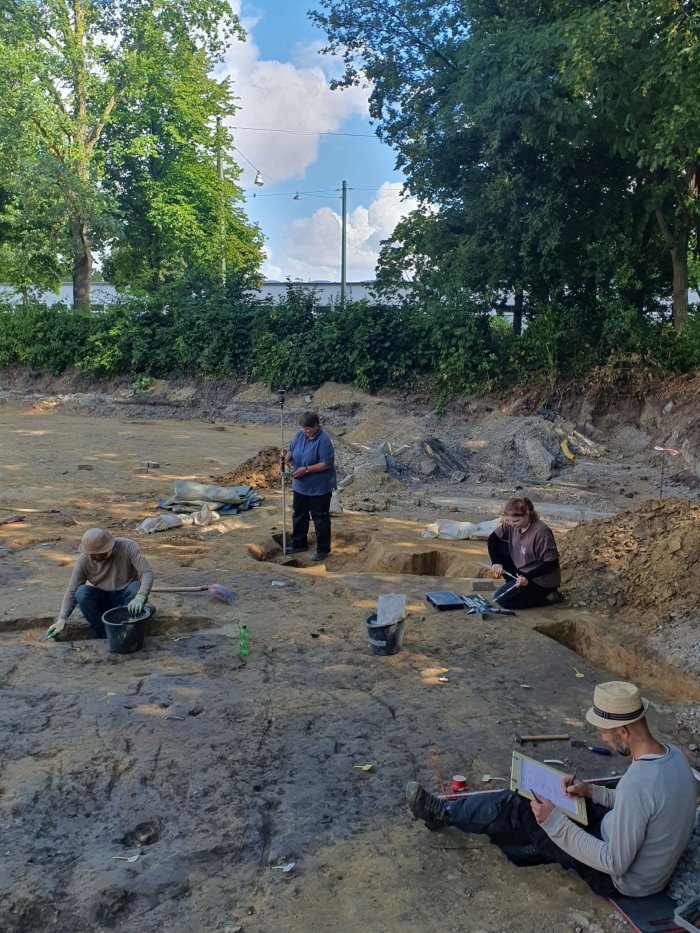
The excavation team is documenting and digging out the former pit fills in the ground; these provide important insights into life in Westphalia during the Roman Imperial period. Image: LWL Archaeology for Westphalia/Sebastian Düvel
After several months of fieldwork, a team of archaeologists, accompanied by workers from the Westphalia-Lippe Regional Association (LWL), finally completed excavations at a German settlement in the south-east of the city of Bielefeld. The team has excavated about 30 homes, some of which reached 8m wide and 30m long. Next to them were auxiliary buildings and small semi-submerged houses.
At a time when most people in East Westphalia lived in isolated farmsteads or small hamlets with just a few farms, this settlement was the exception. Therefore, an interesting issue for the researchers is to explain why the density of the buildings and their organized location stand in such a contrast to other buildings typical for the region at that time.
Fertile soil on the northern edge of the Teutoburg Forest and the Mühlenbach stream, which flowed through the settlement and the Roman pass, were certainly the most important factors in the village’s establishment, according to LWL archaeologist Sebastian Düvel.
The population of this Iron Age village undoubtedly benefited from a favorable geographical location.
Another important reason was the place’s strategic significance, namely, proximity to the ancient Roman pass.
“The Romans left their mark on East Westphalia during their conquests: On their campaigns as far as the Weser River, the river route along the Lippe, as far as Anreppen and Paderborn, ensured supplies. From there, they continued through the Senne region to the Weser,” Düvel commented.
A marching camp was discovered in Sennestadt a few years ago. From this site, the route led north to the Weser River through the 2.5-kilometer Bielefeld Pass, a depression between Sennestadt and Stieghorst, which was monitored by a watchtower on the Sparrenberg Egge ridge.
Experts at the LWL (Westphalian State Museum of Archaeology) confirm that the road connections remained after the Romans left the area. Numerous imported goods, mainly found in the nearby settlement cemetery, indicate ongoing contact with the Roman world west of the Rhine.
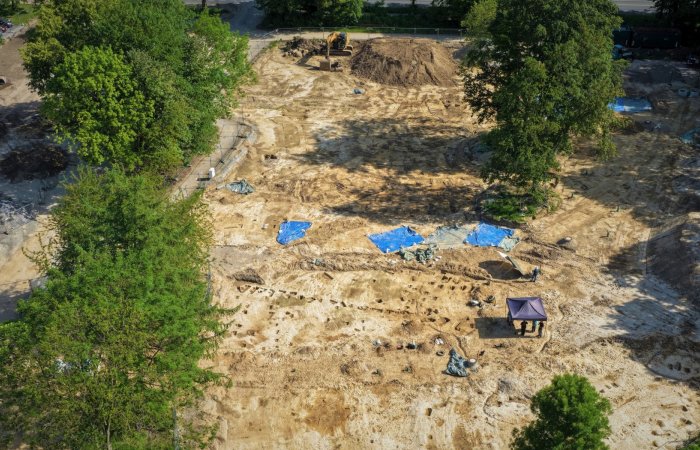
Aerial view of the current excavation site in front of the new school building in Bielefeld-Sieker. The rows of excavated archaeological finds still mark the locations of the Germanic longhouses.
Image: LWL Archaeology for Westphalia/Arne Koch
“Apparently, a trade route developed along this axis well into the 5th century, as evidenced by numerous Roman coins found along the way,” Düvel says.
Bielefeld was an important route for imperial troops. People living in the ancient city sold extra farm products to the soldiers, who traded luxury goods that have since been found during excavations.
See also: More Archaeology News
The area of this large village southeast of the Mühlenbach was studied in the 1980s. Houses very closely spaced were sometimes rebuilt two or three times in the same spot. This means that the farmstead stayed in use for up to 200 years. While the exact dates are not yet known, the pottery already excavated shows the settlement’s use in the 2nd and 3rd centuries.
Among many finds at the site, there is one – a small Roman coin- particularly important for further study, according to excavation director Dr. Eva Manz.
“It comes from the fill of a hole in which scaffolding posts of a house were inserted and thus provides a precise date for the post-built house.” Such finds also help the experts at LWL Archaeology for Westphalia to investigate the development of house types and their changing room layouts.
Source
Written by Conny Waters – AncientPages.com Staff Writer

