


We’re in the midst of a blockbuster El Niño that could be become the strongest in living memory. It and other very strong, recent El Niños are much stronger than those in the past as the result of human-caused climate change, a new study in Science shows.
The new evidence is “a critical piece of the puzzle” in understanding how rising global temperatures are altering this influential natural climate cycle, says climate scientist Kim Cobb, director of Brown University’s Institute at Brown for Environment and Society, who wasn’t involved with the study.
Climate models have given mixed signals about whether El Niño events could become stronger with climate change. Physical evidence from fossilized corals in the western and central Pacific have bolstered the argument that climate change is strengthening El Niño. But the new study used corals from what is arguably the best place to look, the Galápagos Islands in the eastern tropical Pacific. “It lies in the heart of where El Niño has some of its strongest impacts,” says study co-author Julia Cole, a University of Michigan climate scientist.
On supporting science journalism
If you’re enjoying this article, consider supporting our award-winning journalism by subscribing. By purchasing a subscription you are helping to ensure the future of impactful stories about the discoveries and ideas shaping our world today.
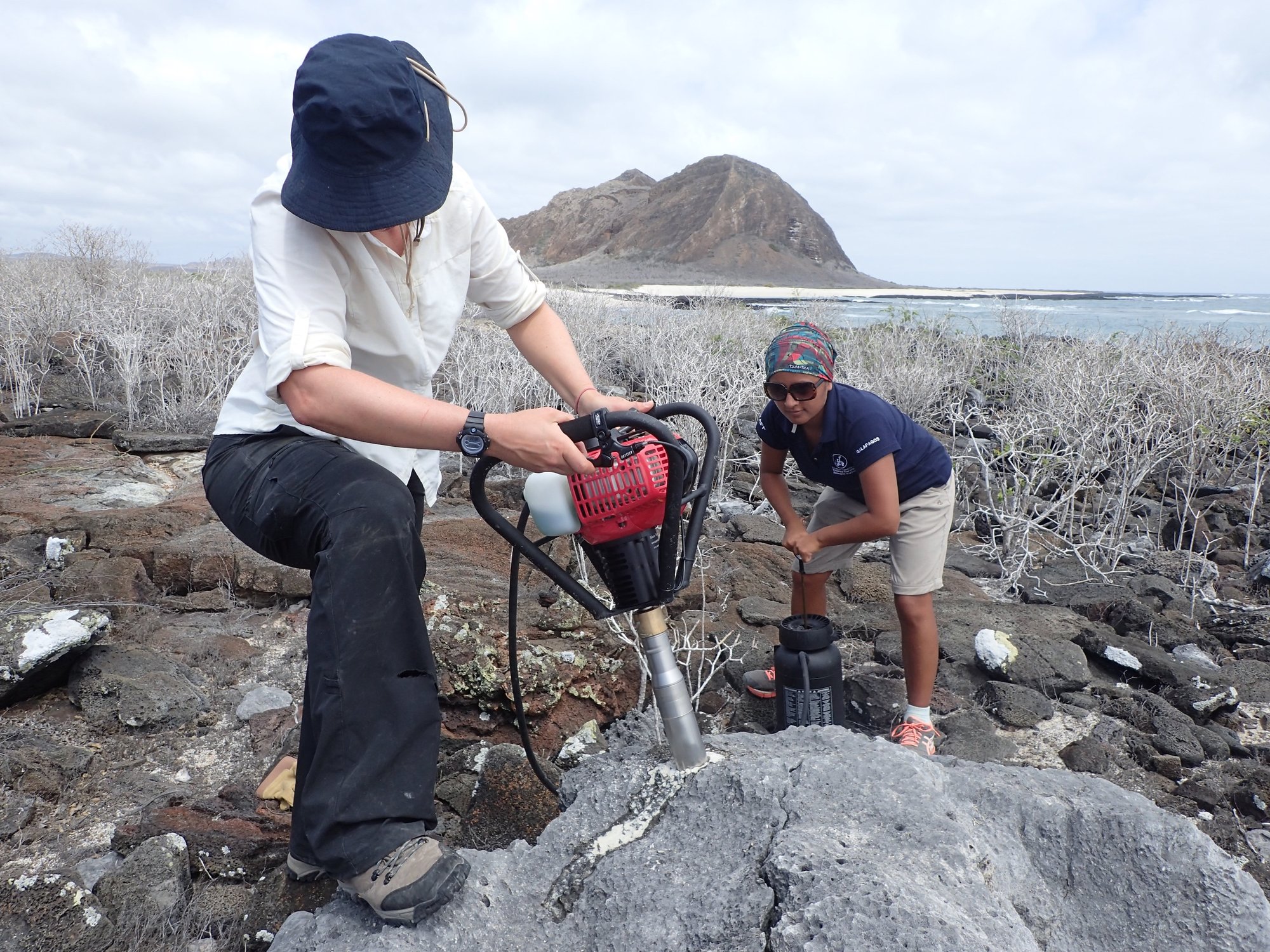
University of Arizona researcher Diane Thompson takes a sample from an ancient coral, along with Andrea Lema, formerly at Charles Darwin Research Station.
Julia Cole/University of Michigan
An El Niño is part of a larger cycle called the El Niño–Southern Oscillation (ENSO), a choreographed dance between the ocean and the atmosphere. In its so-called neutral state, trade winds blow from east to west across the tropical Pacific, piling warm water up near Indonesia and Australia and allowing deep, cold water to well up along the coast of South America. During an El Niño, those winds slacken, and the warm water slides eastward, leading to waters becoming generally one to two degrees Celsius above normal in the area around the Galápagos. In a strong El Niño year, they can reach more than two degrees C above normal. This year’s event is predicted to hit three degrees above normal.
These shifts in ocean temperature change where heat is released into the atmosphere, which alters global wind patterns in ways that have huge effects around the world, such as leading to drought and wildfires in Indonesia and wetter weather across the southern U.S. It is those costly effects that make it so important to understand how El Niño is changing and if it will continue to do so in the future.
Handily, corals leave an indirect record of the temperature of the water around them in their growth bands, akin to tree rings. Corals grow their calcium carbonate skeletons by pulling calcium from the ocean water but can substitute the element strontium if needed. They tend to do that when waters are cooler. Likewise, the ratio of two different isotopes of oxygen in the coral changes with the water temperature.
Cole and her team spent years searching for boulders of fossilized coral that had washed up on the beaches of the Galápagos to take samples that spanned at least a couple of decades, providing “windows” into points in the past, as Cole puts it.
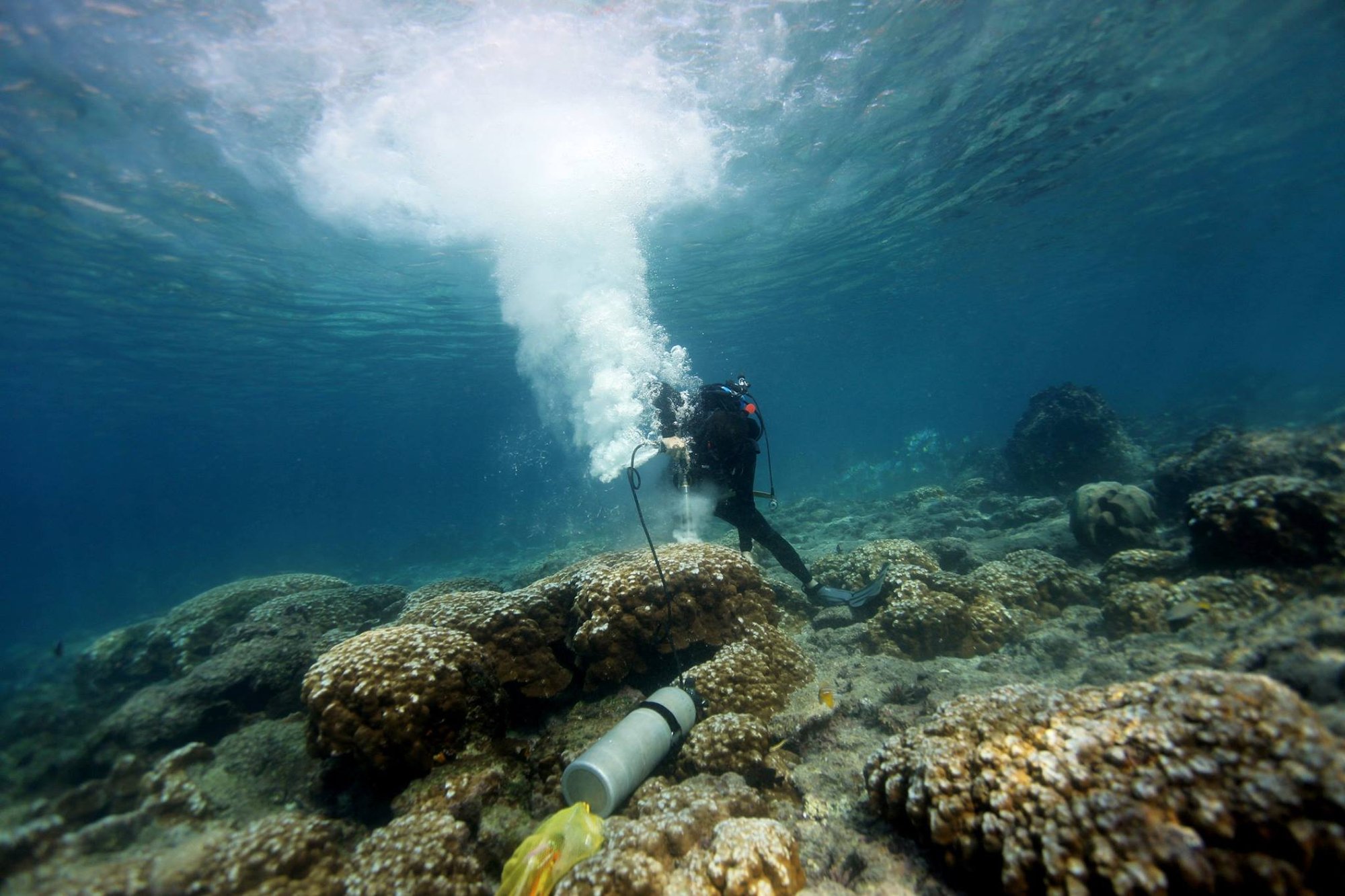
A National Oceanic and Atmospheric Administration scientist uses a pneumatic drill to take a coral core. This process does not injure the colony, which will grow back over the hole in a few years.
NOAA
As the researchers put together the records, they started to see a clear signal but thought, “Is the story really this clean?” she recalls. They decided to run some more data. But eventually the scientists became convinced that they were seeing a real trend: the El Niños of recent decades have been stronger than those of the 20th century and much stronger than those before humans began burning fossil fuels in earnest in the middle of the 19th century.
“Our data, for the first time, allow us to go back into the preindustrial period and say, with some confidence, that what’s happening in the last 40 or 50 years is really unusual,” Cole says. “It is not something we see any evidence for in any of our records over the last millennium.”
Exactly how climate change is causing El Niño to strengthen isn’t yet clear, but some climate models suggest it could be doing so via a phenomenon known as ocean stratification. Basically, as Earth warms, so does the surface of the ocean, including the tropical Pacific. That area is also getting rainier. “Those two things together make the surface layer of the water less dense, so it floats more, and it’s more isolated from the deeper, [cooler] water,” Cole explains. It also means that the surface layer is more responsive when winds shift during an El Niño, causing more warm water in the eastern Pacific.
Whether El Niño will continue to strengthen is something Cole and her colleagues’ records can’t answer, but scientists are using climate models to try to puzzle that out. It’s possible, Cole says, that with the ocean’s surface heating up so much from global warming, “you can warm to the point where the eastern Pacific looks a lot like the western Pacific,” losing the contrast that drives the ENSO cycle. But we simply don’t yet know.
Regardless of what the future has in store for us decades from now, though, “lines of evidence are beginning to pile up” that show that we face much more damaging El Niños today, Cobb says. That means governments need to help vulnerable areas prepare and adapt. And ultimately, researchers say, the findings underscore the need to leave behind a fossil-fuel-driven energy system.
“I think it’s important for us to be able to say, ‘This is happening because climate is warming,’” Cole says, “because I think that does help us understand the consequences of our actions better.”

