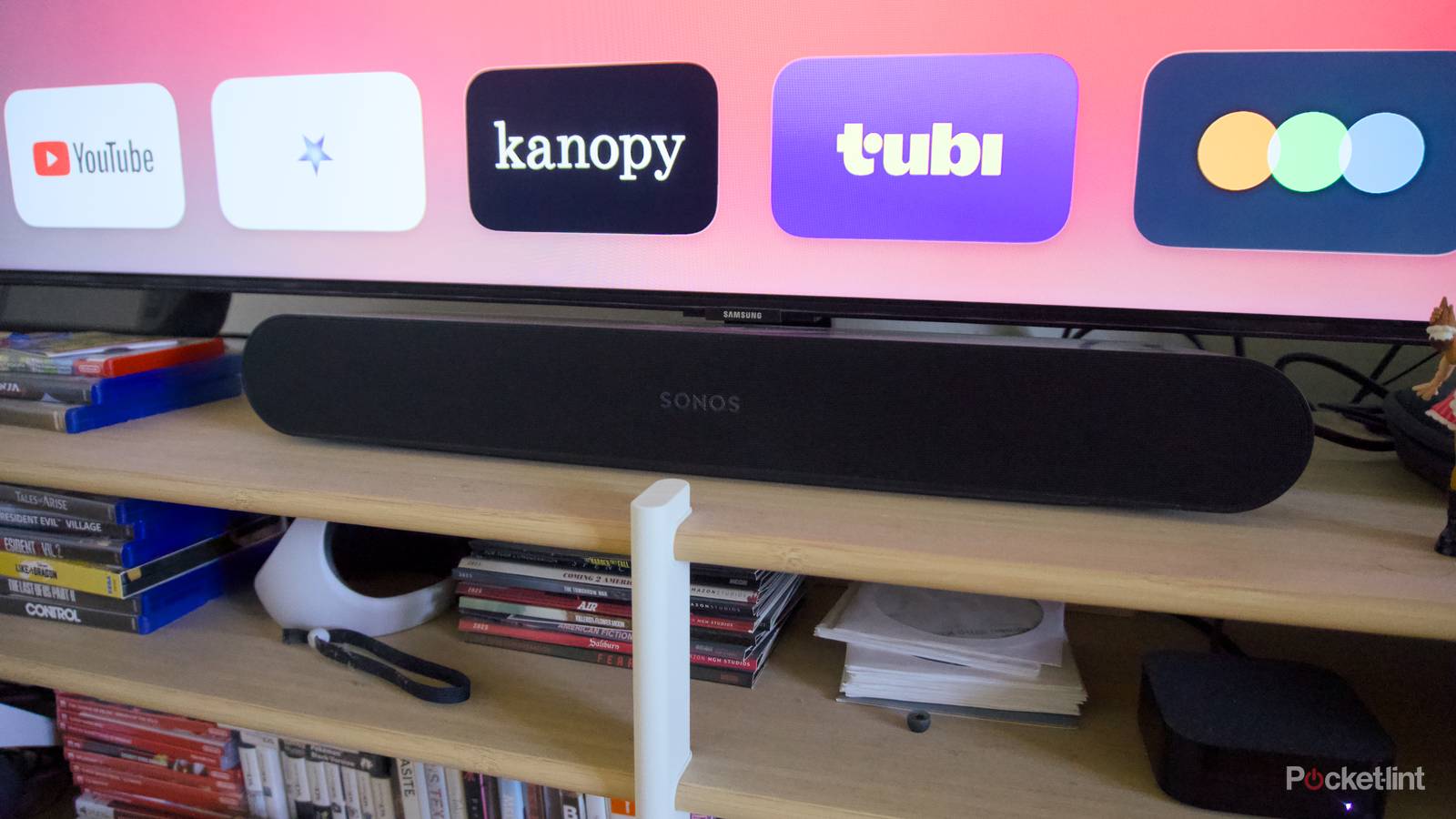
Both in and outside the home theater space, there’s a contingent of audiophiles chasing purity wherever possible. It makes sense, in the abstract. If your audio is lossless, you know you’re getting the best fidelity possible on your hardware, and no one wants to think they’re missing out when they’ve spent several hundred (or several thousand) dollars on a speaker system.
Here’s an unfortunate truth, however: you’re probably not hearing lossless on your TV, even though it’s increasingly prevalent on streaming services such as Apple Music and Spotify. The good news, in a manner of speaking, is that the tech doesn’t matter as much as you might think.

Lossless audio technology
Trivia challenge
From FLAC to Apple Lossless — find out how much you really know about
crystal-clear audio.
FormatsHistoryStreamingCodecsHardware
What does FLAC stand for in audio technology?
Correct! FLAC stands for Free Lossless Audio Codec, and it’s one of the
most widely supported lossless formats available. It was developed by the Xiph.Org Foundation and
released in 2001 as an open and royalty-free standard.
Not quite — FLAC stands for Free Lossless Audio Codec. The ‘free’ refers
to both its open-source nature and the fact that it’s royalty-free, making it a popular choice for
audiophiles and developers alike.
Which company developed the Apple Lossless Audio Codec, also known as ALAC?
Correct! Apple developed ALAC and introduced it in 2004 as part of
iTunes. Interestingly, Apple open-sourced the codec in 2011, allowing other developers and platforms to
adopt it freely.
The correct answer is Apple. ALAC was introduced in 2004 alongside
iTunes and the iPod ecosystem. Apple later open-sourced it in 2011, which significantly broadened its
adoption across non-Apple platforms.
What is the typical file size reduction achieved by FLAC compared to uncompressed
WAV audio?
Correct! FLAC typically reduces file sizes by around 50–60% compared to
uncompressed PCM audio like WAV, without losing a single bit of audio data. This makes it a practical
choice for storing large music libraries.
The correct answer is 50–60%. FLAC’s lossless compression algorithm is
efficient enough to roughly halve the file size of uncompressed audio while preserving every bit of the
original recording — something MP3 cannot claim.
Which music streaming service was the first major platform to offer lossless audio
streaming to subscribers?
Correct! Tidal launched its HiFi lossless streaming tier back in 2014,
years before rivals like Apple Music and Amazon Music entered the lossless space. It was a major selling
point for audiophiles who felt other services fell short.
The first major platform to offer lossless streaming was Tidal, which
launched its HiFi tier in 2014. Apple Music and Amazon Music HD both followed years later, with Spotify
still yet to fully roll out its own lossless option at the time of writing.
Which lossless audio format is most commonly used on Blu-ray discs for
high-definition surround sound?
Correct! Dolby TrueHD is a mandatory audio format on Blu-ray and is
widely used in home cinema setups for its ability to carry up to 24-bit, 96kHz audio across multiple
channels. It’s the lossless backbone of many blockbuster film releases.
The answer is Dolby TrueHD. While FLAC is popular for music, Blu-ray
discs rely on Dolby TrueHD (and sometimes DTS-HD Master Audio) for their lossless surround sound tracks.
These formats can handle up to 7.1 channels of studio-quality audio.
What minimum bit depth is generally considered necessary for a recording to be
classified as ‘hi-res audio’?
Correct! Hi-res audio is typically defined as audio with a bit depth of
at least 24 bits and a sample rate of 96kHz or higher. This exceeds the CD standard of 16-bit/44.1kHz
and theoretically captures more dynamic detail.
The correct answer is 24-bit. Standard CDs use 16-bit audio, but hi-res
audio requires at least 24-bit depth, often paired with sample rates of 96kHz or 192kHz. Whether human
ears can actually perceive the difference is a hotly debated topic among audiophiles.
Which lossless codec is used by the MQA (Master Quality Authenticated) format,
sometimes controversially referred to as ‘lossless’?
Correct! MQA uses a proprietary wavelet-based codec to fold
high-resolution audio data into a smaller file that can stream more easily. Critics argue it isn’t truly
lossless in the traditional sense, which has sparked significant debate in audiophile communities.
MQA uses a proprietary wavelet-based codec — not FLAC, PCM tagging, or
ALAC. The format remains controversial because purists argue that its compression and authentication
system make it technically lossy, despite its ‘authenticated’ high-res claims.
At what bitrate does lossless CD-quality audio (16-bit/44.1kHz stereo) stream,
approximately?
Correct! Uncompressed CD-quality audio runs at approximately 1,411 kbps
— far more than the 320 kbps ceiling of MP3. This is why lossless streaming demands significantly more
bandwidth and storage than standard quality options.
The answer is 1,411 kbps. This figure comes from multiplying 44,100
samples per second × 16 bits × 2 channels. It’s a stark contrast to MP3’s maximum of 320 kbps,
illustrating just how much data lossless audio carries compared to compressed formats.
Your Score
/ 8
Thanks for playing!
Why you’re probably not hearing lossless on your home theater system
The hurdles in the way

For a start, there may be one or more hardware barriers in the way. Lossless requires a tremendous amount of bandwidth (more on that in a minute), to the point that it simply won’t work if speakers are connected via HDMI ARC or optical. You need eARC, or else some form of high-speed wireless, most likely Wi-Fi. Bluetooth is a no-go. While there are codecs that enable high-quality Bluetooth output, that’s still compressed data.
The situation is potentially far more complicated. If you’re expecting lossless from an external device like a media streamer, that has to be connected via HDMI 2.1 or later, the same standard eARC rides on. Anything you’ve got hooked up via HDMI 2.0 just won’t have the throughput, no matter if the device itself is state-of-the-art.
When it comes to movies and TV shows, there are two major lossless formats: Dolby TrueHD and DTS-HD Master Audio, often associated with Dolby Atmos and DTS:X. Strictly speaking, they’re independent of spatial audio. There’s nothing stopping you from listening to a TrueHD mix in conventional 5.1-channel surround. What you really need to be worried about is whether your system can process lossless at all. Chances are, any hardware that can handle Atmos or DTS:X over HDMI 2.1/eARC will be compatible — but you still need to check. You may in some circumstances need to turn to passthrough, which packages raw data so that devices further down the chain can decode it properly.
The biggest hurdle is actually content. You may be able to get lossless music from services like Apple Music — but when it comes to streaming movies and shows, most if not all platforms skip lossless. That’s true even if you pay for the most expensive tiers of Netflix, Disney+, or HBO Max. You’re just getting an upgrade to Dolby Atmos or DTS:X alongside 4K HDR video.
The only way to get lossless audio for movies and shows is on Blu-ray. This is because of the heavy bandwidth demands on streaming. As things are, a 4K HDR feed requires about 25 to 50Mbps. Dolby TrueHD typically consumes about 2 to 8Mbps, but can spike to 18Mbps. The combination risks overwhelming some internet connections, leading to buffering delays, assuming quality isn’t automatically degraded to keep things flowing.
Why lossless doesn’t count for much
Thwarted by human hearing

When the stars align, lossless audio is fantastic. If you’re used to highly compressed stereo on a weak soundbar, it can reveal nuances you never knew existed. In the case of movies, that might include subtle background effects, the range of an orchestral soundtrack, or just previously muffled dialogue.
The issue is that compression has improved by leaps and bounds. With higher bitrates, compressed audio is essentially indistinguishable from lossless within the limits of human hearing. In fact, just 320kbps can be enough to sound pristine to the casual listener, and there are diminishing returns for anything more, even when paired with top-end speakers. It’s telling that DTS has a middleground offering called DTS-HD High Resolution — Master Audio is unlikely to sound noticeably clearer, whether on a $10,000 system or a $1,000 one.
When it comes to a home theater, then, your priorities should be things like spatial audio support and frequency response across the full EQ. Lossless is almost more of a seal of quality, and you don’t necessarily need that to have a good time.