


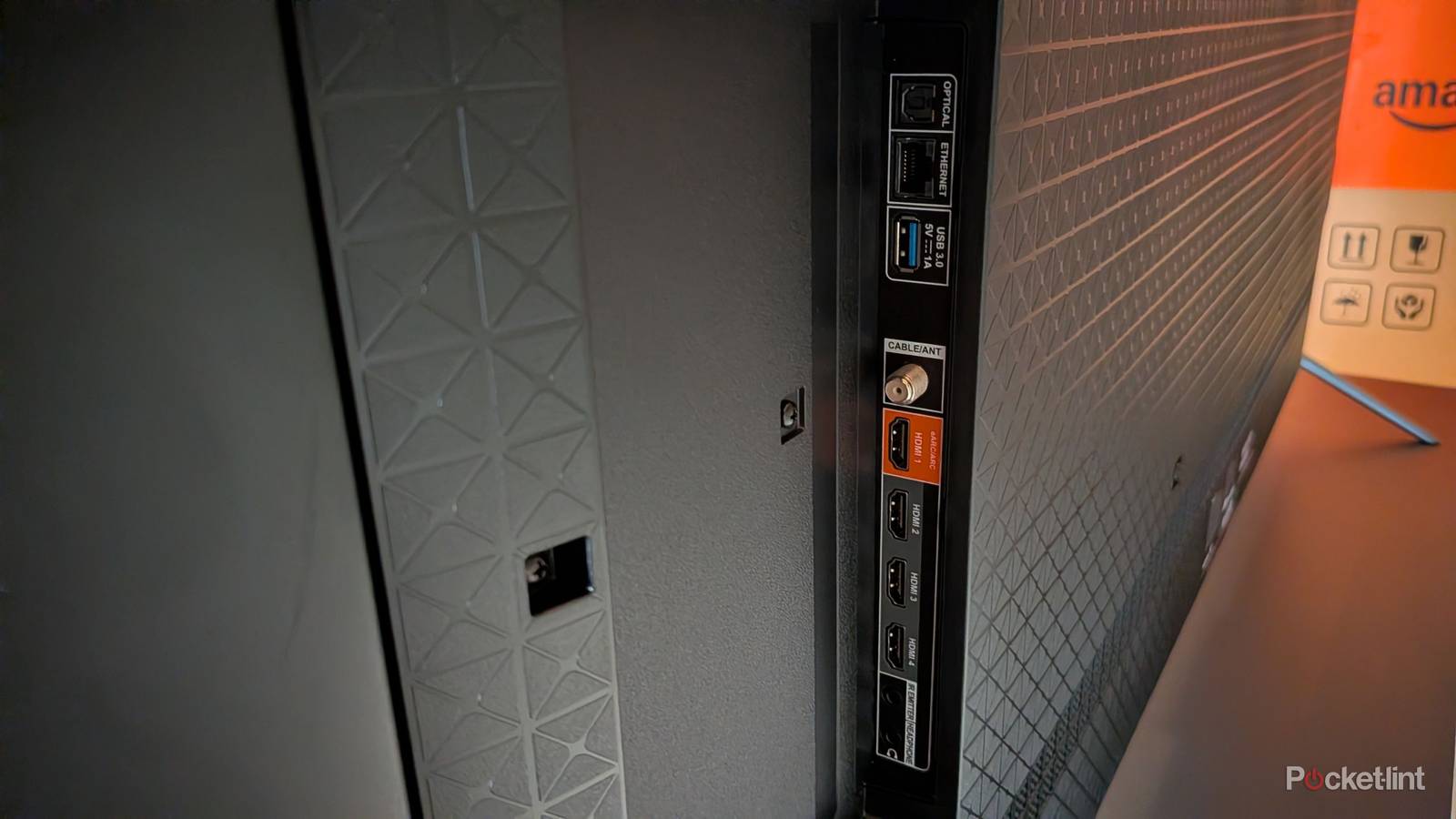
Smart TVs have many ports these days, but I’d say the most important ones to focus on are HDMI. It may have taken a while, but we’re to the point where most devices connect to your TV through an HDMI port, so the more, the merrier. The problem is that many of these ports lack the bandwidth necessary to fully get the most out of your devices.
What I mean by that is, a lot of ports on your TV are HDMI 2.0. I have an Amazon Fire TV Omni QLED from last year has a single HDMI 2.1 port, and it’s the eARC port. My main TV, a Sony Bravia X90J, has four HDMI ports, but just two are 2.1. For a lot of people, that’s fine, but I find it to be very limiting, and I’m glad I have an audio receiver to alleviate this problem. However, that’s not a common solution for a lot of people, and it leads to some sacrifices having to be made.
Not all HDMI ports are created equally
Some are lacking

Believe it or not, but HDMI 2.2 is right around the corner, and TVs still haven’t fully gotten on the HDMI 2.1 bandwagon. You can still buy TVs today that are packed with the older 2.0 format. For the most part, that’s okay, but if you’re a console gamer, it’s a big limitation. If you have a TV like my X90J that has VRR and 120 FPS support, you’ll want to plug your game console into the 2.1 port. The issue with that is that one of those ports is your eARC port, and that’s where your sound system needs to go. That means you have a single port for your consoles, which doesn’t help people who own more than one like I do.
To plug in both an Xbox Series X and PS5 while still ensuring the best possible performance, you have to swap the HDMI cable back and forth between the two consoles. That doesn’t sound like an ideal situation for a high-end TV, and that’s why TVs should be packed with HDMI 2.1 ports instead of mixing in older 2.0 ones. Keep in mind that this isn’t a problem for every TV out there, but it’s an issue with enough of them that I think it’s worth pointing out. Yes, you get what you pay for, but would it really be too much trouble to ask for a couple more 2.1 ports on modern TVs?
It’s likely a cost-cutting measure, but I wonder what’s going to happen when HDMI 2.2 ports start appearing on TVs. Will it result in all of those outdated 2.0 ports being upgraded to 2.1 ports? I hope that’s the case, because I want the next TV I get to have more than enough modern ports to support all of my devices. I have a receiver in my living room to get around this, but that doesn’t help with the devices I have plugged into the Fire TV that’s in my spare bedroom. TVs are too expensive to have limited functionality like this, so I hope that changes in the future.
HDMI 2.0 is still plenty good enough for many devices
Practically everything but a game console

The reality is that many things still run perfectly fine with HDMI 2.0. My 4K Blu-ray player, my Apple TV 4K, and my Roku Ultra all get by just fine with a 2.0 port. With that being the case, it makes sense that manufacturers continue to hold on to the older format, but there’s little reason to do so. The nice thing about the HDMI format is that it’s backwards compatible, so if you upgrade to 2.2 cables, you can keep using them on your 2.0 ports. Similarly, a 2.0 cable works on your 2.1 port, with the downside being that you don’t magically reap the rewards of that port since your cable can’t deliver them.
I think it’s disappointing to see so many devices not need the faster formats because it gives me little to no reason to be excited for the future. I feel like we haven’t really come close to maximizing HDMI 2.1, and now we’re already turning the corner to 2.2. HDMI 2.1 dates back to 2017, so it’s odd that we haven’t found many needs for the added bandwidth offered outside of eARC and game consoles. With HDMI 2.2 doubling the bandwidth from 48 Gbps to 96, I’m already struggling to see what will need that type of speed.
An obvious answer is that it’s for 8K TVs, but it looks like those are struggling to catch on in the mainstream. I’m not entirely sure how far people are willing to go with resolutions, and it seems like a lot of people have settled on 4K being the best they need. That can obviously change in the future, but right now, I don’t think 8K is something to put much stock into. That leaves HDMI 2.2 in an interesting spot, so I hope companies can figure out other ways to utilize the faster speeds offered.


