A junior doctor who stole a paediatric cardiologist’s prescription pad before he was even registered as a medic used it for years to obtain large quantities of benzodiazepines and antidepressants for himself, a tribunal has found.
Augustine Er-Yang Lozano Qiu forged dozens of prescriptions and misappropriated hospital prescription sheets in a scheme the Victorian Civil and Administrative Tribunal described as ‘objectively serious’ and dishonest.
VCAT heard that Dr Qiu issued or attempted to issue 90 false or improper prescriptions between 2018 and 2021, using stolen prescription pads, other doctors’ credentials and fabricated prescribing details.
The misconduct spanned most of the four years Dr Qiu was registered as a doctor and has now resulted in him being reprimanded, disqualified from applying for registration and barred from seeking a reinstatement order for six months.
The Medical Board of Australia took Dr Qiu to VCAT after allegations he stole a prescription pad belonging to a specialist he worked for in an administrative role while seeking accreditation through the Australian Medical Council.
Dr Qiu obtained provisional registration on February 22, 2018, and initially practised in NSW’s Illawarra and Shoalhaven districts before relocating to Melbourne in 2021 to work at The Northern Hospital in Epping.
Months later, a community pharmacist alerted the hospital to the alleged prescription fraud and the use of scripts to obtain substantial quantities of benzodiazepines and antidepressants.
Dr Qiu was stood down from his job and resigned on October 11, 2021.

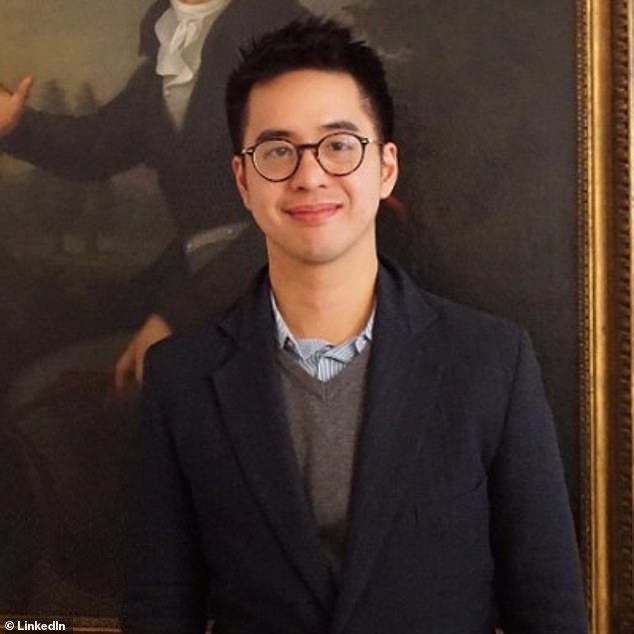
Augustine Qiu (pictured) forged dozens of prescriptions and misappropriated hospital prescription sheets in a scheme the Victorian Civil and Administrative Tribunal described as ‘objectively serious’ and dishonest

Dr Qiu issued or attempted to issue 90 false or improper prescriptions between 2018 and 2021, using stolen prescription pads, other doctors’ credentials and fabricated prescribing details (stock image)

Dr Qiu’s last practising position was at The Northern Hospital (pictured) in Epping
The Medical Board swiftly moved to restrict his ability to practise, saying it reasonably believed that he posed a serious risk to the public.
He did not oppose the action and provided an undertaking not to practise medicine.
Investigators trawled records from Victoria Police, health authorities, Commonwealth prescribing databases and 30 pharmacies as they pieced together the extent of the scheme.
The Board also obtained evidence from Dr Qiu’s employer and the two medical practitioners whose prescribing credentials had been used without their knowledge.
Dr Qiu admitted stealing the paediatric cardiologist’s prescription pad in about 2015 and later writing 45 prescriptions for himself using the doctor’s credentials.
He also wrote seven prescriptions using the specialist’s credentials in his wife’s name for his own use, and a further seven prescriptions in his wife’s name using his own prescribing credentials. His wife is not alleged to have engaged in any wrongdoing.
Dr Qiu also admitted misappropriating generic prescription sheets from hospitals in NSW and Melbourne, which he used to write 30 prescriptions for himself using fabricated prescribing credentials.
The prescriptions were for a range of medications, including the diuretic furosemide, corticosteroids, the anti-anxiety drug clonazepam, antidepressants sertraline and fluoxetine, and sedatives including zolpidem and temazepam.

VCAT said it had ‘some difficulty’ accepting the argument that Dr Qiu’s offending was a genuine attempt to treat his runner’s dystonia
Dr Qiu also obtained prescriptions for Parkinson’s disease medications, including trihexyphenidyl and a combination of levodopa and benserazide.
On May 15, 2023, Dr Qiu pleaded guilty in Heidelberg Magistrates’ Court to stealing the cardiologist’s prescription pad and forging prescriptions for Schedule 4 drugs.
During a police interview, Dr Qiu said he could not specifically remember taking the prescription pad but accepted that it had been in his possession and admitted creating and using the false prescriptions.
He said that he began using the scripts after being diagnosed with dystonia and was ‘aiming to look for remedies’ to relieve paralysis in his leg.
Dr Qiu told investigators that, after moving to Melbourne in 2021, his condition deteriorated rapidly and he became reliant on a wheelchair before later improving under the care of a specialist treatment team.
He said that some of the medications were taken in an attempt to manage his symptoms, while others were used to treat unrelated conditions, including asthma.
Dr Qiu admitted experimenting with a range of drugs, including clonazepam, temazepam and zolpidem, in an effort to relax his leg muscles.
He insisted that he was not abusing the medication but was instead ‘stocking and storing’ it.

Dr Qiu initially practised in NSW’s Illawarra and Shoalhaven hospitals before relocating to Melbourne in 2021 to work at The Northern Hospital in Epping
The Medical Board argued the misconduct was objectively serious because it involved stealing prescription pads and hospital prescription sheets, as well as the dishonest use of two other doctors’ prescribing credentials.
It said the offending spanned most of the four years Dr Qiu was registered and involved repeated self-prescribing without appropriate clinical oversight.
The Board also argued the use of Schedule 4 medications had the potential to affect Dr Qiu’s judgment and, in turn, the care of his patients.
However, VCAT rejected that submission, finding there was insufficient evidence to conclude patients had been placed at risk.
The tribunal said that there was no clear evidence showing when Dr Qiu took the medications, how they affected him, or whether their use overlapped with his clinical work.
Dr Qiu’s lawyers argued the misconduct occurred while he was struggling with declining physical health, difficulties accessing treatment after moving interstate, and cognitive side effects from medication prescribed for dystonia.
They submitted that he had been attempting to treat his condition, albeit in a misguided and inappropriate way, and pointed to his ongoing psychological treatment, his remorse and the fact he has not practised since October 2021.
However, VCAT said it had ‘some difficulty’ accepting the argument that the offending was a genuine attempt to treat his condition.

Dr Qiu was working as a senior resident in Australian hospitals with a focus on emergency medicine, mental health and drugs and alcohol, according to his LinkedIn (stock image)
The tribunal noted that Dr Qiu had stolen the prescription pad and begun self-prescribing before the onset of his symptoms and diagnosis.
It also found that some of the drugs he obtained, including the diuretic furosemide and asthma medication salbutamol, were not reasonably related to dystonia.
‘Dr Qiu’s medical condition, however debilitating and unfortunate, did not cause him to do what he did,’ the tribunal said.
While acknowledging Dr Qiu likely felt ‘very desperate’ to improve his deteriorating condition, VCAT said that self-prescribing carried obvious risks because medications and dosages may not be clinically appropriate and can spiral ‘out of control’ without independent medical oversight.
The tribunal said that the case was ultimately serious because of the dishonesty involved, including the theft of prescription pads, the misuse of other doctors’ credentials and repeated self-prescribing over several years.
It stressed that Dr Qiu’s misconduct was not primarily about the types of drugs he obtained, but the sustained deception used to obtain them.
In imposing the penalty, VCAT said that Dr Qiu had demonstrated insight into his conduct, undertaken significant rehabilitation and had not practised medicine since 2021, but warned that doctors who breach the public’s trust must face ‘very serious consequences’.