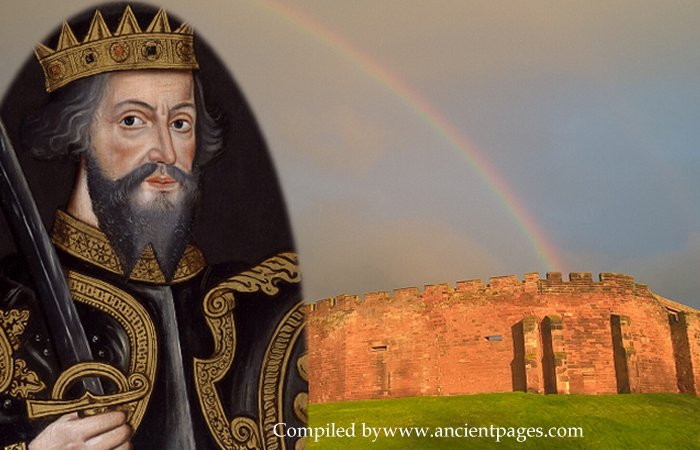
Jan Bartek – AncientPages.com – Chester Castle, located in Chester, Cheshire, England, stands at the southwest edge of the city walls. Founded by William the Conqueror in 1070 to secure Norman control, it was granted to his nephew Hugh d’Avranches, who became Earl of Chester.
The castle guarded the Welsh border and oversaw a key inland port. The earls of Chester governed the region with significant autonomy until Henry III assumed control of the title, castle, and lands in 1237. Despite many changes over the centuries, Chester Castle remained the city’s center of military and legal authority.
Chester Castle is renowned for several features, including the Agricola Tower, constructed around 1200. The crypt beneath the tower held notable prisoners, such as Richard II, King of England from 1377 to 1399, and Eleanor Cobham, a noblewoman sentenced to life imprisonment in 1441 following accusations of practicing black magic.
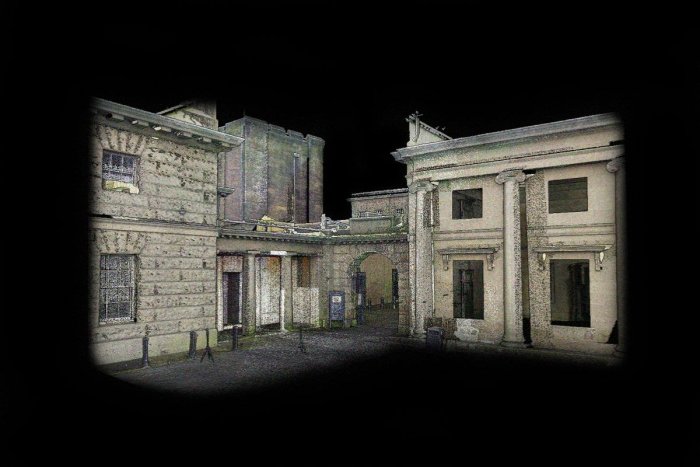
Chester Castle. Credit: University of Chester
Recent explorations at Chester Castle enabled a team of archaeologists from the University of Chester to make a significant discovery without excavation.
Professor Stewart Ainsworth, Time Team’s Landscape Archaeologist and Visiting Professor at the University of Chester, explored the remains of the 18th-century prison beneath Chester Crown Court. During his investigation, he discovered stonework at the end of a dark corridor.
“The walls of the prison and courts designed by Thomas Harrison are typical late 18th-century masonry. It was dark at the end of that old corridor – but by the light of my phone I could immediately tell that a large section of wall in the gloom ahead was totally different. It turned a right angle and disappeared out of sight, leaving a very dark, narrow gap that I couldn’t squeeze into,” Professor Ainsworth explained.
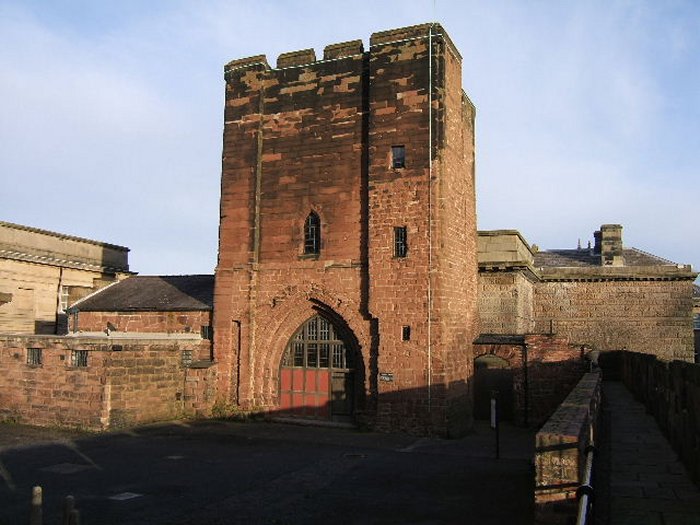
The Agricola Tower. Credit: BrianP – CC BY-SA 2.0
“When I compared the type of stones and the building technique with the surviving parts of the Norman castle, it was clear that this underground wall must also be medieval. Until now, everyone has believed that Thomas Harrison destroyed this part of the castle to create the buildings we see today.
But the wall I discovered is massive – almost three metres high – so we now know that he left a lot of the medieval stonework untouched. And I’m guessing much more may survive under the car park and castle complex, ” he added.
High-resolution digital scanners were used to pinpoint the location of the underground wall. A comparison with old maps and plans showed it was once part of a medieval bridge across a deep ditch surrounding the castle’s strongly defended inner ward. The bridge was probably built about 800 years ago, in the 1260-1280s, when a heavily fortified gateway was added to the inner ward to replace an earlier gateway. Thomas Harrison subsequently demolished that 13th-century gateway.
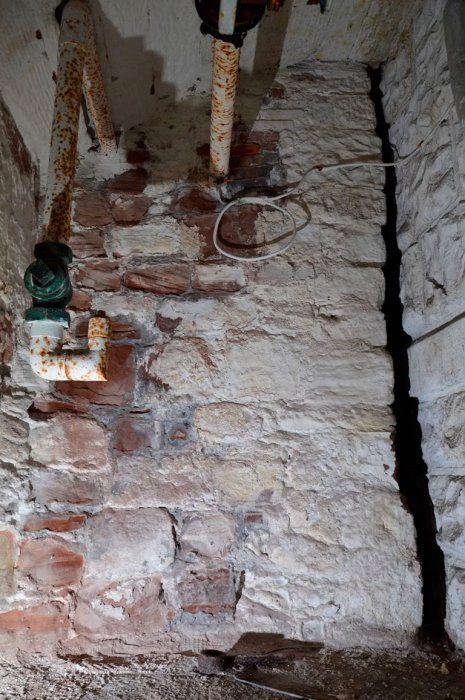
Part of the discovered Medieval bridge. Credit: University of Chester
The castle’s original stone gateway, now known as the Agricola Tower, is looked after by English Heritage and is open to visitors at weekends. On the first floor of the tower, the chapel of St Mary de Castro contains fragments of rare and beautiful wall paintings dating to the 1240s.
The newly discovered wall at Chester Castle is very similar to part of the bridge across the deep ditch at Beeston Castle, the remains of which visitors can still see today. There, a drawbridge could be raised to prevent attackers reaching the twin-towered, 13th-century gatehouse. It is likely that a similar arrangement once existed at Chester Castle.
See also: More Archaeology News
The underground remains and other parts of the castle have been digitally scanned by the University and SCCS North to create highly accurate 3D models as part of Digital Dimensions, a collaborative project between the University, Cheshire Constabulary, English Heritage, Historic England and the Hartree National Centre for Digital Innovation.
Source: University of Chester
Written by Jan Bartek – AncientPages.com Staff Writer