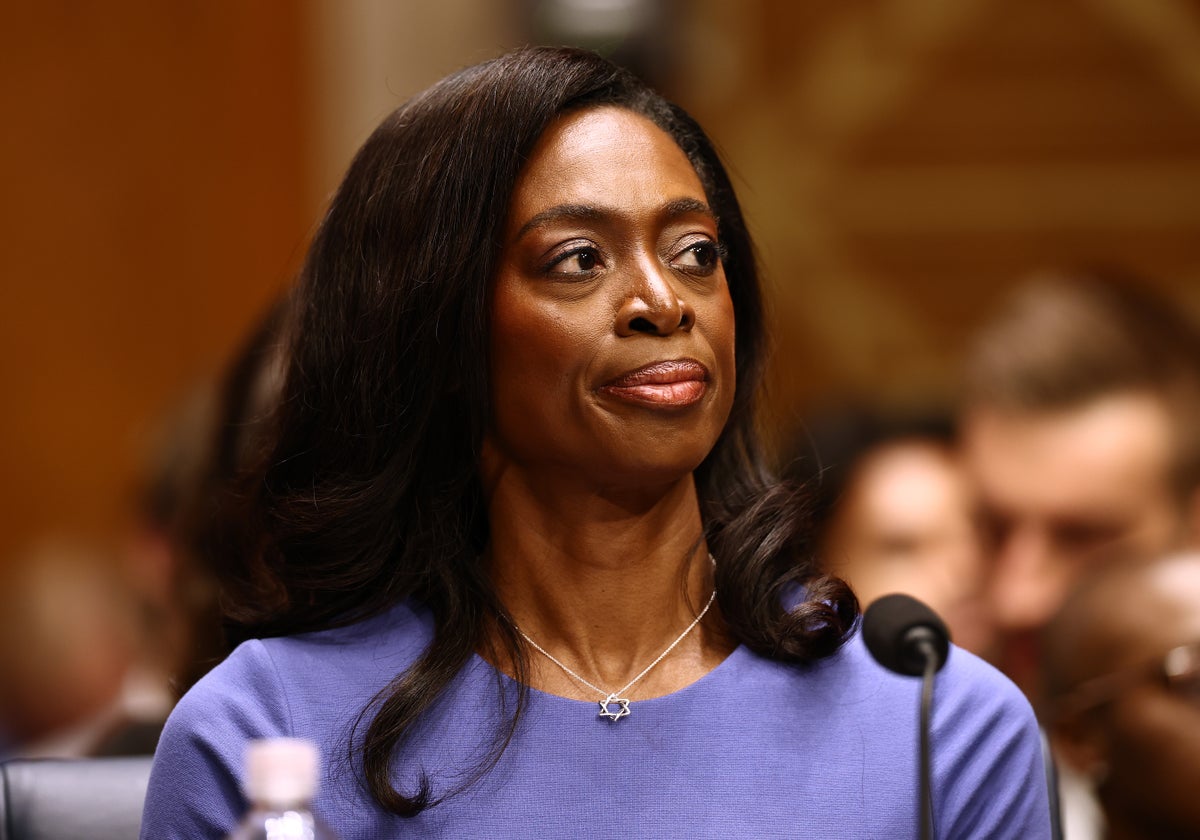
President Donald Trump’s latest choice to lead the U.S. Centers for Disease Control and Prevention appeared before a Senate committee on Wednesday to answer lawmakers’ questions about her readiness for the role.
Erica Schwartz was previously deputy surgeon general in the first Trump administration—a civil position that isn’t politically appointed—and a rear admiral in the U.S. Coast Guard, where she served as chief medical officer.
“Public health is in my DNA,” Schwartz said at the hearing. Her first priority at the CDC would be to restore trust, she said, adding that “I will never betray the science.”
On supporting science journalism
If you’re enjoying this article, consider supporting our award-winning journalism by subscribing. By purchasing a subscription you are helping to ensure the future of impactful stories about the discoveries and ideas shaping our world today.
The remarks come as faith in the nation’s highest public health agency has nose-dived. A poll released in June of this year found that just 50 percent of Americans said they trusted the agency’s health recommendations, compared with 77 percent in spring 2025. In the year or so that has passed between the two polls, the Trump administration has sought to remake the nation’s health and science agencies.
That effort has proven particularly tumultuous at the CDC. The first agency director under Trump’s second administration, Susan Monarez, was fired in August 2025 and accused Health and Human Services Secretary Robert F. Kennedy, Jr., of forcing her out for refusing to rubber-stamp vaccine policies that went against research. Jim O’Neill, an investor, was appointed as an interim director until February 2026, before Jay Bhattacharya, the current head of the National Institutes of Health, took over as acting head of the CDC.
Schwartz will need to work under Kennedy if confirmed. Senator Bill Cassidy, the committee chair, alluded to Monarez’s fraught tenure by asking Schwartz if she would stand up to Kennedy if necessary.
“If I’m confirmed as a CDC director, the nation’s health and well-being will take primacy, and I will never compromise on that,” Schwartz said.
Cassidy pressed her repeatedly on whether she would be able to say no to “junk science,” nodding to vaccine skepticism in the administration. “I will never compromise on the science,” she said, adding that the CDC would focus on “radical transparency” and to “lead with humility.”
Senator Bernie Sanders also honed in on vaccines, asking if she would commit to removing information on the CDC website linking vaccines to autism (a claim scientists say has no basis in evidence). “Senator, we do not know what causes autism,” she said, adding that she accepts that overwhelming scientific evidence shows vaccines do not cause autism. Schwartz said that if confirmed, she would ask Kennedy about the information in question.
This is a developing story and may be updated.
It’s Time to Stand Up for Science
If you enjoyed this article, I’d like to ask for your support. Scientific American has served as an advocate for science and industry for 180 years, and right now may be the most critical moment in that two-century history.
I’ve been a Scientific American subscriber since I was 12 years old, and it helped shape the way I look at the world. SciAm always educates and delights me, and inspires a sense of awe for our vast, beautiful universe. I hope it does that for you, too.
If you subscribe to Scientific American, you help ensure that our coverage is centered on meaningful research and discovery; that we have the resources to report on the decisions that threaten labs across the U.S.; and that we support both budding and working scientists at a time when the value of science itself too often goes unrecognized.
In return, you get essential news, captivating podcasts, brilliant infographics, can’t-miss newsletters, must-watch videos, challenging games, and the science world’s best writing and reporting. You can even gift someone a subscription.
There has never been a more important time for us to stand up and show why science matters. I hope you’ll support us in that mission.