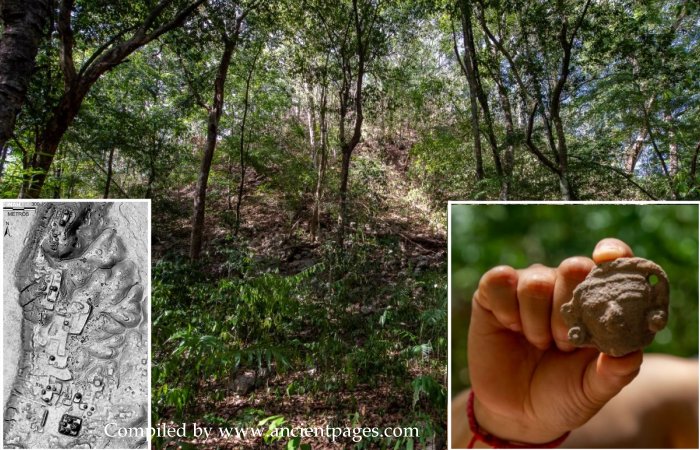
Conny Waters – Ancientpages.com – Hidden within the thick forests of the Balam Kú Biosphere Reserve are the ruins of El Yesal, one of the biggest cities in the Central Mayan Lowlands.
This site has now been formally studied for the first time, thanks to a project led by Professor Ivan Šprajc from the Research Center of the Slovenian Academy of Sciences and Arts. The team set out to explore an area that has rarely been examined by archaeologists.
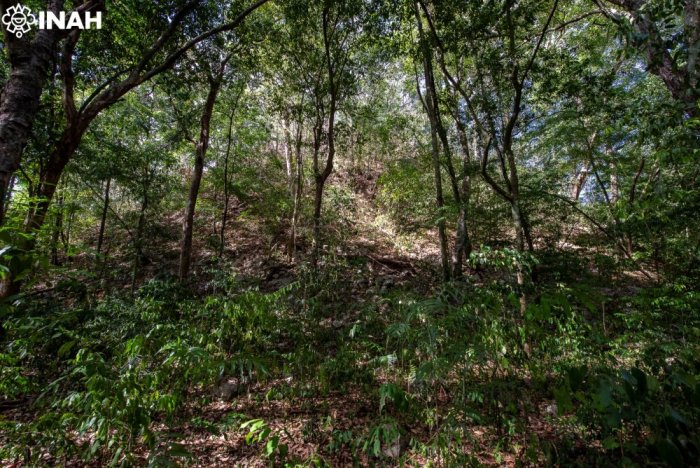
The Balam Kú Biosphere Reserve in Campeche is home to the ruins of El Yesal, one of the largest cities in the Central Maya Lowlands. Photo: Daniel Santaella INAH.
After discovering Minanbé in the first phase, the team moved on to El Yesal to reach another goal for the season. Their work was supported by the Ministry of Culture of Mexico, through the Archaeology Council of the National Institute of Anthropology and History (INAH).
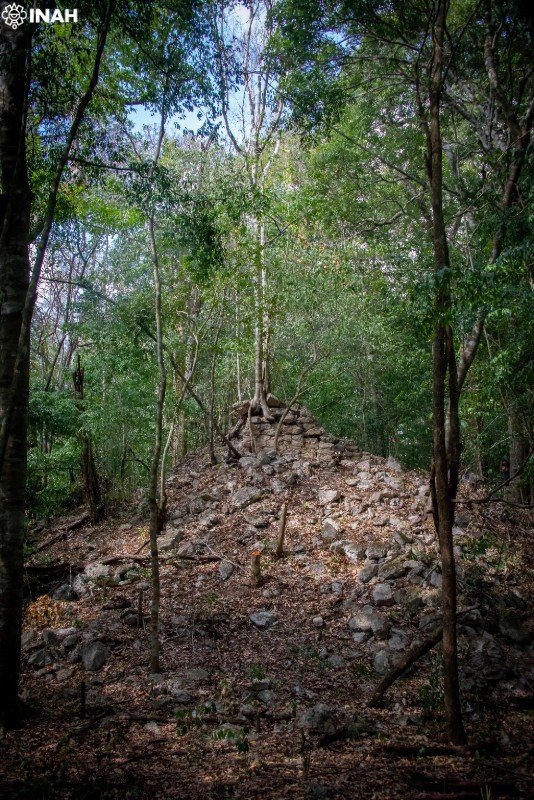
The site expanded northward during the Late Classic period. The outlying complexes feature defensive embankments and terraces. Photo: Daniel Santaella, INAH.
“Despite being a large site, with its monumental area covering more than one square kilometer, El Yesal had only been visited briefly by a few researchers. A detailed exploration had never been carried out.”
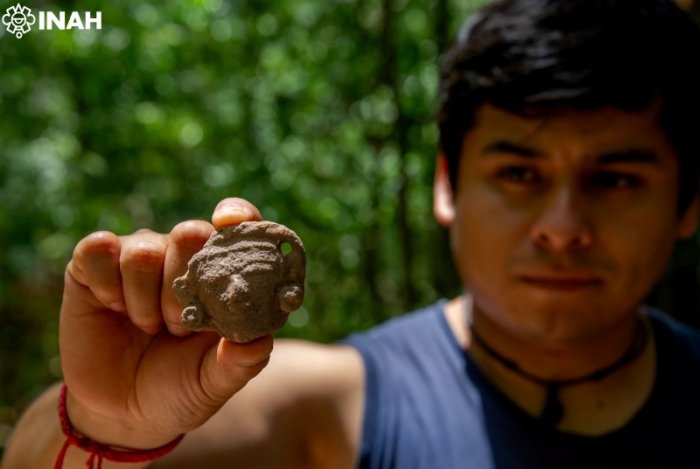
Figurines and lithic materials with Central Highlands characteristics have been recovered. Photo: Daniel Santaella INAH.
“It is clearly one of the largest Mayan cities in the Central Lowlands,” says Šprajc. He had already seen how big and spread out the settlement was by looking at digital elevation models made from airborne laser scanning (LiDAR) data.
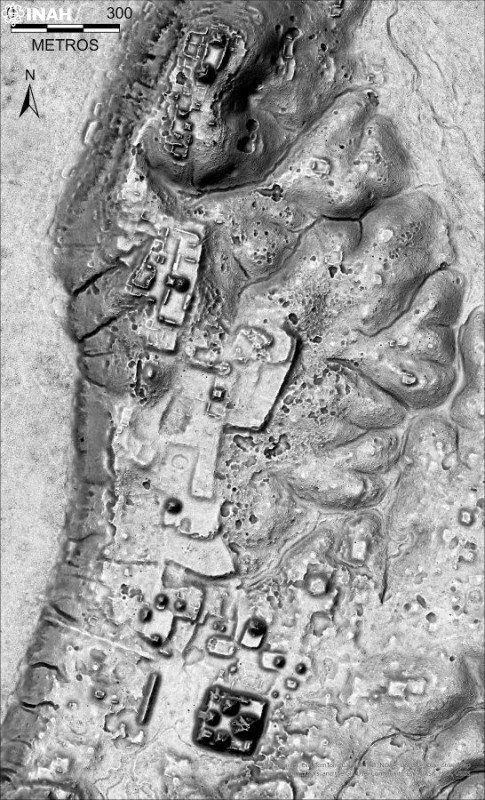
LiDAR images show a monumental core of 1 square kilometer. ZRC SAZU.
One of the main accomplishments of this study was the creation of a photogrammetric record of a stela. Although the stela is worn down, epigrapher Octavio Esparza Olguín from the Center for Mayan Studies at the National Autonomous University of Mexico points out that its 3D model shows details of the ruler shown on it, such as a staff and the headdress of Yopaat, the Mayan storm god. These features might be linked to the ruler’s name.
Large Pyramids
Archaeologists Quintín Hernández Gómez, Vitan Vujanovic, Israel Chato López, and Atasta Flores Esquivel surveyed the site, starting at the main core and working outward to the surrounding complexes.
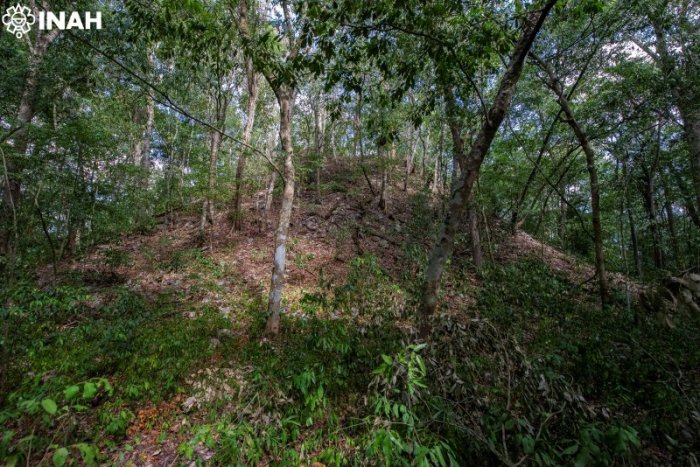
The base of the tallest pyramid of the Great Acropolis reaches 27 meters above the upper level of the platform. Photo: Daniel Santaella, INAH.
At the southern end of the core area stands a large acropolis. It is a square platform, 150 meters on each side, rising 15 meters above the ground and supporting four pyramid bases.
Flores Esquivel says, “in its architectural and spatial conception, the Great Acropolis of El Yesal has similarities with other sites, for example, with Edzná, but in its Petén era, from the Early Classic period or even earlier periods, going up to the Late and Middle Preclassic.”
The tallest pyramid base at the Great Acropolis rises 27 meters above the platform. Chato López dug a test pit there, and Flores Esquivel carried out a similar excavation at the North Acropolis pyramid across from it.
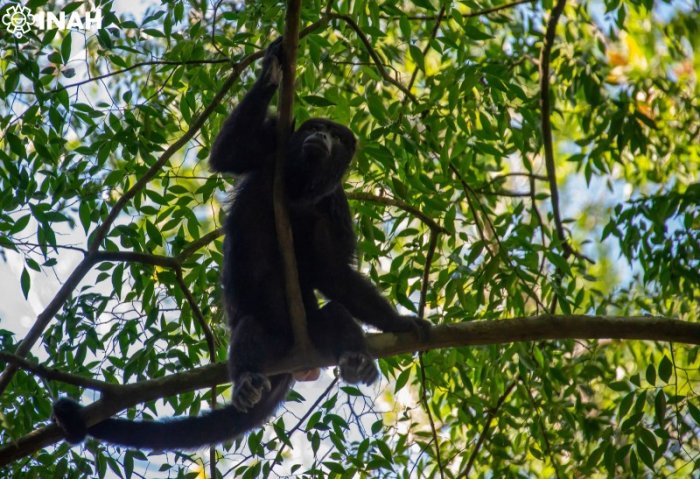
This sanctuary is part of the Great Maya Forest Biocultural Corridor, which unites protected areas in Belize, Guatemala, and Mexico. Photo: Daniel Santaella, INAH.
Both excavations found ceramic remains from the Chicanel and Mamom phases. Expert Sara Dzul Góngora will analyze these finds, which may show that the El Yesal complex dates back 2,500 years, between the Middle and Late Preclassic periods (600-500 BC to 200 AD).
See also: More Archaeology News
The team also found what they call nested complexes next to the Great Acropolis. These are low, long, narrow structures arranged in circles or rectangles, similar to the Chiik Nahb complex in Calakmul. They were probably used as markets.
Šprajc says this survey lays the groundwork for more research at El Yesal. This important regional center may have interacted with sites like Calakmul, Balamkú, or Uitzilná, which were documented by this project in 2007.
Source: INAH
Written by Conny Waters – AncientPages.com Staff Writer