


Not too long ago, I experimented with making Apple Maps the (literal) primary driver on my iPhone, but ultimately went back to Google Maps. It’s what I started out with the day I replaced my old Garmin GPS unit, and in some ways, it’s still way ahead of Apple’s product. There’ll be more to say about that in a moment.
More recently, I’ve come to accept that I may need to bounce back and forth between the apps. The truth is that Apple Maps does have its perks, and dual-wielding is probably the best way of ensuring you’ll get the directions and information you want. You might want to buy a paper atlas for a cross-country roadtrip — but in 2026, that’s just a fallback plan.
Why using both Apple and Google makes sense
Not just getting from A to B

Google’s chief advantage can be described in two words: massive data. Google Maps has been around in various forms since 2005, including the iPhone since 2007. That gave it a seven-year headstart, and it shows not just in the amount of map coverage it has, but the amount of photos and details for those locations. I will always trust Google over Apple when it comes to navigating to the most remote locations, although Apple is certainly catching up, as you’d hope a nearly $5 trillion megacorporation would.
For me, the way Google’s data really pays off is in research ahead of a trip or move. You can try Apple Maps for this, but Google is able to leverage data from across more online services, and leverage Maps into other services (cough, Gemini) in a way that Apple is only now poised to equal with its revamped Apple Intelligence, due in fall 2026. Heck, the web version of Apple Maps is still a pale shadow of its counterpart — as of this writing, you can’t even log in with your Apple account and add bookmarks. You shouldn’t have to own a Mac or iPad to do planning on a big screen. Arguably, all you need to know is that the web app has been in beta since July 2024.
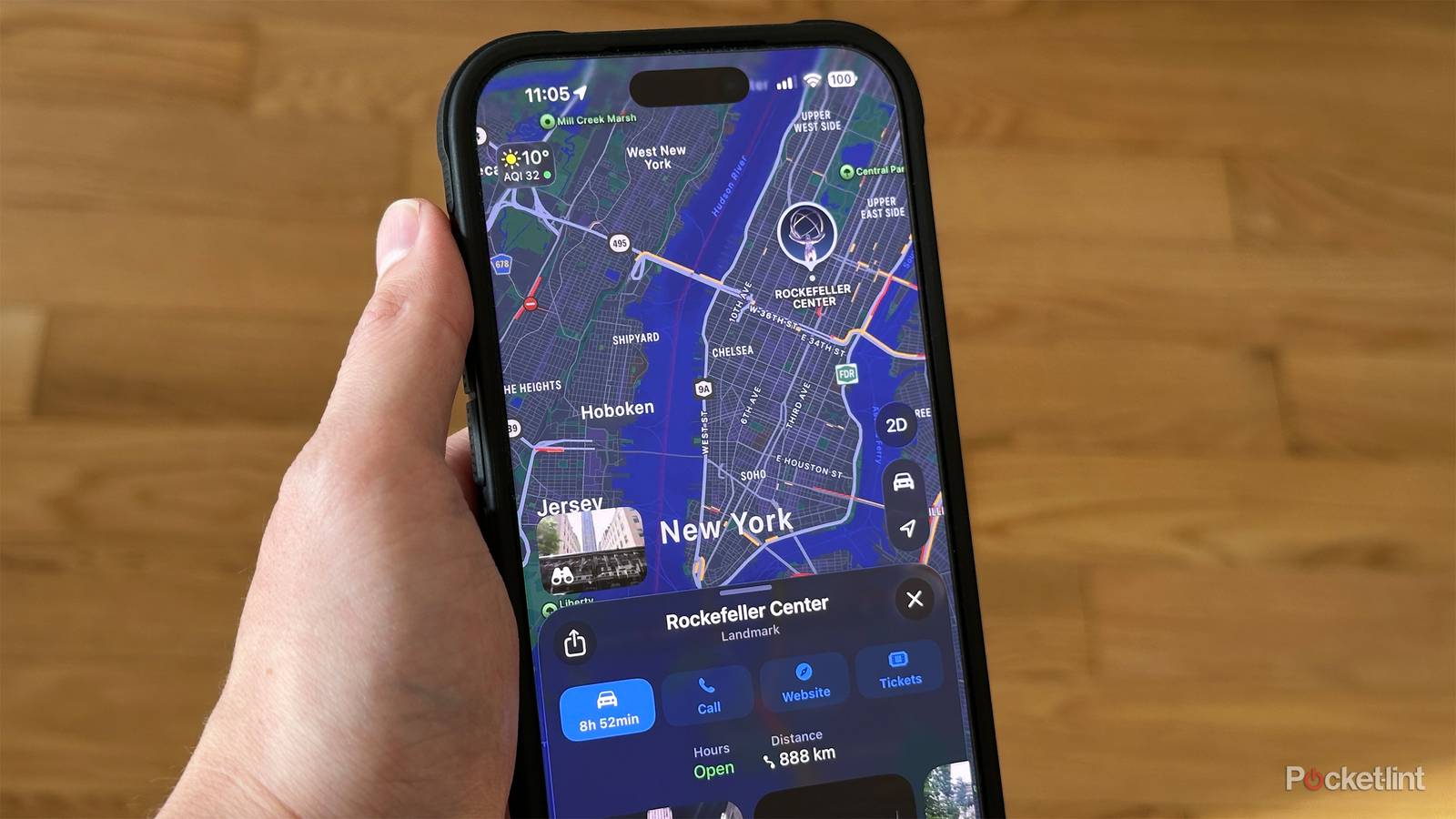
One thing I do appreciate about the Apple Maps iPhone app is its presentation. I’m almost hesitant to say anything, since Apple and Google are in a constant arms race, but Apple’s UI is often easier to parse in urban environments, with distinct, color-coded icons and object outlines for points of interest. Its 3D views are impressive enough that Google is working to one-up them with its Immersive Navigation feature. For these reasons, I sometimes prefer Apple for expeditions downtown.
The app can also win me over sometimes with its Apple Watch integration and better audio instructions. If you’ve got a Watch, you can get haptic turn alerts, as well as integrated compass points on some Ultra watchfaces. Those audio instructions are universally available — instead of something generic like “In 100 feet, turn right,” Apple’s app is more specific, for example saying “After the next set of lights, turn right.” I don’t know about you, but I find it far easier to navigate by landmarks instead of my vague sense of distance. Combined with easier UI parsing, these things make Apple a great choice for navigating cities by foot, bike, or PEV.
Well, up until a point. Google may still have better coverage, and if you need to take public transit, Google is the safer bet. It’ll even suggest flights as an option if the location is far enough. Apple does compete well enough when it comes to things like bus, train, and ridesharing options, so you might not notice much difference on a daily basis.
One last point is traffic. Google is (seemingly) better at delivering up-to-date traffic data and rerouting you, not the least because of crowdsourced incident reporting. Reporting tools do exist in Apple Maps — but because Google Maps is multi-platform, it likely has far more people providing data in your area, and that’s always going to have a downstream impact.
Some of these arguments are extremely subjective, naturally. You might personally find Google’s maps clearer, or think Apple’s reduced info is a fair trade for better privacy. One thing’s for sure, though. The navigation wars are going to continue ad infinitum, since both companies have all the money they could want to keep them raging. It’s probably wise not to bet it all on one side.

- Brand
-
Apple
- SoC
-
A19 Pro
- Display
-
6.3-inch 1206 x 2622 pixel resolution Super Retina XDR OLED, 120Hz, HDR10, Dolby Vision, 1000 nits / 1600 nits peak brightness
- RAM
-
N/A