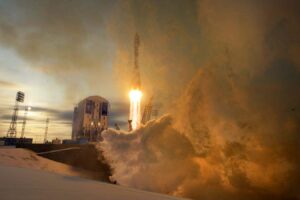
It looks like SpaceX’s next Starship flight is on the horizon, and it may lift off sooner than you might think.
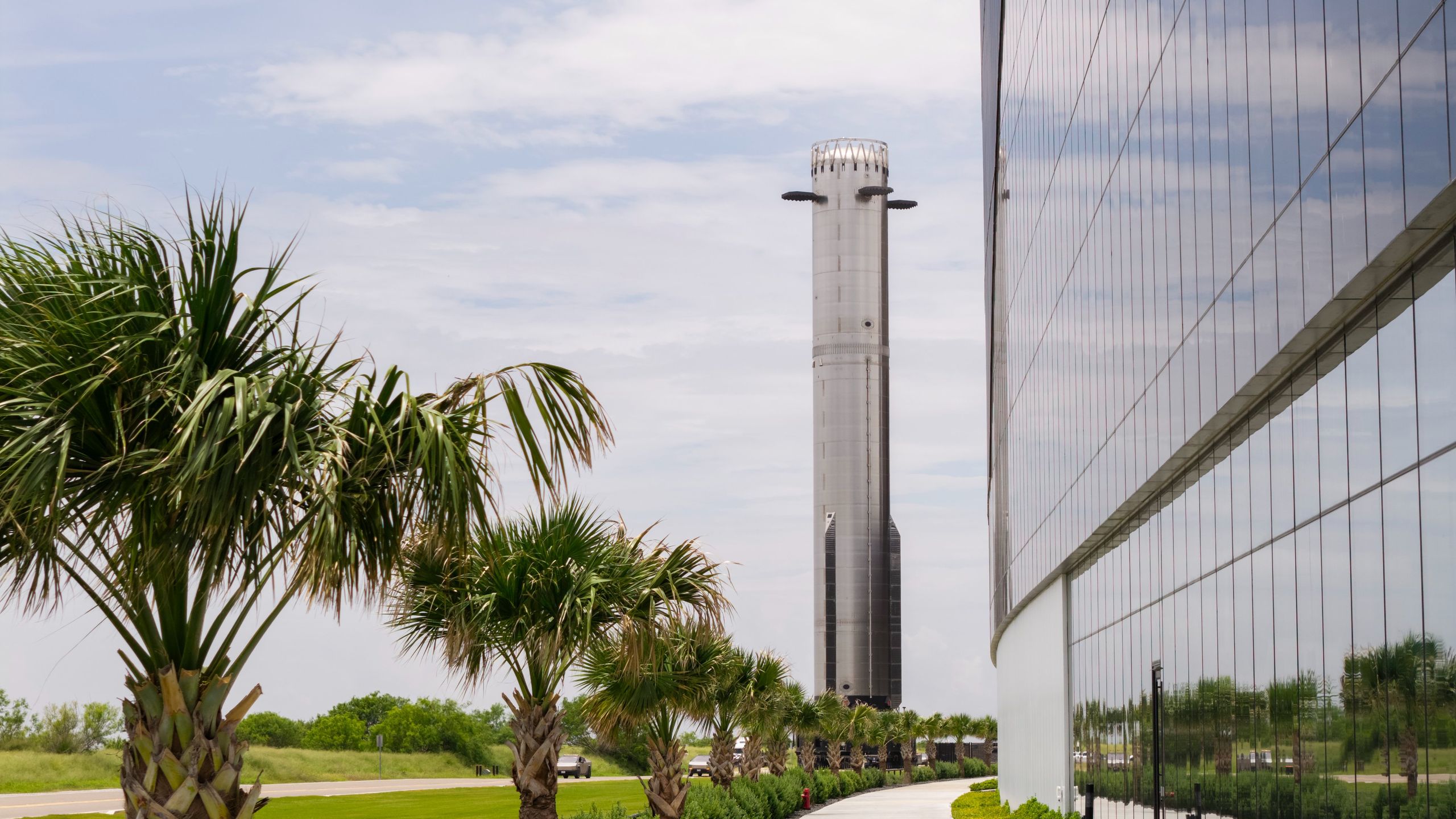
SpaceX today (July 10) completed a brief static fire of the Starship Super Heavy booster tapped to launch the 13th test flight of the massive, mega-lift vehicle.
Booster 20 — the latest Super Heavy to roll off the assembly line — was transported to the pad at SpaceX’s Starbase, Texas, facility yesterday (July 9) and hoisted onto its support stand using the launch tower’s stalwart “Mechazilla” chopstick arms. By early Friday, SpaceX began preparations leading up to the prelaunch engine test, including closing Boca Chica beach around 8 a.m. EDT (1200 GMT) and transferring fuel to the pad’s tank farm ahead of loading propellant onto the vehicle.
Starship Flight 13: WOW! Heck of a long Static Fire for Booster 20!https://t.co/Hs3zIE8QpH pic.twitter.com/sUCwS40ILBJuly 10, 2026
This is the second “Version 3” (V3) booster to reach the pad at Starbase for testing, and is equipped with 33 of SpaceX’s upgraded Raptor 3 engines. Those engines ignited in a blazing heat on Friday just before 11 a.m. EDT (1500 GMT), and underwent a roughly 25-second burn simulating on the launch stand the duration and flight conditions for an actual launch.
The successful completion of Booster 20’s static test fire paves the way for Starship’s upcoming test launch, Flight 13. That could launch as early as Wednesday (July 15), according to a notice from the Federal Aviation Administration.
Compared to Version 2 (V2), Starship V3 packs a much stronger punch. The rocket was upgraded with enhanced avionics to reduce mass and increase launch capacity, a taller fuel tank with a larger volume, and equipment for transferring propellant between spacecraft, which will be needed to fulfill many of the missions Starship is being designed to carry out.
A handful of those missions will be for NASA’s Artemis program, and the agency’s plans to return to the moon. Starship is one of two lunar landers currently contracted to deliver astronauts to the lunar surface, so, its success and timely demonstration of the technologies needed to do so are coming under a microscope as the timeline for those missions shrinks.
Flight 13 will follow the same basic timeline as Flight 12, which lifted off in May with mixed success. Flight 12 was the first launch of Starship V3, and prompted SpaceX to fly a slightly more conservative mission than many previous tests, which have built on previous successes with increasingly expanding goals. Starship’s last flight sent the vehicle’s upper stage, Ship, on a suborbital trajectory with a soft splashdown in the Indian Ocean. SpaceX ran into some issues, though, when the rocket’s Super Heavy booster (Booster 19) failed to maneuver itself for a soft ocean splashdown of its own. Ship (Ship 39) also ran into an engine anomaly that caused SpaceX to forgo the stage’s in-space engine relight demonstration.
Ship 40 and Booster 20, the Starship vehicles that will fly on Flight 13, will follow the same set of mission objectives to shake out the remainder of kinks in Starship V3. Spacex hopes the mission will pave the way for further technology demonstration tests the vehicle needs to complete before reaching full operational status. That includes the retrieval of both stages back at their Starbase launch pad, for refurbishment and reuse on future flights.

Starship is designed to be fully reusable, and capable of delivering over 100 tons to low Earth orbit. Once the rocket begins regularly delivering payloads, Ship and Super Heavy will be able to both return to Starbase to be caught by the Mechazilla arms on both of the site’s two launch towers. SpaceX has succeeded in a handful of V2 Super Heavy catches during its previous flight tests, and managed to launch two of those recovered boosters on subsequent missions, but has not yet attempted to do the same with a Ship upper stage.
That’s because landing Ship is much different than landing Super Heavy. SpaceX has a lot of practice landing and reflying rocket boosters. The company’s workhorse Falcon 9 rocket launches several times a month, and is routinely recovered, refurbished and reflown within a short few weeks. A batch of Starlink satellites recently launched on one of SpaceX’s most-flown Falcon 9 boosters, which broke a reflight record as it touched down for the 36th time after delivering its payloads to orbit. Though it lacks the landing legs of Falcon 9, Super Heavy’s descent back to Earth is very similar to a Falcon 9 booster, and therefore less complex an engineering question to have to solve compared to Starship’s upper stage.
Ship drops through the atmosphere belly-first, allowing the black, hexagonal heat shield tiles that cover half the vehicle to absorb the blazing temperatures of reentry. Fins near the spacecraft’s nose and base control its orientation and attitude, which remains mostly horizontal during its freefall. To an extent, Ship’s descent profile is not very unlike the space shuttles, except for its actual touchdown, which differs significantly.
As Ship’s altitude decreases toward sea level, the vehicle performs a “flip and burn” maneuver that swings the whole stage upright and arrests its descent for a soft touchdown — eventually back at the Starbase pad on future launches, but once again in the Indian Ocean for Starship’s upcoming mission.
Flight 13 will give SpaceX a chance to demonstrate that descent profile again using Ship 40, while also working through the booster and engine issues encountered during Flight 12. If all goes according to plan, the launch will bring Starship V3 closer to more ambitious tests, including orbital insertion, propellant transfer and the recovery of both stages back at Starbase.