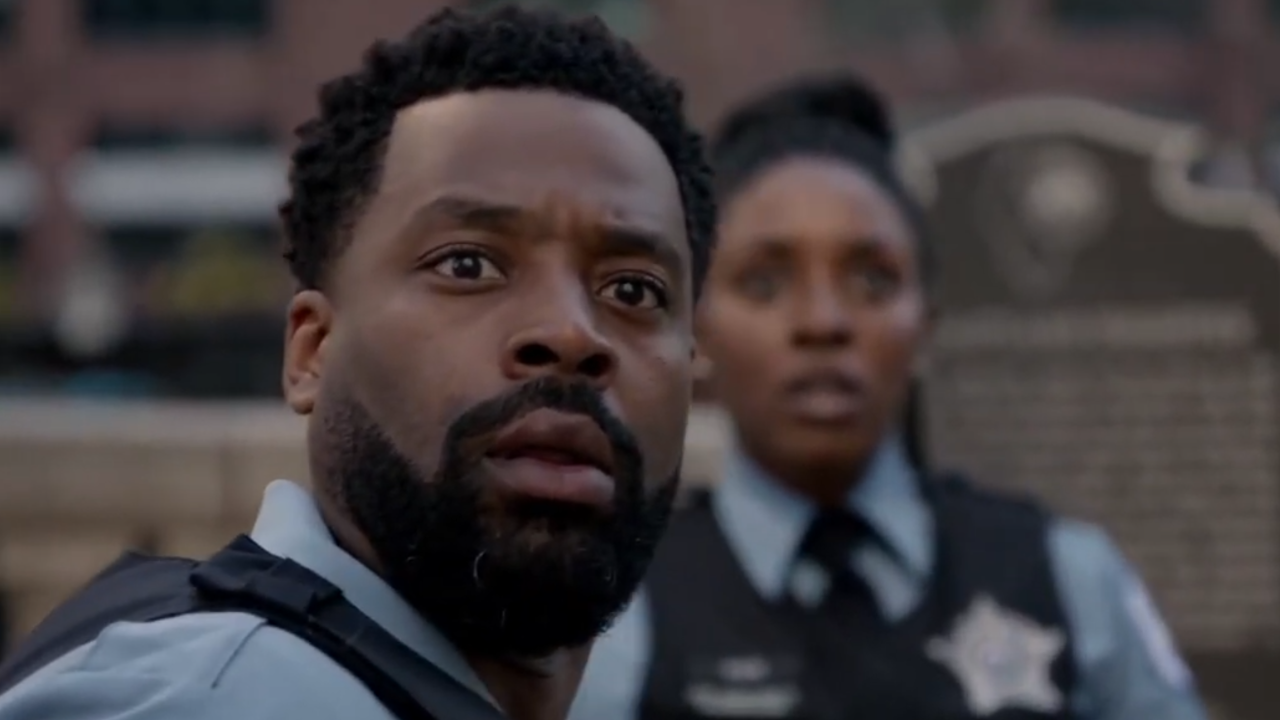
For 13 seasons, Chicago P.D. has delivered gripping crime stories through the elite Intelligence Unit as they tackle Chicago’s most dangerous cases while navigating the personal costs of the badge. Among its most enduring figures has been Kevin Atwater, brought to life with warmth, conviction, and strength by LaRoyce Hawkins.
News that Hawkins will exit the series during Season 14 marks the end of an era for the NBC drama, with the actor returning briefly to conclude Atwater’s story. As fans prepare to say goodbye, these unforgettable moments celebrate the courage, compassion, and unwavering integrity that made Kevin Atwater the soul of Chicago P.D.
1. Navigating a high-stakes undercover assignment in Prison Ball (Season 2, Episode 2)
ADVERTISEMENT
Article continues below this ad
Kevin Atwater’s first major undercover assignment in Prison Ball thrusts him into one of the most dangerous situations of his early Intelligence Unit career. Sent inside a prison to expose gang leader Devon Tucker’s role in ordering the m***** of a 10-year-old girl, Atwater willingly risks everything to secure justice. His mission takes a terrifying turn when his cover is exposed, leaving him trapped in the prison laundry room against multiple attackers. Armed with little more than determination and quick thinking, he fights his way through the brutal ambush until help finally arrives.
The episode marks a turning point for Atwater, shedding his image as the team’s newest detective and revealing the fearless officer beneath. His decision to accept the assignment stems from the same protective instinct that defines his life outside work, making the victory about far more than survival.
It establishes Atwater as a resilient detective whose courage never falters, even in complete isolation.
2. Outsmarting a criminal with pure psychology in Memory (Season 9, Episode 20)
In Memory, the Intelligence Unit investigates the ritualistic m****** of an elderly couple whose deaths mirror a chilling cold case from two decades earlier. The investigation leads the team to Jim, an intelligent carpenter whose knowledge of his victims’ homes makes him the prime suspect. With little physical evidence to secure an arrest, Hank Voight turns to the interrogation room. After every detective fails to crack Jim’s composure, Kevin Atwater takes a different approach.
Rather than relying on intimidation, he calmly studies the suspect, shifting effortlessly between empathy and authority to unsettle him. His measured words, calculated pauses, and ability to read Jim’s psychology gradually dismantle the killer’s confidence. The scene perfectly captures Atwater’s evolution into one of Intelligence’s most skilled interrogators. It highlights his emotional intelligence, tactical patience, and remarkable adaptability, proving that the sharpest weapon in his arsenal isn’t force but his ability to understand exactly how people think.
3. Facing the cost of truth behind the badge in Night in Chicago (Season 6, Episode 13)
Kevin Atwater is pushed into one of the most harrowing moral crises of his career in Night in Chicago while deep undercover inside a major narcotics operation. Embedded with Daryl Ingram, he is forced to maintain his cover during a routine traffic stop that quickly escalates under the weight of blatant racism and racial profiling. Officers Tom Doyle and his partner immediately treat the situation through a biased lens, reading threat into presence and suspicion into identity, turning a simple stop into a dangerous power play.
Kevin, unable to reveal his identity without jeopardizing the entire operation, is forced to sit inside that injustice in real time, absorbing humiliation while the situation spirals out of control. The fatal shooting that follows destroys the sting and leaves Kevin to confront a fractured sense of justice. The incident becomes a turning point in his journey, exposing the painful duality of being both a Black man and a police officer, and solidifying his resolve to challenge corruption even within his own ranks.
4. Trying to protect his brother in Snitch (Season 5, Episode 5)
His younger brother, Jordan Atwater, becomes the only witness to a gang execution in Snitch, placing Kevin Atwater in a case that immediately stops being just another homicide investigation. During the Intelligence Unit’s pursuit of a m******* undercover informant, Kevin learns that his younger brother has seen the face of the k*****, turning him into both a crucial piece of evidence and an immediate target. Kevin is forced to move through two opposing realities at once.
As a detective, he needs Jordan’s testimony to build a case against a dangerous offender. As a brother, he knows that even the perception of cooperation with police can make Jordan a marked man. The investigation continues to advance, but Kevin shifts into protection mode, trying to keep Jordan invisible while the case closes in from all sides. With pressure rising from both the streets and the unit’s momentum, Kevin is left managing a situation where every step toward justice tightens the risk around his family.
5. An emotional family reconfrontation in Where Do We Go From Here (Season 10, Episode 11)
During an Intelligence Unit investigation in Where Do We Go From Here into a series of home invasions and targeted robberies, Kevin discovers that the case is tied to Lew, his formerly incarcerated father, forcing him into a situation where professional duty and personal history collide in the same breath. He confronts his years of abandonment and unresolved anger, while continuing to work the case, but every interaction near Lew chips at a silence he has carried since childhood.
The tension is not loud or explosive; it builds in pauses, in avoided eye contact, in everything left unsaid for years. Eventually, Kevin stops containing it. He confronts Lew directly, and what follows is not a release but a long, exhausted unraveling. Kevin speaks through years of absence, responsibility, and resentment, while Lew finally offers explanation instead of silence. The confrontation does not resolve everything, but it shifts the weight between them just enough to make understanding possible, opening the door to a slow, uncertain kind of healing.
6. Highlighting his true evolution in The Real You (Season 10, Episode 2)
Kevin Atwater’s pursuit of long-overdue professional recognition reaches a decisive inflection point in The Real You, amid an Intelligence Unit investigation into a prison van hijacking and hostage crisis. Beneath the procedural urgency, a deeper narrative of institutional inertia and hierarchical neglect shapes Kevin’s trajectory, as years of exemplary field performance remain met with administrative stagnation. Despite a decade defined by high-risk undercover operations, ethical ruptures within the department, and unwavering operational reliability, Kevin remains persistently sidelined by bureaucratic optics and internal politics rather than meritocratic advancement.
The cumulative weight of this inequity culminates in a moment of assertive rupture, where he abandons passive endurance and directly confronts leadership. In doing so, Kevin articulates not merely ambition but justified reclamation, demanding acknowledgment commensurate with his documented sacrifice and tactical indispensability. The moment crystallizes a pivotal metamorphosis: from compliant, self-effacing operative to self-advocating professional who recognizes his own institutional value. It signals a profound recalibration of identity, agency, and authority within District 21.
7. Finding answer to a defining question in Black and Blue (Season 6, Episode 8)
Rarely does Kevin Atwater receive a romantic arc in Chicago P.D., but when it does in Black and Blue, it becomes one of his most emotionally fracturing experiences. During an Intelligence Unit investigation into drug kingpin Kenny Armstrong, the case opens with a traumatic street shooting where a teenage drug runner dies in Kevin’s arms, anchoring the episode in immediate personal grief. Amid the investigation, Kevin develops a relationship with Laila Davis, a community center worker whose presence briefly softens the brutality of his world.
ADVERTISEMENT
Article continues below this ad
That fragile connection collapses when she becomes entangled in the case through fingerprints tied to a decade-old murder weapon, forcing Kevin into an impossible collision between love and duty. The episode’s “Black vs. Blue” divide defines its emotional core when Laila challenges Kevin directly, telling him he chooses when to be Black and when to be blue. The line exposes a deeper contradiction in his identity, forcing him to confront how rigid loyalty to police protocol can fracture the very communities he is trying to protect.
Season 13 closes on a powerful, emotionally layered note for every character, including Kevin Atwater, as LaRoyce Hawkins prepares to exit Chicago P.D., with Season 14 used to wrap up his final storyline, while these seven defining moments reveal his moral depth, identity conflict, and lived-in realism.
ADVERTISEMENT
Article continues below this ad
Which Kevin Atwater moment stands out most to you? Let us know in the comments.