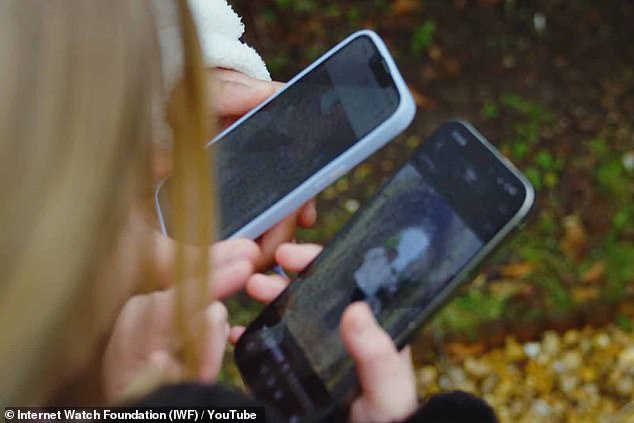
Parents have been warned about posting pictures of their children publicly online amid fears they may be turned into sexual abuse images.
The National Crime Agency (NCA) and the Internet Watch Foundation (IWF) issued landmark guidance to parents about keeping their children safe from online predators over mounting concerns about AI-generated sexual abuse material such as ‘deepfake’ images.
In it, the organisations recommended parents should not put photos of their children on public display online.
The NCA and the IWF suggested parents turn their social media accounts to ‘private’ rather than public, reducing the number of people who can access photographs.
They also advised tweaking account settings meaning that pictures are shared only with close friends and family members if they are posted, and reviewing which users are currently allowed to view content uploaded to social media accounts such as Facebook and Instagram.
The NCA and IWF said they did not wish to tell parents how to behave, but said rapid advances in technology meant action needed to be taken to prevent harmful predators scraping the internet for images and manipulating them to create realistic-looking child abuse content.
The guidance further suggested discussing openly whether or not other family members, friends or organisations have permission to publish images of their children on the internet.
It comes a fortnight after Sir Keir Starmer announced children would soon be banned from accessing social media until they reach the age of 16.

The National Crime Agency and the Internet Watch Foundation have identified a range of measures parents can take to reduce the risk of AI manipulating images of children
Tim Wright from the NCA said: ‘Artificial intelligence tools are becoming more powerful, more widely available and easier to use, and we are seeing offenders exploit them to target children in new ways.
‘Images shared online, even everyday family photos, can be stolen and manipulated to create sexualised content without a child or parent’s knowledge.
‘While we and policing colleagues tackle offenders, prevention remains vital. We encourage parents and carers to take a few simple steps today.’
Kerry Smith, chief executive of the IWF, said: ‘The threat is disturbing. If someone’s imagery is online, they could be easy pickings for criminals and anyone, especially children, could find themselves being targeted.
‘We don’t want to say: don’t share your children’s images with the people you love and trust. But we want everyone to be aware of the potential risks and make an informed decision with the full facts at their disposal. These are not hypothetical threats, they are real.
‘The impact of this imagery can be devastating. The harms are very real. And the potential for lasting damage is something which I think every parent would do anything they can to prevent.’
Dan Sexton, the organisation’s chief technology officer, told the Guardian he ‘would be very cautious’ about putting pictures of children online ‘because there is no protection’.
The NCA and IWF guidance suggested discussing ‘image consent with friends, family and even within the places your child attends like schools and clubs’.

The IWF and the NCA has suggested making social media accounts private in order to better protect children
It added that it may be ‘helpful to revisit these conversations and involve your child, especially as they get older and start exploring new spaces online’.
It suggested being prepared to have uncomfortable conversations with those who have uploaded pictures of parents’ children.
The guidance added: ‘If you find something you’re not comfortable with, speak to them clearly and calmly. You can set clear boundaries using our practical conversation starters, helping to protect your child and make expectations clear for everyone.’
IWF analysts found 3,440 AI-generated videos of child sexual abuse in 2025, compared with just 13 in 2024, and the NCA has increasingly seen offenders exploiting AI technologies to target children in new ways.
The Government has been under pressure to make the online space safer for children following concerns about grooming, exploitation and young people’s mental health.
Last month, the Prime Minister said the social media ban will give youngsters back their childhood and said he would not compromise on the ‘safety and happiness of our children’.
The restrictions will leave technology firms, rather than children, liable for enforcement action if they fail to comply.
There will also be measures to prevent children from chatting with adults on gaming and livestreaming platforms.
The Government is also looking at potential overnight curfews and breaks in infinite scrolling for under-18s.