


Woodside’s Toxic Legacy is still haunting the oceans
For the last 10 years Woodside and the Australian government have been embroiled in a long-running saga that led to the Northern Endeavour–a giant oil processing vessel–being shipped halfway across the planet to dismantle and deal with the toxic waste onboard.
Our colleagues at Greenpeace Denmark were particularly concerned to learn that Australia had sent this toxic waste, including mercury, asbestos and low-level radioactive material, to their shores.
Now it turns out that the Naturally Occurring Radioactive Materials (NORMs) onboard will have to be sent all the way back to Australia for disposal. It’s the latest twist in this saga, full of dodgy corporate manoeuvres, environmental risks, and bureaucratic bungles that make up the story of the Northern Endeavour.
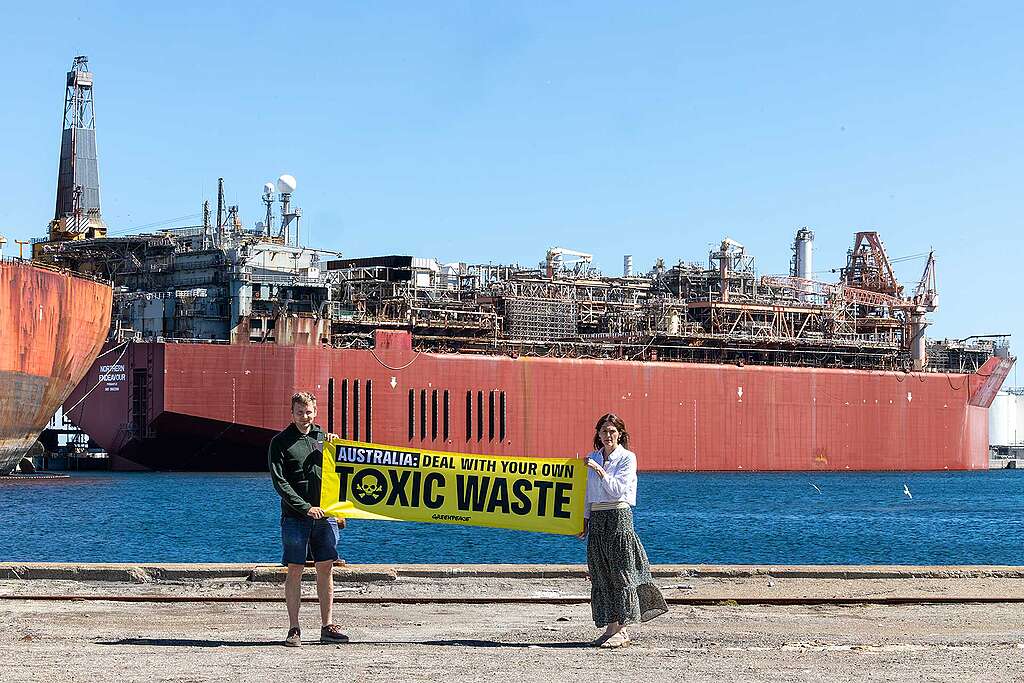
What is the Northern Endeavour?
The Northern Endeavour is a giant 274 metre-long, 43,000 tonne-long Floating Production, Storage and Offloading (FPSO) vessel that operated off the northern coast of WA for 26 years, producing more than 200 million barrels over its lifetime. By the end of its life, the Northern Endeavour was a corroding rust-bucket, harbouring toxic and hazardous materials, slated for decommissioning.
ICYMI: decommissioning refers to the removal of offshore oil and gas infrastructure, including plugging and abandonment of the well. In layman terms, it’s what’s required of the oil and gas industry to clean up their mess, and ensure no waste is left in the environment.
How legal loopholes allowed for a dodgy sale of a degrading asset
By 2015 the Endeavour’s production was on the decline, so Woodside scaled back maintenance and let the vessel rot and degrade in the Timor Sea…until, out of the deep blue sea, they found a buyer.
Woodside took advantage of a legal loophole of that allowed them to transfer titles and sell off the Endeavour and the associated oilfield production licenses to the Northern Oil & Gas Australia Pty Ltd (NOGA)–a newly created, undercapitalised, one-person company with zero experience operating a complex offshore production facility like the Endeavour. The legal loophole enabled Woodside to bypass the regulator, who would normally rigorously scrutinize the new titleholders’ capacity to safely operate and decommission an oil rig. Woodside even paid NOGA (whose name was now TSOGA…confusing right?) USD$16.5 million (m) in cash and $5.4m in services. Nothing like a little bonus for taking a giant rust-bucket off a giant oil and gas company’s hands so they don’t have to pay to decommission it…
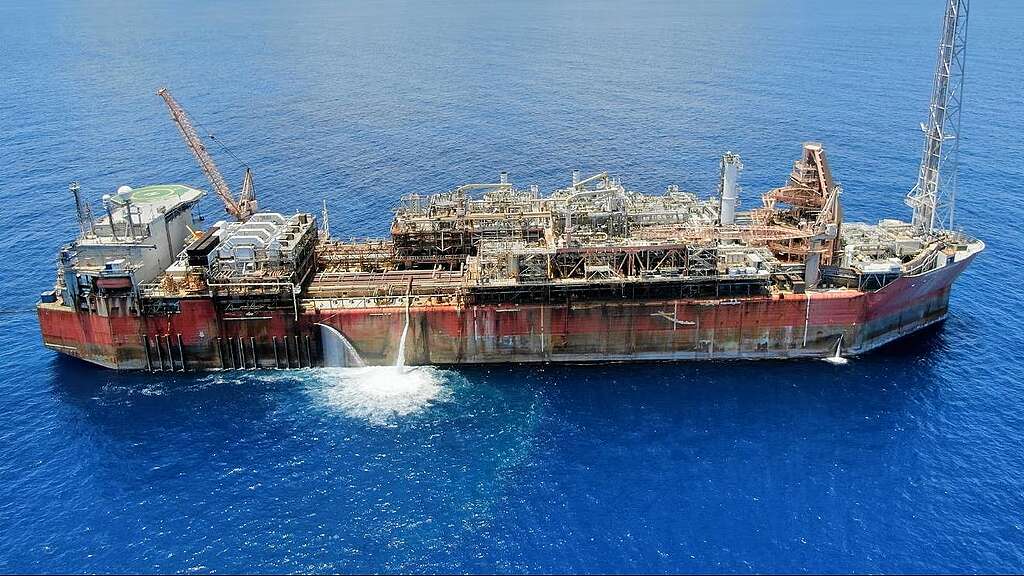
So what happened next? Spoiler alert: Not good!
TSOGA contracted out the operation and safety management of the Endeavour to UPS, but it was to no avail. In its first inspection of the vessel, the federal regulator, the National Offshore Petroleum Safety and Environmental Management Authority (NOPSEMA), found “extensive corrosion was present throughout the facility”. NOPSEMA issued 16 recommendations, with the need for a corrosion management plan being most urgent. That was on top of the 21 outstanding recommendations they had put to Woodside. Things didn’t get better from there as TSOGA failed to comply with the recommendations, and the regulator issued a series of escalatory breach notices. Then in 2019, after almost 3 years, NOPSEMA finally ordered TSOGA to cease all production on the Endeavour. In February 2020, NOGA and all its companies, including TSOGA, conveniently went bankrupt, passing the buck–the Endeavour and its decommissioning liability–to the federal government.
From ‘Lighthouse Mode’ to industry levies and regulatory overhaul
After landing Australia’s largest decommissioning liability in its history, the federal government forked out more than $200m to keep the Endeavour in ‘lighthouse mode’ while they worked out what to do–and in fact what they did was make some sweepingly positive moves.
In the face of staunch opposition and criticism, the government introduced trailing liability provisions as a backstop against another Northern Endeavour scenario, and the OP Levy, which taxes the oil and gas industry to cover the cost of the Endeavour’s decommissioning.
The upshot is for every dollar Woodside saved offloading the Endeavour, the industry is paying it back (and lots more!) to cover the cost of cleaning up their mess–tipped at $1 billion dollars. These were bold moves and a strong signal from the government that they wouldn’t be held captive by the industry’s dodgy corporate maneuvers. In response, Shell is suing Woodside for costs incurred by the levy–seems like nobody likes Woodside, not even within their own industry!
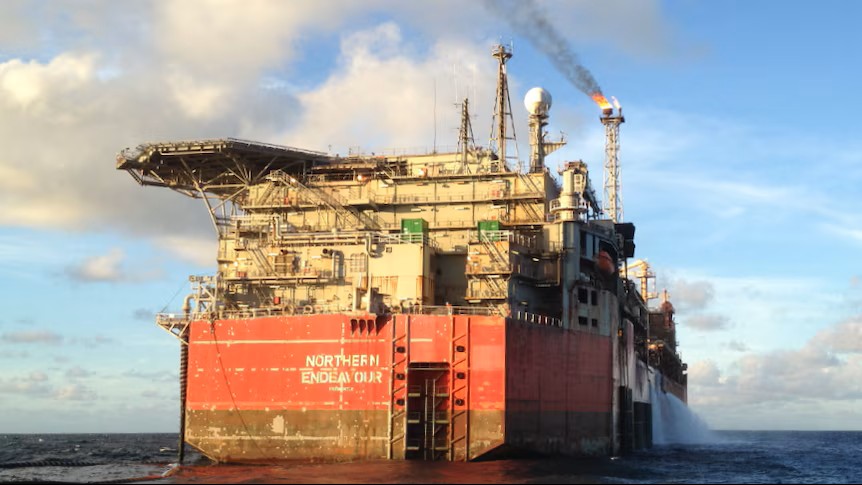
A green and golden missed opportunity
With a levy in place to recoup the cost of the clean-up from the industry, the government was presented with a golden opportunity to test-run a decommissioning pilot case. Australia has 5.7 million tonnes of offshore oil and gas infrastructure to recycle — the steel equivalent of 110 Sydney Harbour Bridges and 11 more FPSOs like the Northern Endeavour. Of this, the vast majority of the industry lies off the coast of WA, making the state ground zero for what may be the largest industrial and environmental clean-up in Australian history.
Instead, the Australian Government awarded a $35.6m contract to the Modern American Recycling Services, Europe (MARS) to dismantle the vessel, and sent it 17,000 kilometers across the world to Denmark. Freedom of Information (FOI) documents obtained by Greenpeace Denmark revealed that the Endeavour contained toxic waste when it was shipped off, and that it does not appear to have received official sign off by Australia’s Basel Competent Authority prior to departure–potentially in contravention of the international Basel Convention. Sending a corroding rust-bucket, full of flammable liquids, poisonous substances, corrosive substances, toxins, and ecotoxins to a harbour in Denmark was not the ending to the Northern Endeavour saga we were all hoping for.
Shipping the decommissioning overseas is an enormous missed opportunity across the entire value chain—with the industry valued at more than $60 billion dollars til 2060 and beyond. With more than 50% of infrastructure to be decommissioned before 2030, and nearly 75% by 2040, it’s urgent that Australia establishes a plan that will benefit the environment, economy and workers. If we get the conditions right with proper planning and coordination, it will drive investment, create thousands of jobs, support the circular economy and green steel industries and lay a foundation for clean energy pathways. That means:
- Build a WA decommissioning hub
- Enforce and strengthen existing laws to ensure full and timely decommissioning
- Invest in ports, recycling facilities, and a local workforce
- Hold operators financially responsible and mandate full industry-funded clean-up
- Introduce strict environmental monitoring
- Consult unions, First Nations, and communities to deliver a just, inclusive transition
- Link recycling to national green steel plans to position WA as a global clean energy leader
One last hurrah: the return of the NORMs!
But wait…there’s more! It turns out that any naturally occurring radioactive materials (NORMs) found on board the Endeavour won’t be disposed of in Denmark, and instead they’ll make the return trip back to Australia. NORMs are an expected hazard in oil and gas production processes, and given that Danish law on their disposal is very clear–namely that it rests with the operator–the federal government would have known from the outset that the NORMs would be making a round-the-world return trip back to Australia. This latest development means Australia would have to deal with the most toxic legacy of the oil and gas industry, while all the valuable material is gifted away.
Importation of radioactive material into Australia is not something we understand has happened before and questions remain as to how this complies with the Basel Convention. While there may still be more twists in the tale of the Northern Endeavour, it must serve as a wake-up call to get moving on a homegrown decommissioning industry. With the right planning, coordination and ambition, government and industry can get this right and ensure a prosperous pipeline of work for decades to come that will support the economy, provide jobs, and ensure our oceans are healthy and protected from corroding, toxic rust-buckets like the Endeavour.

