Conny Waters – AncientPages.com – Tollan-Xicocotitlan, or Tula, was once the capital of the Toltec civilization. It sits in Tula de Allende, in the Tula Valley of southwest Hidalgo, northwest of Mexico City. Tula reached its height between 900 and 1100 AD, but by the 12th century, its influence had faded. Even so, many groups settled in the area and adopted Toltec architecture, artifacts, rituals, and styles to assert their status as the city’s successors.
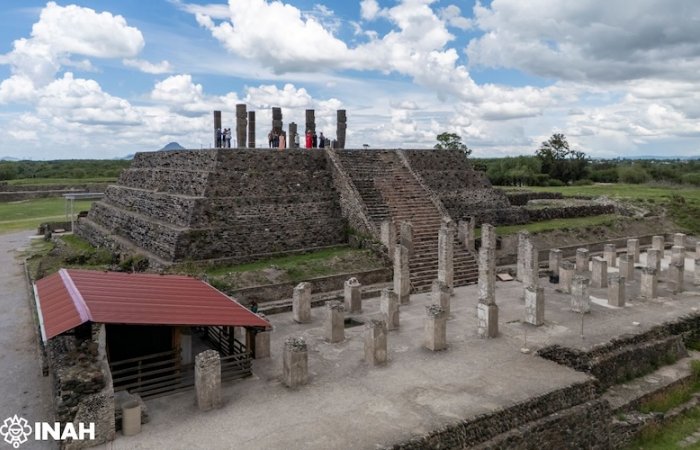
The iconography on the tombstones indicates that they come from Pyramid B at Tula. Credit: Daniel Ponce, INAH.
This is supported by the discovery of a 40-by-80-meter building. The building is decorated with images of chalchihuites, green stone beads linked to power and wealth, and two tombstones thought to have come from Pyramid B, which features the famous atlantes statues at the Tula Archaeological Zone in Hidalgo.
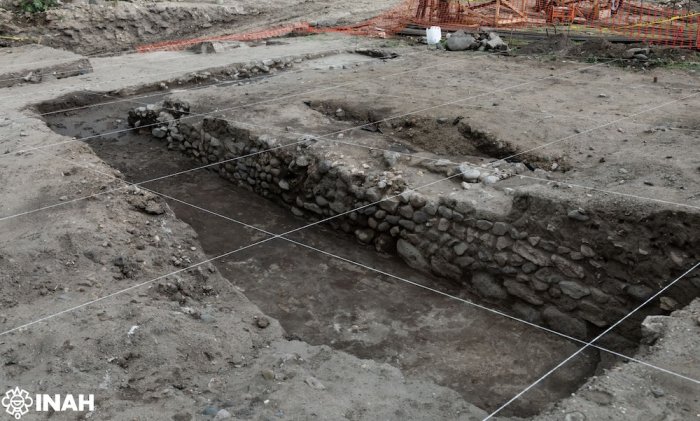
An elite structure and engraved Toltec tombstones were discovered during an archaeological salvage operation in Hidalgo. Credit: Gerardo Peña, INAH.
In this regard, the Secretary of Culture of the Government of Mexico, Claudia Curiel de Icaza, emphasized that “every archaeological discovery expands our knowledge of the past and strengthens the right of future generations to know it. This find in Tula demonstrates that scientific research and archaeological salvage are fundamental to protecting a heritage that reveals the grandeur, complexity, and historical continuity of the civilizations that gave rise to Mexico.”
Experts from the National Institute of Anthropology and History (INAH) found Structure II during archaeological salvage work that started in May 2026. This work is underway alongside the construction of a water treatment plant in the 16 de Enero neighborhood of Tula de Allende.
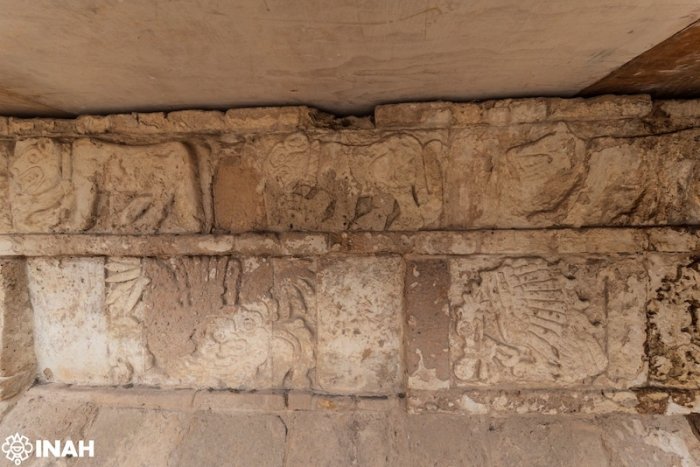
Felines in procession as part of the decoration of Pyramid B. Credit: Gerardo Peña, INAH.
The iconography on the two reliefs confirms their origin. One shows the god Tlahuizcalpantecuhtli, a form of Quetzalcoatl, and the other shows a feline. Both match the images found on Pyramid B.
For Luis Gamboa Cabezas, the lead archaeologist on the salvage project, this context is evidence of self-legitimization. “At a time when the core area of Tula was perhaps no longer so sacred, people from the periphery came to the palace and adopted the symbols necessary to be able to identify and feel like Toltecs.”
Finding the feline tombstone also answers a question that has long persisted. In the mid-twentieth century, archaeologist Jorge R. Acosta found coyote and feline decorations moving from right to left on the east side of Pyramid B, but none on the west. The new tombstone, which shows the animals moving from left to right, proves that animal images encircled the structure.
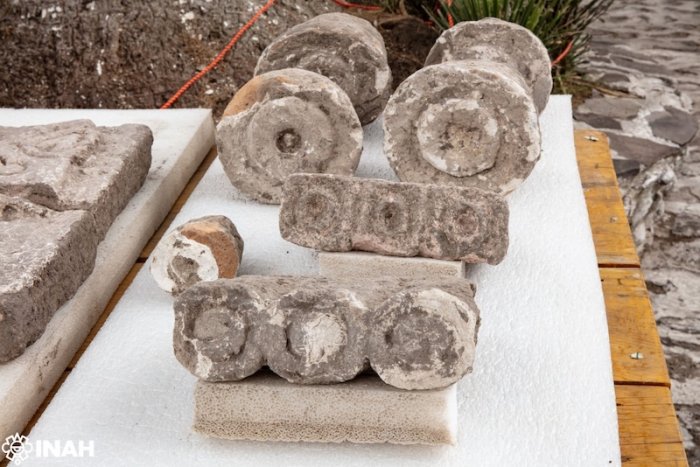
The structure’s decoration included representations of chalchihuites, greenstone beads associated with power and wealth. Credit: Gerardo Peña, INAH
The salvage operation area, situated nearly 100 meters from the Tula Archaeological Zone (ZAT) perimeter and adjacent to the Tula River, has produced significant findings, according to archaeologists Martha García Sánchez and Carlos Arriaga Mejía of the INAH Hidalgo Center. In 2018, during an archaeological rescue phase, 23 skulls with dental and cranial modifications, characteristic of pre-Hispanic elites, were discovered. Their placement in vessels and alignment near an altar indicate a connection to this sacred space.
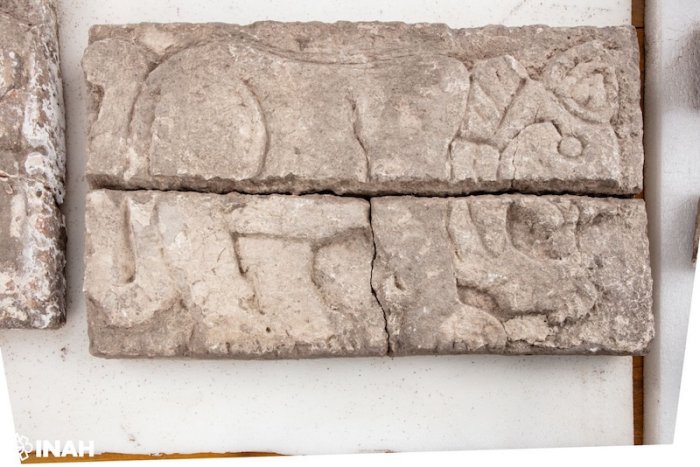
The INAH (National Institute of Anthropology and History) discovered two reliefs, one depicting a feline and the other the god Tlahuizcalpantecuhtli, on the outskirts of the Tula Archaeological Zone. Credit: Gerardo Peña, INAH.
In the current phase of archaeological salvage, a diverse range of materials dating from 1100 to 1521 AD has been recovered. These include vessels, plates, bone awls, shell beads, seals, spindle whorls, and numerous figurines. Notable finds include a blue-painted fragment depicting a canid with a headdress and a vessel fragment featuring a feathered serpent.
Primary and secondary burials were also recovered. Among these, the simultaneous offering of six infants, aged between 1 and 6 years at the time of death, placed beneath a house floor, is particularly notable.
It also highlights a copper awl that fits a scraping mark on a human lower jaw; hence, it is believed to have been used for skin extraction in ritual sacrifice.
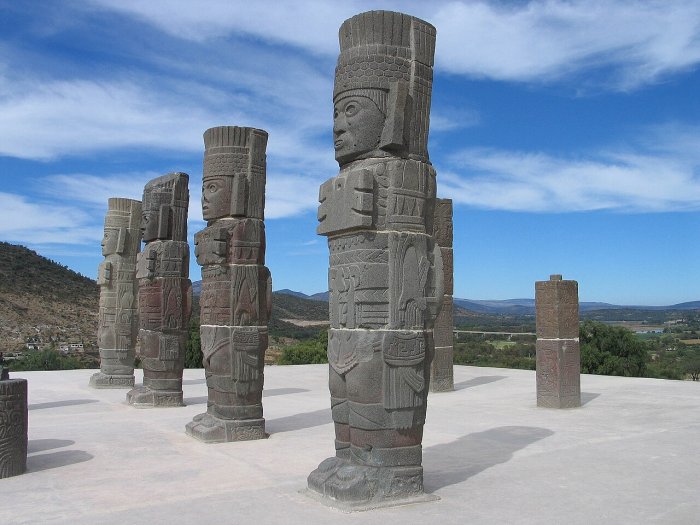
Atlantean columns on Pyramid B in the form of Toltec warriors. Credit: Alejandro Linares Garcia – CC BY-SA 3.0
Because the artifacts were found on land historically prone to flooding from the Tula River, their preservation requires careful handling. Archaeology intern Diana Pérez Olivera notes that each piece is transported to the ZAT camps for safekeeping after recovery.
The artifacts undergo cleaning and classification before being registered in the INAH databases. This process ensures they are available for future research and possible long-term public display.
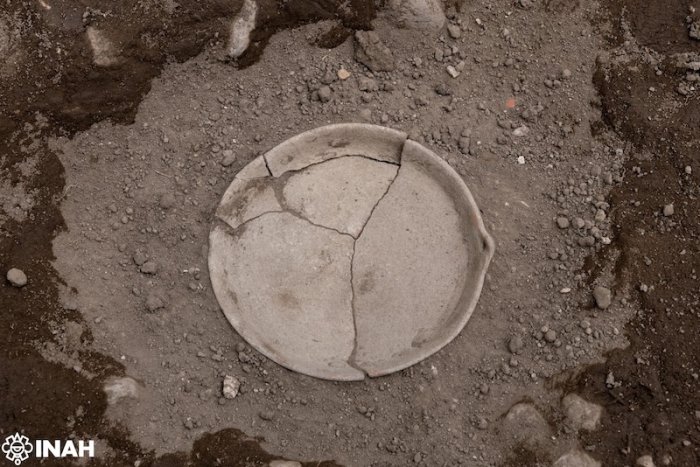
Detail of a plate found during the archaeological salvage operation. Credit: Gerardo Peña, INAH.
Once the architectural remains are registered and consolidated, they will be covered with geotextile and earth to ensure preservation. The National Institute of Anthropology and History (INAH) and the Hidalgo State Water and Sewerage Commission have agreed to reserve the area for low-impact construction that will not place significant weight on the Toltec structures.
See also: More Archaeology News
“This finding reiterates that the polygon of the Tula Archaeological Zone is only a tiny percentage of what the pre-Hispanic city was, therefore, society and government must join efforts to notify the INAH and safeguard any discovery,” concludes archaeologist Arriaga Mejía.
Source: INAH
Written by Conny Waters – AncientPages.com Staff Writer