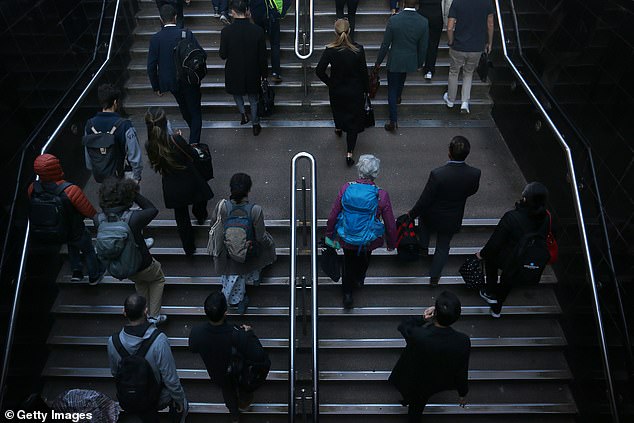
The number of immigrants arriving in Australia has outpaced the number of homes being built in every state since Labor came to power, according to new data.
Australian Bureau of Statistics figures analysed by The Daily Telegraph show net overseas migration surpassed 1.4million over the past three and a half years.
NSW has carried the heaviest load, taking in close to 450,000 migrants while delivering just 149,000 new homes over the same period.
Most new arrivals have settled in Sydney, intensifying demand in an already tight market.
SQM Research data shows Sydney’s vacancy rate edged up to 1.5 per cent in May from 1.3 per cent in April, with 10,820 properties available.
Despite the rise, vacancy levels remain historically low.
Rents slipped 0.1 per cent over the month but remain 7.6 per cent higher than a year ago, with average house rents at $1,154.51 per week.
Vacancies remain broadly in line with last year, with the modest increase reflecting a typical seasonal lift as the market moves into the cooler months.

ABS data shows that housing construction has not kept up with migration levels (stock image)
At an average household size of 2.5 people, that building effort has only accommodated around 375,000 residents, even before accounting for natural population growth of more than 110,000.
The result is an effective housing shortfall equivalent to 184,000 people.
The government maintains migration is now easing.
Recent ABS data shows net overseas migration has fallen to 301,000, down more than 45 per cent from its post-Covid peak in 2023.
Annual migration to December 2025 dropped nine per cent year-on-year, while arrivals in the first half of this financial year totalled 145,000, below the Budget forecast of 295,000.
Fewer temporary visa holders and international students, both down 10 per cent over the year, have driven the slowdown, with student migration returning to pre-pandemic levels.
Visitor migration has also declined amid tighter visa settings, while more working holiday makers are leaving as post-reopening cohorts move on.
Meanwhile, the Albanese government’s National Housing Accord is now expected to undershoot its target of building 1.2 million homes by 2029.

The Albanese government’s target of 1.2million homes by 2029 is not set to be met
NSW is projected to deliver just 258,000 homes, 69 per cent of its 376,000 target, according to the National Housing Supply and Affordability Council’s State of the Housing System 2026 report.
Shadow Housing Minister Andrew Bragg has criticised the government’s changes to negative gearing and capital gains tax, warning they risk undermining housing investment.
‘We want more investors,’ Bragg said, describing a ‘bizarre’ deal between Labor and the Greens that he claims favours large super funds while restricting self-managed super funds.
He accused the government of prioritising institutions over individual investors.
‘We should be encouraging investment across the board,’ Bragg said.
‘It shouldn’t matter who the investor is.’
‘We need to be doing everything we can to increase supply,’ he said, ‘not driving investment away by picking winners and losers.’
Opposition Leader Angus Taylor has called for migration to be linked to housing levels, to take pressure off the market.