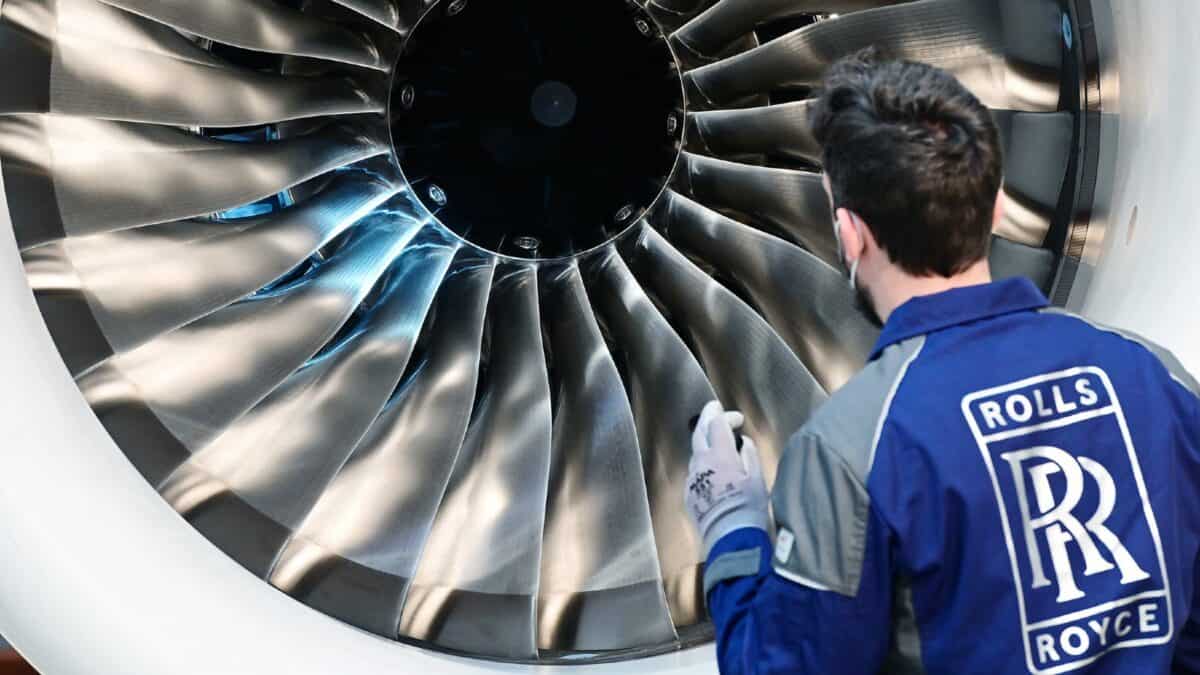

Image source: Rolls-Royce plc
Cast your mind back to the end of last year. One of the big stories in the UK stock market was that it had been another barnstorming year for Rolls-Royce (LSE: RR). Yet again, Rolls-Royce shares had been among the strongest performing FTSE 100 name of the prior 12 months. Investors such as myself were considering whether we ought to buy them.
Past performance though, is not necessarily an indicator of what to expect in future. So what has happened to Rolls-Royce shares so far this year?
A strong first-half performance
We are just several days away from the end of the first half of the year – and the Rolls-Royce share price has moved up 19% so far in 2026. That means it is 53% up over 12 months – and a stunning 1,247% higher than five years back.
So £5,000 invested at the start of January would now be worth around £5,950.
Along the way there have been some ups and downs. Back in March, as the Middle Eastern conflict made investors concerned about civil aviation demand and its potential impact on Rolls’ jet engine business, the share price was down 8%. So a £5k investment was showing a £400 paper loss.
At its strongest point so far this year, the share price was actually higher than now, up around 28%. That would mean a £5k investment was showing a paper gain of £1,400.
Deciding when to buy, sell, or hold
A paper loss or gain is just that, until the shares are sold and it becomes an actual loss or gain. The high I mentioned above was short-lived, so how might an investor have known about it without constantly monitoring the market. One way can be to set a standing sell order with a stockbroker once the share hits a certain point, even if only briefly.
Its opposite is a stop loss order – an instruction to sell when a share falls to a certain level chosen by the investor.
Say someone had set a stop loss order at 5% below the cost when buying back in January. That would have been triggered in March and the £5,000 investment would have lost £250. But the investor would have missed out on the subsequent recovery and price gain in Rolls-Royce shares.
In other situations though, a stop loss order can be a useful way to manage risk. It is easy to become emotionally attached to shares and hang onto them even when the investment case is weakening and price keeps falling. A stop loss order can be a tool that enables an investor to be more self-disciplined.
Investing for the long term
My general approach is to buy and hold for the long term. Long-term investing can be very powerful and Rolls-Royce shares over the past few years demonstrate why.
Along the way, an investor can also earn dividends. These share only yield 0.7% right now which, on a £5 investment today, would mean around £35 of dividends a year.
The dividend may grow – Rolls has ambitious financial targets, is cash generative, and currently benefits from strong customer spending in defence and power.
But the ongoing risk to civil aviation sits uneasily with me. Also, at 48 times earnings, Rolls-Royce shares look overpriced to me. So for now, I have no plans to invest.
Should you invest £5,000 in Rolls-Royce Plc right now?
When investing expert Mark Rogers and his team have a stock tip, it can pay to listen. After all, the flagship Twelfth Magpie Share Advisor newsletter he has run for nearly a decade has provided thousands of paying members with top stock recommendations from the UK and US markets.
And right now, Mark thinks there are 6 standout stocks that investors should consider buying. Want to see if Rolls-Royce Plc made the list?
Christopher Ruane does not hold any positions in the companies mentioned.