Andy Burnham was on Tuesday urged by the Government’s jobs tsar to forget rejoining the European Union and instead fix Britain’s sicknote culture.
Sir Charlie Mayfield said tackling the problem of long-term sickness absence was a major opportunity to revive the UK economy.
The former John Lewis boss, who led the Keep Britain Working review for the Government, said just a 1 per cent boost to the number of people in employment would add the equivalent of a city to the nation’s workforce.
He was speaking as latest data showed Britain’s private sector shrinking for a second month in a row in June as the energy price shock caused by the Iran war adds to the cost pressures being piled on to business by Labour.
And it came as Mr Burnham closes in on a coronation as Prime Minister following Sir Keir Starmer’s resignation. He is likely to come under pressure to move even closer to Europe, with Rejoiners arguing that will boost the economy.
But corporate Britain – and even bosses who thought leaving the EU was a bad idea – are uneasy about trying to go back.

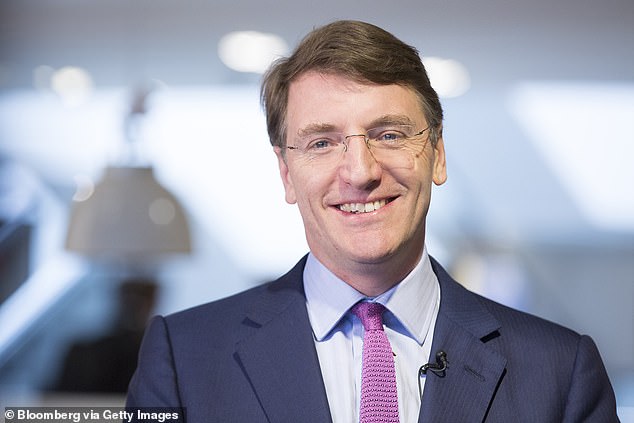
Sir Charlie Mayfield said long-term sickness was a ‘quiet but urgent’ crisis
On Tuesday, Confederation of British Industry (CBI) chief Rain Newton-Smith told the Financial Times: ‘Businesses aren’t looking to relitigate the referendum. None of the business leaders I speak to want to reopen that debate.’
And Sir Charlie, whose report for the government revealed the staggering scale of Britain’s ‘quiet but urgent’ crisis of long-term sickness, said tackling that issue was the best way to reap rewards.
‘This is probably one of the biggest opportunities we have to drive growth in this country,’ he said.
Speaking at an event hosted by the Work Foundation think-tank,he cited figures showing that 35 million people work in the UK while nearly three million are economically inactive through long-term illness.
Adding one per cent to the working total would equal nearly 350,000 – ‘the size of a major town or city’, he added.
‘You don’t have to rejoin the EU, you don’t have to build any houses, you don’t have to open up a new route of immigration, you don’t have to wait for a whole cohort of young people to leave school and join the workplace.
‘We have got an opportunity to drive growth sitting right in front of us and actually it’s a very attainable opportunity – it doesn’t require us to do all those things.
‘It just requires us to get employers on the pitch. It requires us to make sure that we are reinforcing with employees that they also have a responsibility about health.’
Sir Charlie’s report earlier this year noted that 800,000 more people are now out of work due to health problems than there were in 2019, with another 600,000 due to be added by 2030.
It also calculated that a 22-year-old who falls out of work for health reasons could be more than £1 million worse off over his or her lifetime than if they had been in sustained employment.
Economic inactivity caused by ill health that prevents work is estimated to cost the UK £212 billion a year and rising.
Yesterday, a poll of 1,001 bosses by the Work Foundation found 62 per cent are seeing persistent levels of ‘health-related exits’ from work.