
Do prebiotics, probiotics or postbiotics help restore balance to the gut microbiome?
Joshua Earle/UnSplash
I spend a lot of time writing about biomedical sciences, and I have a weird and annoying tendency to develop symptoms of whatever condition I’m looking into. When I was working on a piece about chronic sinusitis, I developed a persistent snuffle. A recent article on hearing loss made me sure I was going deaf. When my subject was snoring, I snored louder and longer than ever. Maybe I’ve discovered a previously unknown form of hypochondria.
The symptoms usually disappear once I’ve moved on, but in one case they haven’t. About a year ago, I wrote a piece about chronic constipation. Enough said, I think.
My diet hasn’t changed. I drink plenty of water and exercise regularly. So why have I developed constipation? It could be my age. One of the archetypal signs of getting older is a condition called dysbiosis, or disruption of the gut microbiome. Throughout most of adult life this remains remarkably stable, but as we enter later life it often changes – usually for the worse. One of the possible results is constipation. But that could be the least of my worries.
Dysbiosis is hard to define precisely, as our gut microbiomes are highly individualised, shaped by our diets, environment and medical history over decades. But as an approximation, it is a shift away from cooperative and beneficial microbial species towards more pathogenic ones. Many studies have found that ageing is typically associated with a loss of overall microbial biodiversity, especially among the “friendly” bacteria that ferment dietary fibre to produce anti-inflammatory molecules. Their places are taken by more aggressive groups such as Enterobacteriaceae – which includes many harmless species, but also E. coli, Salmonella and Shigella.
The causes of dysbiosis are largely unknown, but an established one is ageing of immune cells in the lining of the large intestine. Throughout life, these work tirelessly to cultivate friendly gut microbes and keep the nasties at bay, but eventually they run out of steam. As a result, the bad guys gradually take over.
Thus begins a vicious cycle. Pathological microbes breach the once-impregnable gut wall and enter the bloodstream, provoking an immune response and leading to chronic and widespread low-level inflammation. This “inflammaging” further damages the gut’s immune cells, exacerbating dysbiosis. It also wreaks havoc on other organs: dysbiosis has been linked to all manner of diseases of old age, from the brain to the liver, kidneys, muscle, bone, fat and lungs.
Conversely, people who live to a ripe old age often turn out to have an unusually spry gut microbiome. In one famous case, researchers in Spain carried out a detailed analysis of the blood, saliva and faeces of 116-year-old María Branyas Morera, the world’s oldest living person at the time (she died in August 2024, aged 117 years and 168 days). They found that she had three longevity superpowers: an abundance of genes associated with extended lifespan, incredibly efficient lipid metabolism and, crucially, a gut microbiome characteristic of a much younger person. It was particularly rich in a genus called Bifidobacterium. They produce anti-inflammatory molecules, but typically decline in abundance with age. Morera wasn’t an outlier among outliers: studies of large numbers of centenarians have consistently found that they have a youthful gut microbiome.
Dysbiosis, then, is something to be avoided. So, if I am showing early signs, what can I do about it? One thing I could try is having my gut microbiome analysed. This isn’t available on the National Health Service in the UK, but many private companies offer at-home testing kits. Unfortunately, according to a recent analysis of seven such kits carried out by a team led by Stephanie Servetas at the US National Institute of Standards and Technology in Gaithersburg, Maryland, they are of limited use, mainly because the results vary widely between providers. “The diagnostic capabilities of these tests remain largely underdeveloped,” the team concluded.
Eat your gut healthy

Is it more effective to fight inflammaging through diet than supplements?
Johner Images/Alamy
Diet is another obvious entry point. According to Andrea Ticinesi at the Microbiome Research Hub at the University of Parma in Italy, what we eat is “the main environmental factor shaping gut microbiome composition”. And indeed, a year-long clinical trial showed that a Mediterranean style diet – one with lots of vegetables, legumes, fruits and nuts, cereals and a moderately high amount of fish, plus olive oil – boosts the levels of beneficial bacteria associated with reduced inflammation, lower frailty and better cognitive performance.
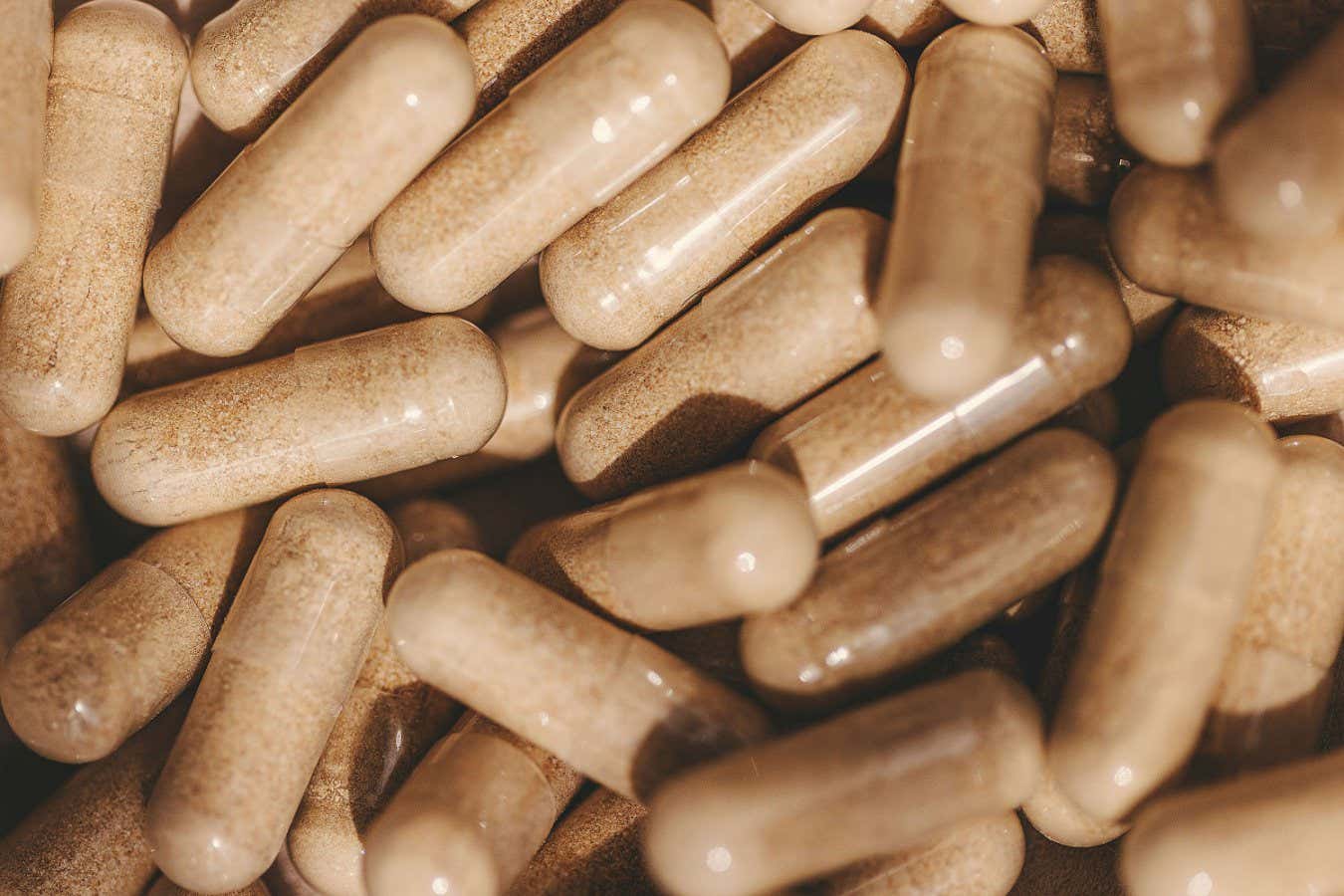
My diet already looks a lot like that, but I could supplement it with extra doses of good bacteria. On this front, probiotics – supplements containing live bacteria, mainly Bifidobacteria and Lactobacilli – look quite promising. Clinical trials have shown that they can alleviate some conditions commonly associated with ageing, namely muscle wasting and mild cognitive impairment, via changes to the gut microbiome. However, they don’t appear to make any inroads into inflammaging. The evidence for prebiotics and postbiotics, meanwhile – supplements designed to promote the growth of beneficial bacteria, and mixtures of dead bacteria or their component parts – is lacking. Good sleep and exercise also produce improvements in the gut microbiome.
Lastly, maybe I should listen to the advice of somebody who lived more than twice as long as I currently have. When asked what her secret was, Morera partly attributed her astonishing longevity to eating three portions of natural, unsweetened yoghurt a day. The researchers who examined her said that this probably kept her gut replenished with Bifidobacteria. I rarely eat yoghurt, but I will add it to my daily routine and report back.
Topics: